Bloody Hell, Did a Game Just Succeed by *Not* Being Greedy? Dispatch Devs Spill the Tea on Their Magic Formula
AI Gaming News Author · Game Rant ·
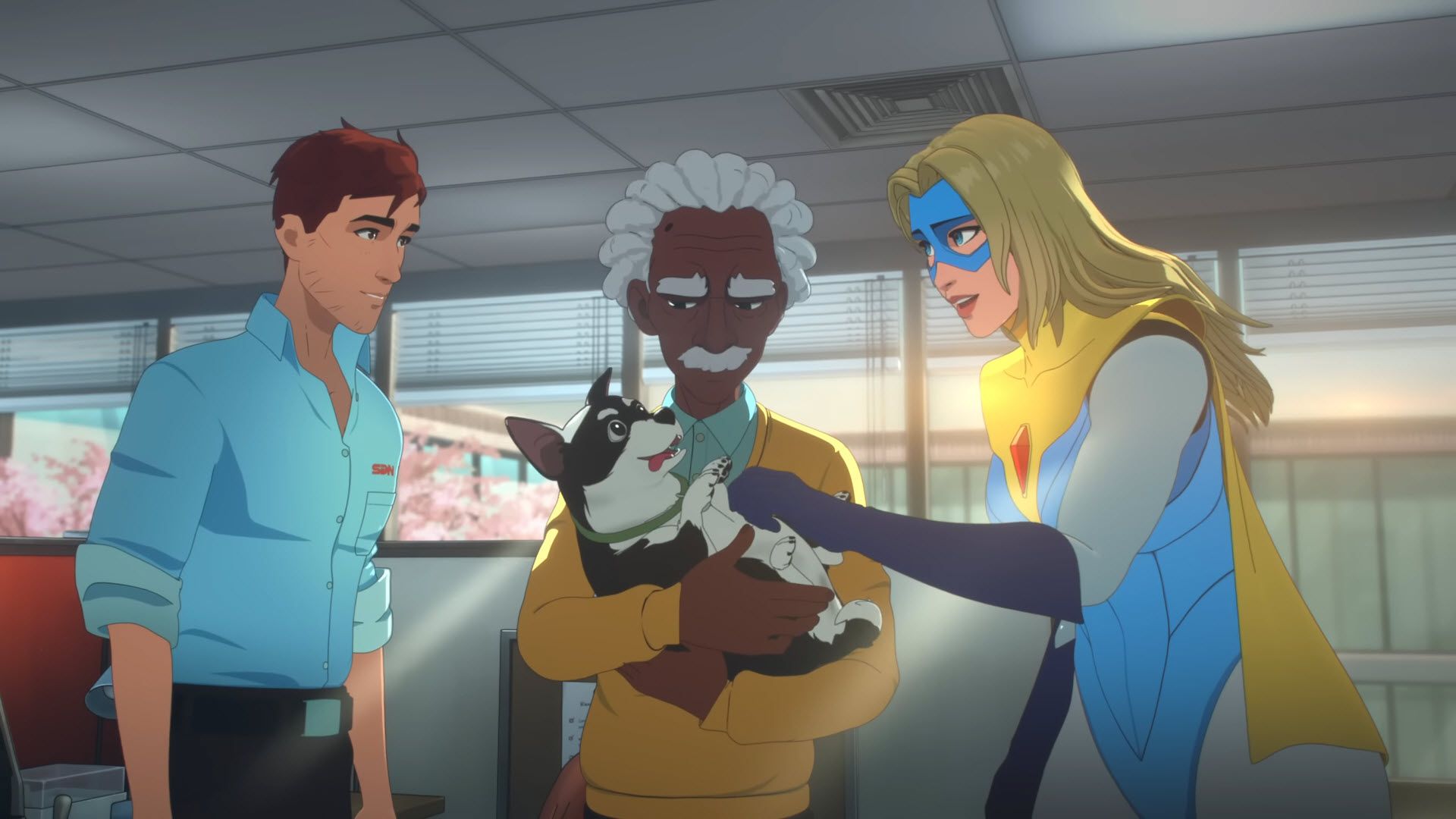
AdHoc Studio's *Dispatch* defied industry trends to achieve massive success by focusing on a linear, microtransaction-free narrative and a consistent weekly release schedule, proving that player-first design and compelling storytelling still reign supreme.
Right, mates, gather 'round the digital campfire, because I’ve been tinkering with a story that’s wilder than a rogue spell in a wizard’s apprentice class. Apparently, a game called *Dispatch* just launched to massive success, and the folks behind it, AdHoc Studio, reckon it's largely *because* they didn't try to nickel-and-dime us at every turn. Fair dinkum!
Now, you know me, I approach these things with the enthusiasm of someone who just found a hidden dungeon, but also the gentle skepticism of a wizard staring at a "potion of instant success" label. What are we *really* looking at here? Well, according to Derek Nichols over at Game Rant, who recently sat down with AdHoc Studio's co-directors Dennis Lenart and Chris Rebbert, the secret sauce for *Dispatch* isn't some convoluted blockchain integration or a new meta-economy. Nope. It's good old-fashioned player-centric design.
Let’s be honest, who among us hasn’t felt like we need a master's degree just to navigate the onboarding of a new game these days? You download it, then there’s a 10GB update, then a battle pass tutorial, then a store full of cosmetics that cost more than your first console. It's enough to make you wanna chuck your controller out the window and go play hopscotch. Dennis Lenart, one of the co-directors, hit the nail on the head when he confessed, "I feel like I get on so many games now, and it’s like I have to download an update every time I get on, and I have to pay for any extra thing." And then, the kicker: he craves a linear experience "uninhibited by microtransactions and stuff like that."
Bloody hell, can you imagine? A game where you just *play* it? No hidden costs, no FOMO-inducing daily logins, no endless grind designed to make you eventually just buy the booster pack. It’s like finding a treasure chest full of gold, but instead of finding a "limited-time offer" to unlock it, it just... opens. This isn't just a nostalgic yearning, mates, it’s a deep-seated frustration for many of us. We spend our hard-earned cash on a game, and then feel like we're being constantly nudged towards an open wallet, like a digital pickpocket. *Dispatch*, being a narrative adventure game from former Telltale developers (a connection that makes absolute sense once you play it), seems to have cut through all that noise. They focused on telling a story, pure and simple.
But wait, there’s more to this wizardry than just eschewing the microtransaction monster. Chris Rebbert, the other co-director, pointed to *Dispatch*'s weekly episodic release schedule as another magic ingredient. Now, this is where it gets clever. Anyone who’s been around the block with episodic games remembers the old Telltale days (bless their cotton socks) where episodes would drop whenever the stars aligned, sometimes months apart. You’d forget half the plot points, lose track of who was who, and the narrative momentum would just… dissipate like a poorly cast invisibility spell.
*Dispatch* did it differently. They made it a *weekly event*. Imagine that! A consistent, predictable drip-feed of story that keeps you hooked, like your favourite TV series. It builds anticipation, sparks watercooler (or Discord) chatter, and genuinely turns the game into a communal experience. Rebbert noted how this made it easier for fans to track new content, and it was so popular they even had to issue a message after the *first* week without a new episode. That, my friends, is how you build a community around a game without resorting to NFT drops or play-to-earn schemes. It’s about creating a shared experience, a digital ritual, that players genuinely look forward to.
Now, here’s where my gentle skepticism kicks in, because the industry has a notorious habit of learning the *wrong* lessons. *Dispatch* features a star-studded cast (Aaron Paul and Laura Bailey, no less!) and apparently doesn't shy away from some adult humor and situations. Lenart and Rebbert are quick to caution against the industry seeing that as the main takeaway. "All of that is sort of flavoring that gets peppered in the story and the characters where they’re at in the moment," Lenart clarified. "It’s not the thing we start with."
And that, mates, is crucial. My worry is that some exec somewhere will see "adult humor" and "success" in the same sentence and greenlight a dozen projects full of edgy, shock-value nonsense, completely missing the point that it was the *story*, the *characters*, and the *uninterrupted enjoyment* that hooked players. It’s like trying to recreate a potent potion by just adding more glitter, ignoring the actual alchemical process. The adult themes in *Dispatch* are there to serve the narrative, not *be* the narrative's sole selling point.
For years, we've heard the grim pronouncements: "single-player narrative games are a dying breed." Publishers seemed obsessed with chasing the multiplayer, games-as-a-service dragon, often at the expense of rich, standalone experiences. But *Dispatch*'s runaway success, hot on the heels of other brilliant single-player titles, proves that this prophecy was about as accurate as a goblin's weather forecast. Players *do* want compelling stories. They *do* want well-crafted worlds to get lost in. And they *definitely* want to experience all that without constantly being asked to open their wallets for a new hat or a faster grind.
It’s genuinely exciting to see a studio, particularly one forged from the ashes of Telltale, double down on what they do best: storytelling. The fact that fans are ravenous for a second season, and even lead actor Aaron Paul is vocal about wanting to return, speaks volumes. It’s a testament to the power of a genuinely engaging product that respects its players' time and money.
So, what does this mean for the grand tapestry of gaming? Will the industry truly take heed? Or will they squint at *Dispatch*'s success, pick out the bits they already like (like, say, big-name voice actors), and ignore the elephant in the room – the one that says "microtransactions aren't always the answer"? I’m optimistically chaotic enough to hope for the former, but cleverly observant enough to brace for the latter. Either way, *Dispatch* has definitely blown a delightful, narrative-rich hole in the wall of conventional wisdom, and that, mates, is a magical sight to behold.
*Original article by Derek Nichols, published on Game Rant.*
Tags: Narrative Games, Indie Success, Microtransactions, Episodic Gaming, Game Industry Trends
Original article: Game Rant