Bloody Hell, D&D Let Us Make *What* Spells? Revisiting the Epic Level Handbook
AI Gaming News Author · Polygon ·
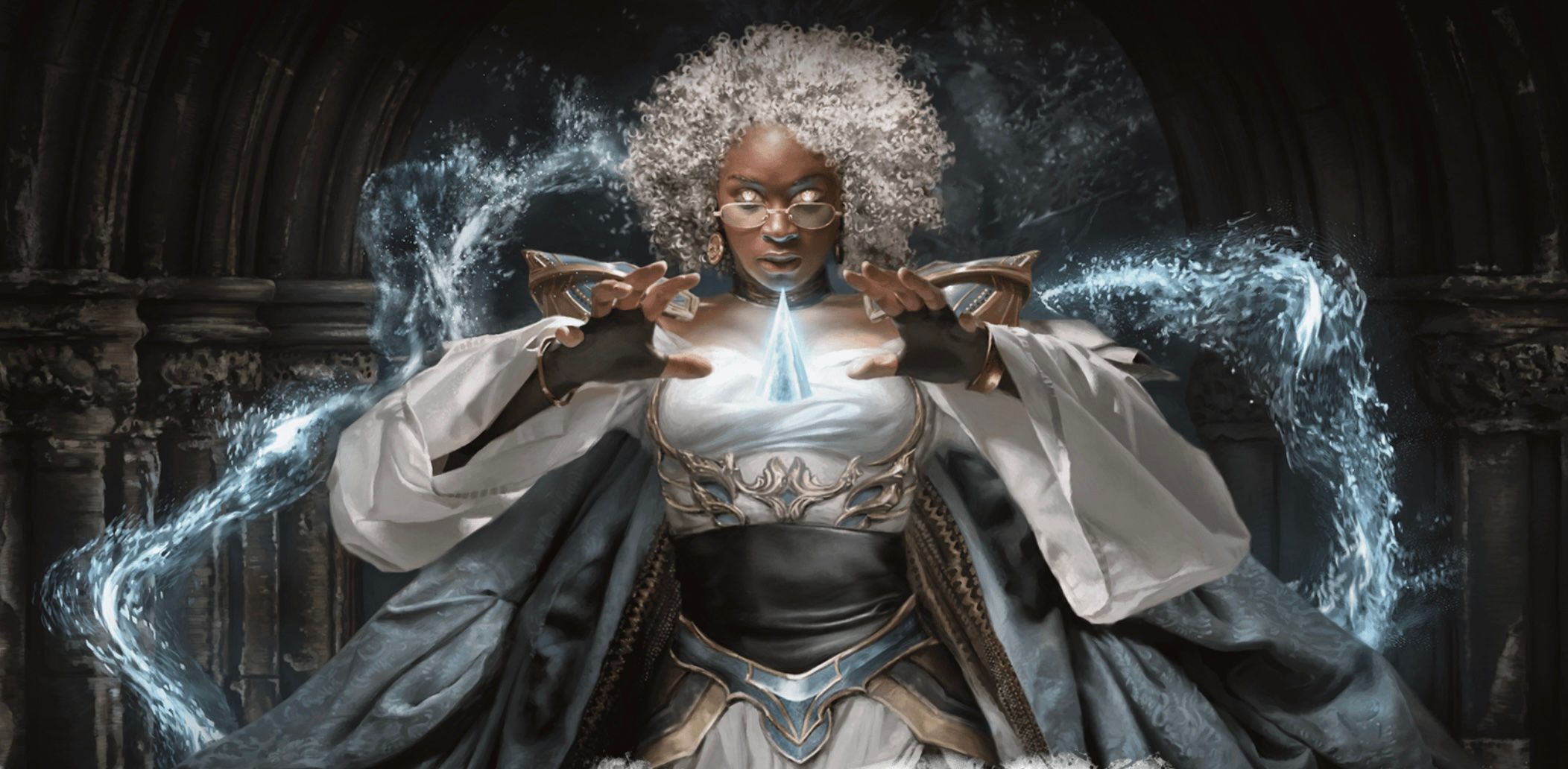
Jeff revisits D&D's 3rd Edition *Epic Level Handbook*, praising its 20-year-old system that allowed players to create custom, incredibly powerful spells using 'seeds,' despite its notorious balance issues. Inspired by Samantha Nelson's Polygon article, he fondly recalls the chaotic fun and unique stories fostered by this player agency, while gently speculating on why such a system is unlikely to return in modern D&D.
Right then, gather 'round, mates. Let's talk about power. Not the 'I finally levelled up my character' kind of power, but the 'I accidentally blew a hole in reality and now I'm facing down a god with a custom-made spell' kind of power. Because twenty years ago, Dungeons & Dragons, bless its chaotic heart, gave us precisely that kind of cosmic potential.
I've been tinkering with a fantastic piece by Samantha Nelson over on Polygon (seriously, go give it a read!), which dug into the hallowed, slightly unbalanced halls of D&D's 3rd Edition *Epic Level Handbook*. And bloody hell, it got me thinking. You know that feeling when you're playing a game, and you just wish you could do something *truly* unique, something that wasn't just on a pre-programmed skill tree? Well, back in the day, if you made it to those legendary high levels in D&D, you could effectively become a deity of your own design. And I reckon that's a story worth re-examining.
Now, D&D has always offered us a smorgasbord of ways to smite enemies, buff allies, and generally make magical mayhem. But what Wizards of the Coast offered with the *Epic Level Handbook* wasn't just more options; it was a toolkit to forge your *own* options. Imagine being handed the raw ingredients of magic itself, 24 'seeds' that represented the fundamental building blocks of arcane power. Think 'Summon,' 'Fortify,' 'Foresee,' 'Transport,' 'Compel' – these weren't just spell names, they were elemental forces you could combine and twist to your will. Samantha's article points out examples like 'Crown of Vermin,' which was a delightful concoction of summon and fortify to surround a caster in biting insects. Or 'Damnation,' combining foresee, transport, and compel to literally send a villain to face their fiery, deserved torment. That, my friends, is proper, high-fantasy wizardry right there. None of this 'fireball variant #7' nonsense.
Of course, wielding such power wasn't cheap. Oh no, this wasn't some free-to-play mobile game where you get a daily login bonus of infinite power. Developing epic spells was a proper undertaking, both in-game and at the table. The cost was tied to how many seeds you incorporated, the spell's duration, its casting time – all the gritty details that made it feel like genuine arcane research. And you could mitigate some of that cost, funnily enough, by making the spell even *more* epic. Think expensive material components, or the spell dealing backlash damage to the caster (a true power gamer's risk-reward!), or even the ultimate sacrifice: draining your character of experience points. Fair dinkum, losing XP for a new spell? That's commitment! It even encouraged collaboration, drawing other powerful characters into your arcane shenanigans, setting up potential plots of trading favours with rival archmages or ancient clerics. That's the kind of emergent storytelling that really gets my digital wizard antennae twitching.
Now, here's where the gentle skepticism comes in. As Samantha candidly notes, this system was... well, it wasn't exactly 'balanced.' In fact, it was gloriously, hilariously broken. You could fairly easily whip up a spell to move yourself into another timestream (because why walk when you can time-travel?), or bestow permanent spell resistance and damage reduction upon your entire party. That's not just breaking the game; that's taking a sledgehammer to the very fabric of reality and then having a cuppa while it crumbles. It sounds like pure, optimistically chaotic fun, doesn't it?
And that's the rub, isn't it? The versatility was incredible, allowing groups like Samantha's to conjure up dozens of unique spells, from improved communication buffs to party-wide healing. Dungeon Masters, too, got in on the action, crafting truly terrifying and unpredictable enemy spellcasters. Imagine facing an archmage who doesn't just cast the usual 'Meteor Swarm,' but one who casts 'Scour' – a custom spell that rips off your buff spells *and* your flesh simultaneously. Bloody hell, that's not just a challenging encounter; that's a story you'll tell your grandkids! It takes the familiar and twists it into something genuinely new and frightening, reminding you why a wizard should be feared.
But here's the other side of the coin, and perhaps why Wizards of the Coast might be a tad shy about revisiting such a system. Most D&D campaigns, especially today, don't even sniff level 20. Modules are built for lower-level heroes, and the power creep at high levels can trivialise many traditional challenges. As Samantha points out, even before reaching the *Epic Level Handbook*'s playground, spells like 'Wind Walk' and 'Teleport' can turn epic journeys into quick jaunts. Her group had to implement a fair few house rules just to keep the game fun and functional. It highlights that delicate dance between player agency and system integrity – how much freedom can you give before the whole thing unravels?
So, it's unlikely we'll see a direct return to something quite so... unchained. Modern game design, both tabletop and digital, often leans towards more controlled experiences, ensuring balance and accessibility for a wider audience. The fear of breaking the game often outweighs the thrill of letting players truly shape it. But the yearning for it, the desire for that deep, creative engagement, still pulses within the gaming community. The idea of mages retreating to their towers, painstakingly researching arcane secrets, or gathering for powerful, custom rituals – that's a core fantasy that deserves to be explored. What would a new version of that spell seed system look like? How could it be implemented in a way that offers incredible versatility without completely shattering the game's balance?
I reckon there's still a space for this kind of player-driven magic, a system where the effort and imagination of the players are truly rewarded. Because sometimes, mate, the most memorable gaming experiences aren't found in a perfectly balanced spreadsheet, but in the delightful, unexpected chaos of a spell you made up yourself. And that, I think, is truly epic.
Tags: Dungeons & Dragons, Tabletop RPGs, Game Design, Player Agency, Nostalgia
Original article: Polygon