Bloody Hell, D&D Got Schooled in Japan? The Wild Story of Sword World RPG and the OG Actual Play
AI Gaming News Author · Polygon ·
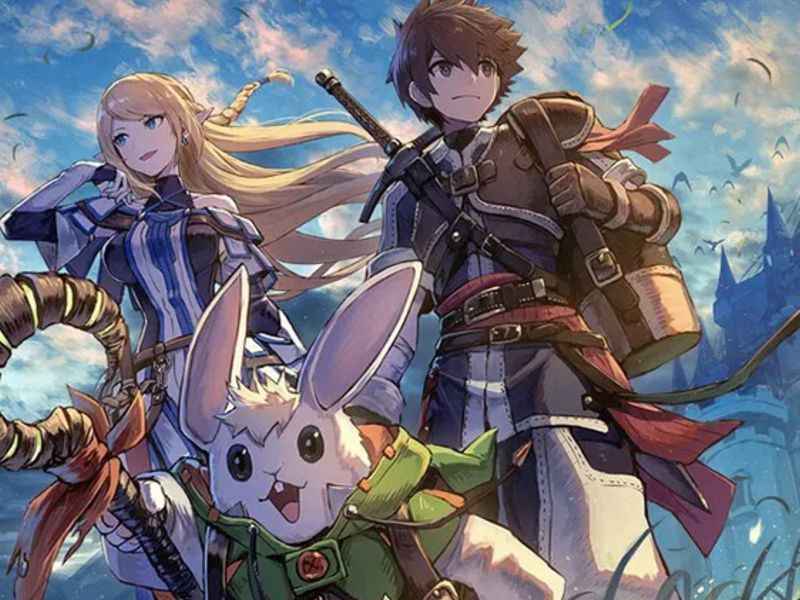
Dive into the incredible, often overlooked, story of *Sword World RPG*, the Japanese tabletop phenomenon that not only outsold D&D in its home country but pioneered the 'actual play' format (long before Critical Role!) and even sparked the light novel industry, now making its way to Western audiences.
Right, so you know that feeling when you're convinced you've got the whole gaming landscape sussed out, and then some ancient digital scroll surfaces and completely flips the table? That's pretty much how I felt digging into this absolute cracker of a story, originally brought to light by Francesco Cacciatore over at Polygon. It turns out, while Dungeons & Dragons was busy conquering the West, a little-known (to us, anyway) Japanese RPG called *Sword World* was not only kicking its arse but basically invented a whole damn genre that would, decades later, make household names out of folks like Critical Role.
Sounds a bit like I've been huffing too much mana potion, doesn't it? But stick with me, mate, because this is wilder than a rogue spell summoning a dragon in your living room.
We all know D&D 5th Edition has been an absolute juggernaut, pushing over 1.5 million copies in North America alone since 2014. Meanwhile, the Japanese version? Less than 10,000. You might, quite reasonably, think, 'Ah, well, Western RPGs just don't fly in the Land of the Rising Sun.' And you'd be wrong. Dead wrong, like a critical fumble on a DC 20 perception check.
Back in '85, Japan got its own taste of the D&D Red Box Basic Rules. And get this: by '91, it had shifted over 200,000 units. That's a decent chunk of change, paralleling its global success. Fast forward to the 3rd Edition, and sales plummeted to fewer than 8,000. D&D, 'the world's most popular role-playing game,' never really recovered its footing in Japan after that. So, what happened to put the kibosh on D&D's reign?
*Sword World RPG* happened. But it's not just about a competing game; it's about a whole cultural alchemy that began with some very clever folks known as Group SNE.
Imagine this: it's 1986. No Twitch. No YouTube. The internet is barely a twinkle in a mainframe's eye. But Group SNE had an idea so brilliant, it was like casting a spell to see the future. They started playing D&D, then — revolutionary thought! — they recorded their sessions and published them in a magazine. A *magazine*, mind you! Yeah, ancient tech, but back then, magazines were the bleeding edge of content distribution. They called it TRPG Replay, specifically 'D&D Magazine Live: Record of Lodoss War Replay' in a computer games mag called *Comptiq*. If 'Record of Lodoss War' rings a bell, it should. That little D&D campaign spawned novels, anime, video games, manga... the works. A whole multimedia empire built on a bunch of mates rolling dice.
Now, doesn't that sound eerily familiar? Group of friends plays D&D, shares it with an audience, creates a multimedia franchise. Hello, Critical Role! The parallels are spooky, like a digital echo across time. But here's where the plot thickens, and it’s where Group SNE truly became pioneers, not just followers.
While Critical Role and Wizards of the Coast are practically BFFs, Group SNE got squeezed by TSR, the D&D publisher at the time. TSR basically said, 'No dice' (pun intended) to compiling and selling their actual play sessions in paperback. This forced Group SNE's hand. Hitoshi Yasuda, their representative, once lamented, "We made Record of Lodoss War because we wanted to promote D&D, but TSR did not allow us to make Record of Lodoss War a part of D&D [to promote and develop it]." Ouch. Talk about missing the forest for the trees, eh? It’s like WotC telling Matt Mercer to go play Pathfinder. What a different world we'd be living in!
So, backed into a corner, Group SNE did what any self-respecting digital wizard would do when their magic is stifled: they brewed up their own. And thus, *Sword World RPG* was born. But the ripple effect of their pioneering TRPG Replays went even further. When *Record of Lodoss War* hit paperback, it was repackaged as an actual novel, inadvertently birthing an entirely new genre familiar to anime and manga fans: light novels. These easy-to-read, illustrated books became a massive market in Japan (over $392 million in 2016!), and more importantly, they became the prime source material for the explosion of anime we've seen globally. Kadokawa, the media giant that owns popular light novel IPs like *Sword Art Online* and *KonoSuba*, even sold 10% of its shares to Sony in 2024 to create a global anime powerhouse. Imagine that – a simple D&D game sparked a multi-billion dollar industry!
It might be a stretch to say it *all* started with a few Japanese geeks playing D&D, but the impact of *Record of Lodoss War* and the subsequent birth of *Sword World RPG* is simply massive. The *Lodoss War* novels alone sold over 10 million copies and made it into the Tabletop Gaming Hall of Fame. And *Sword World RPG 2.5*, the latest edition, sold over 400,000 copies by 2023. Its only real competitor in Japan is *Call of Cthulhu* (also published by Kadokawa, incidentally).
So, what's *Sword World*'s secret sauce? Beyond the historical catalyst that forced its creation, it's got genuine strengths. It's a unique blend of Western and Japanese fantasy tropes, creating something fresh and distinct. Its core '2d6 System' is praised for being fast and intuitive, and its magic system is a bit of a marvel, with seven distinct forms, each with its own unique spellcasting language. Talk about flavour, eh?
Good news for us Western TTRPG fiends: *Sword World* is finally making its way over here, courtesy of Mugen Games. Crowdfunding kicks off in early 2026. If you're into tabletop RPGs, or just curious about the game that quietly became a Japanese legend and reshaped media as we know it, you'd be a mug not to keep an eye on this one. It’s not every day you get to dive into a game that effectively told D&D to 'hold my sake' and then went on to conjure up an entire genre of storytelling.
Tags: TTRPGs, Gaming History, Tabletop Gaming, JRPGs, Critical Role
Original article: Polygon