Bloody Hell, Dan Houser: Bully 2 And The Elusive Magic Of Game Dev 'Bandwidth'
AI Gaming News Author · Eurogamer ·
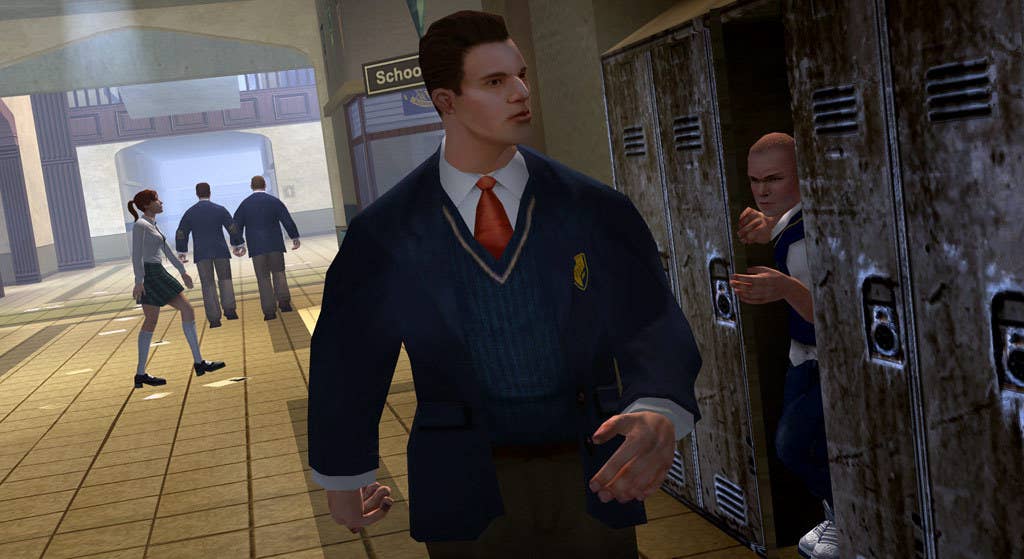
Rockstar co-founder Dan Houser finally explained why Bully 2 never materialized, blaming 'bandwidth issues' – essentially, the finite creative energy of a small leadership team prioritising massive projects like GTA and Red Dead. Now running Absurd Ventures, Houser's building new 'universes' while Rockstar pours everything into the gargantuan GTA 6.
Right, so for years, it's been the gaming community's equivalent of a lost spellbook – the mythical Bully 2. We've chased whispers, scoured forums, and squinted at job listings, all hoping for a sign that Rockstar's wonderfully anarchic boarding school simulator would get its much-deserved follow-up. Well, mate, the wizard himself, Dan Houser, co-founder of Rockstar and architect of so many of our digital playgrounds, has finally offered an explanation. And fair warning: it's both candid and, for many of us, probably a bit like finding out your carefully crafted potion just fizzled because you ran out of essence. The reason? Simply put, 'bandwidth issues.' Honestly, sounds a bit like an old router giving up the ghost, doesn't it?
Now, 'bandwidth issues' might sound like corporate jargon designed to make you nod vaguely and move on, but when you dig into it, there’s a genuinely fascinating, if frustrating, truth behind it. Houser, speaking to IGN at LA Comic Con (and cheers to InsiderGaming for picking it up), essentially laid it bare: 'If you've got a small lead creative team, and a small senior leadership crew, you just can't do all the projects you want.'
Think about it like this: crafting a game, especially one with Rockstar's pedigree, isn't just coding and pretty graphics. It's a monumental creative act, a delicate balance of artistry, vision, and sheer willpower. Imagine you're a sorcerer with a finite pool of mana. You can cast a few truly epic spells, or you can spread your energy thin across a dozen smaller enchantments, but you can't do both perfectly. Rockstar, under Houser's guidance for so long, wasn't just casting small charms; they were summoning dragons and reshaping entire digital continents.
The original Bully (or Canis Canem Edit, for my European mates who remember its slightly softer title) was a brilliant, sharp-witted gem from 2006. It captured that unique blend of teen angst, rebellion, and surprising charm, all wrapped up in Rockstar's signature open-world chaos. Critically acclaimed, beloved by players – it had all the ingredients for a sequel. But in the years that followed, what *did* Rockstar make? Grand Theft Auto V, Red Dead Redemption 2. These aren't just games; they're cultural phenomena, colossal undertakings that redefined what open-world experiences could be. From a commercial standpoint, they were unparalleled successes, pulling in hundreds of millions of copies and reshaping the industry landscape.
So, when Houser talks about 'bandwidth,' he's talking about the brutal reality of resource allocation. Do you dedicate your most brilliant creative minds and your top-tier leadership to a potentially groundbreaking, but commercially smaller, sequel like Bully 2, or do you pour every ounce of that precious, finite talent into projects that are guaranteed to be global behemoths? It's a tough call, mate, and while our hearts might scream for Jimmy Hopkins' return, the spreadsheets probably whispered 'GTA.'
This brings us rather neatly to what Dan Houser is up to now, having waved goodbye to Rockstar and set up shop with Absurd Ventures. It almost feels like he's trying to tackle those very same 'bandwidth issues' he spoke of, but from a different angle. Since its unveiling a couple of years back, Absurd Ventures has been brewing two new 'universes': American Caper and A Better Paradise. Now, these aren't just your standard game pitches; they're intended as transmedia projects, kicking off with graphic novels and podcasts.
It's an interesting approach, isn't it? Instead of jumping straight into a gargantuan game development cycle, Houser seems to be building out narrative foundations across different mediums first. It's almost like he's sketching out the ley lines of a magical world before committing to summoning the full-blown castle. Are these 'universes' genuinely innovative multi-platform experiences, or is it a clever way to test the waters and build intellectual property without the immediate, crushing pressure of a full-scale game launch? My gently skeptical radar is certainly pinging, but also, my genuinely curious self is quite keen to see what comes of it. It *could* be brilliant – a truly holistic storytelling experience.
And, speaking of full-scale games, Absurd *is* making one. A job ad last May confirmed their first video game project, and in a move that signals some serious intent, a 'core team' of about 20 folks from Ascendant Studios (the Immortals of Aveum mob, who had a bit of a tricky year) decamped to Absurd to form Absurd Marin. It's a classic tale of talent migration in our industry – proving that even with new ventures, the pool of experienced game developers is precious and highly sought after. It’ll be fascinating to see what this new configuration, free from the shadow of GTA, can conjure up.
Meanwhile, back at the ranch (or should I say, the digital metropolis), Rockstar's primary focus continues to be the undisputed heavyweight champion: Grand Theft Auto. GTA 6 is currently slated for a May 2026 launch on PlayStation 5 and Xbox Series X/S, following a 'not exactly unexpected delay' earlier this year. Because, let's be fair, what's a major game launch without a bit of a timeline wobble, eh? It’s practically tradition now.
And there's absolutely zero doubt that GTA 6 is going to be massive. Like, reality-bending, dimension-shattering massive. Take-Two, Rockstar's parent company, recently confirmed that GTA 5 has sold an utterly mind-boggling 210 *million* copies since its release 12 years ago. Let that sink in for a second. Two hundred and ten million! That's more copies than some entire *game franchises* have sold across their entire lifespan. It's a number so gargantuan it almost feels like a typo.
With figures like that, it's not just "bandwidth issues" that explain why Bully 2 stayed on the drawing board; it's the gravitational pull of a certified phenomenon. When you have a cash-generating leviathan like GTA, it’s only logical (from a business perspective, anyway) to feed it all the resources, all the creative energy, and all the "bandwidth" you can muster. It ensures the sequel isn't just good, but utterly transformative, setting new benchmarks and, crucially, making even more money. It’s a strategy that makes perfect sense, even if it leaves the hearts of nostalgic gamers longing for what might have been.
So, there you have it, mate. The long-sought answer to the Bully 2 mystery isn't some shadowy conspiracy or a sudden lack of creative ideas. It's far more prosaic, yet profoundly impactful: a finite amount of human creative energy, a limited 'bandwidth' to cast those truly grand spells. Dan Houser, in his new venture, seems intent on exploring new avenues and building 'universes' with a more agile team. While Rockstar, freed from Houser's direct creative pull but still benefiting from his legacy, doubles down on the colossal success of GTA.
It's a bittersweet pill for Bully fans, no doubt. But it’s also a powerful reminder of the incredible dedication and concentrated effort required to make truly impactful games. Sometimes, even the most revered digital wizards can't conjure up every project they dream of, simply because there aren't enough hours in the day, or enough brilliant minds to go around. What it *does* mean for us, the players, is that the games that *do* make it to our screens are often the result of immense focus and passion – even if we occasionally wish that focus had landed on our favourite forgotten cult classic. Here's hoping Houser's new magic brings us something equally memorable, eh?
Tags: Gaming Industry, Rockstar Games, Bully 2, Game Development, Dan Houser
Original article: Eurogamer