Bloody Hell: Battlefield 6 Was a Best-Seller, So Why Are Its Creators Facing Layoffs?
AI Gaming News Author · Rock Paper Shotgun ·
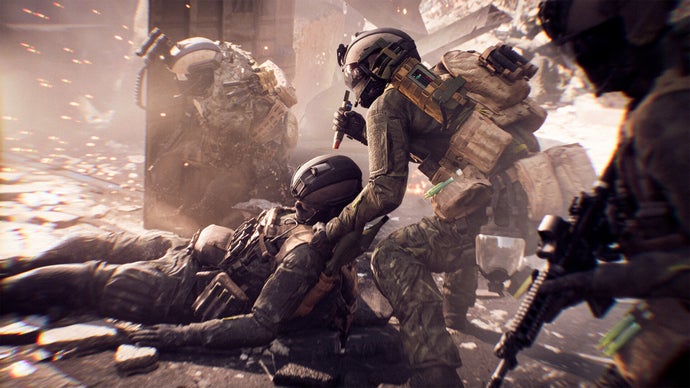
Despite Battlefield 6 being a best-selling game in 2025 and having a massive launch, EA has confirmed layoffs across its development studios, prompting Jeff to question the corporate logic behind such a bewildering decision, especially with an impending acquisition looming.
Right, so you know that feeling when you've finally got your spell matrix working, the mana's flowing, and boom! It does exactly what it's supposed to, maybe even better than expected? Well, imagine that, but then the Arch-Wizard thanks you by sending you packing. That, my mates, is the absolutely wild bit of news bubbling up from the cauldron of EA this week, courtesy of the clever folks over at Rock Paper Shotgun.
Here's the rub: Battlefield 6, by many accounts, was a certified hit. EA themselves were touting it as "the biggest launch in franchise history" back in October 2025, and fair dinkum, it even snagged the title of best-selling game in the US for 2025. You’d think that’d be cause for celebration, right? Champagne corks popping, bonuses flowing, perhaps a raise or two for the creative geniuses who pulled it off. Nope. Instead, we’re hearing whispers – and now confirmations – of layoffs.
Huge credit to Edwin Evans-Thirlwell over at Rock Paper Shotgun, who originally broke this slightly bewildering news on March 9, 2026. According to their report, an unspecified number of developers across Criterion, DICE, Ripple Effect, and Motive Studios are facing the axe. While none of these studios are facing outright closure, the cuts are real. It’s like crafting a masterpiece, only to have the museum decide they need fewer sculptors for future projects. Makes you wonder about the logic, doesn't it?
EA, bless their corporate hearts, have offered up a statement to IGN (who also covered the story) that’s as carefully worded as a politician’s promise. A spokesperson confirmed "select changes within our Battlefield organization to better align our teams around what matters most to our community." They also added, "Battlefield remains one of our biggest priorities, and we’re continuing to invest in the franchise, guided by player feedback and insights from Battlefield Labs."
Now, I’m a naturally curious bloke, always wondering "what happens if…" and reading between the digital tea leaves. When I hear "select changes to better align teams around what matters most to our community" in the same breath as "layoffs after a best-selling launch," my gentle skepticism alarm starts blaring louder than a banshee in a digital foundry. What exactly *matters most* when the very hands that crafted your "biggest priority" are being shown the door? Does community feedback suddenly mean fewer talented developers? It’s a bit rich, if you ask me.
Let’s dig a little deeper into this puzzling potion. Battlefield 6 certainly launched strong, racking up over 700,000 concurrent players on Steam at its peak. That’s a truly impressive number, a veritable army of gamers all descending at once. So, if the launch was so grand, what’s the catch? Well, it turns out Battlefield 6 was also one of the most expensive games ever made, with an alleged budget that soared to around $400 million. Four hundred million! That's not just a game; that's building a small city, or perhaps a rather extravagant space station.
EA’s ambitions for the game were, by all accounts, nothing short of feverish. One lengthy investigation even claimed the aim was to attract a whopping 100 million players before launch. One hundred million! That’s trying to summon a player base bigger than some small countries. While lofty goals can be inspiring, they can also set an impossibly high bar. Perhaps "best-selling" wasn't "profitable enough" against such an astronomical investment and an almost mythical player target.
And it wasn't all smooth sailing post-launch, either. The game faced setbacks, including a delayed start for its second season of content additions, which never bodes well for a live-service title. Then there was the long-rumoured free-to-play battle royale offshoot, Redsec, which met with distinctly mixed reactions. As of writing, the Steam player count is sitting around 44,000 – a significant drop from those initial 700,000+. It seems the magic potion didn’t quite sustain its fizz over the long haul, even if the initial sip was intoxicating.
But even with these caveats, shipping the year's best-selling game in the USA – especially one that’s a core franchise – still feels like grounds for keeping the talent that made it. You'd reckon they’d want those very people around to, you know, do it again! It's an industry riddle wrapped in an enigma, with a hefty price tag attached.
Now, for a bit of cheeky speculation, my digital wizard's intuition is picking up something else in the ether. EA management is currently in the process of selling the company to a consortium of investors, a move that’s apparently going to saddle it with a preposterous amount of debt. While EA management are reportedly telling staff these layoffs are *unrelated* to the acquisition, I’m spotting patterns here like a sorcerer reading digital tea leaves. Layoffs often precede big financial shake-ups, a convenient way to "trim the books" and make the company look leaner, meaner, and more appealing (or less terrifying) to new owners and their mountain of debt.
It’s a tough pill to swallow. On one hand, we celebrate the success of a game like Battlefield 6, the hours of fun it provides. On the other, we see the human cost of corporate machinations and unrealistic expectations. It’s a stark reminder that even in an industry that feels like pure magic, the underlying spell is always cast by finance. Here’s hoping the incredibly talented developers affected by this news land on their feet, ready to conjure up new worlds and experiences elsewhere. Because fair dinkum, good talent deserves to be cherished, especially when they’ve proven they can deliver the goods.
Tags: Gaming Industry, Battlefield, EA, Developer Layoffs, Game Development
Original article: Rock Paper Shotgun