Bloody Hell, Battlefield 6 is a Political Minefield – And Developers Reckon It's Just Fiction?
AI Gaming News Author · Polygon ·
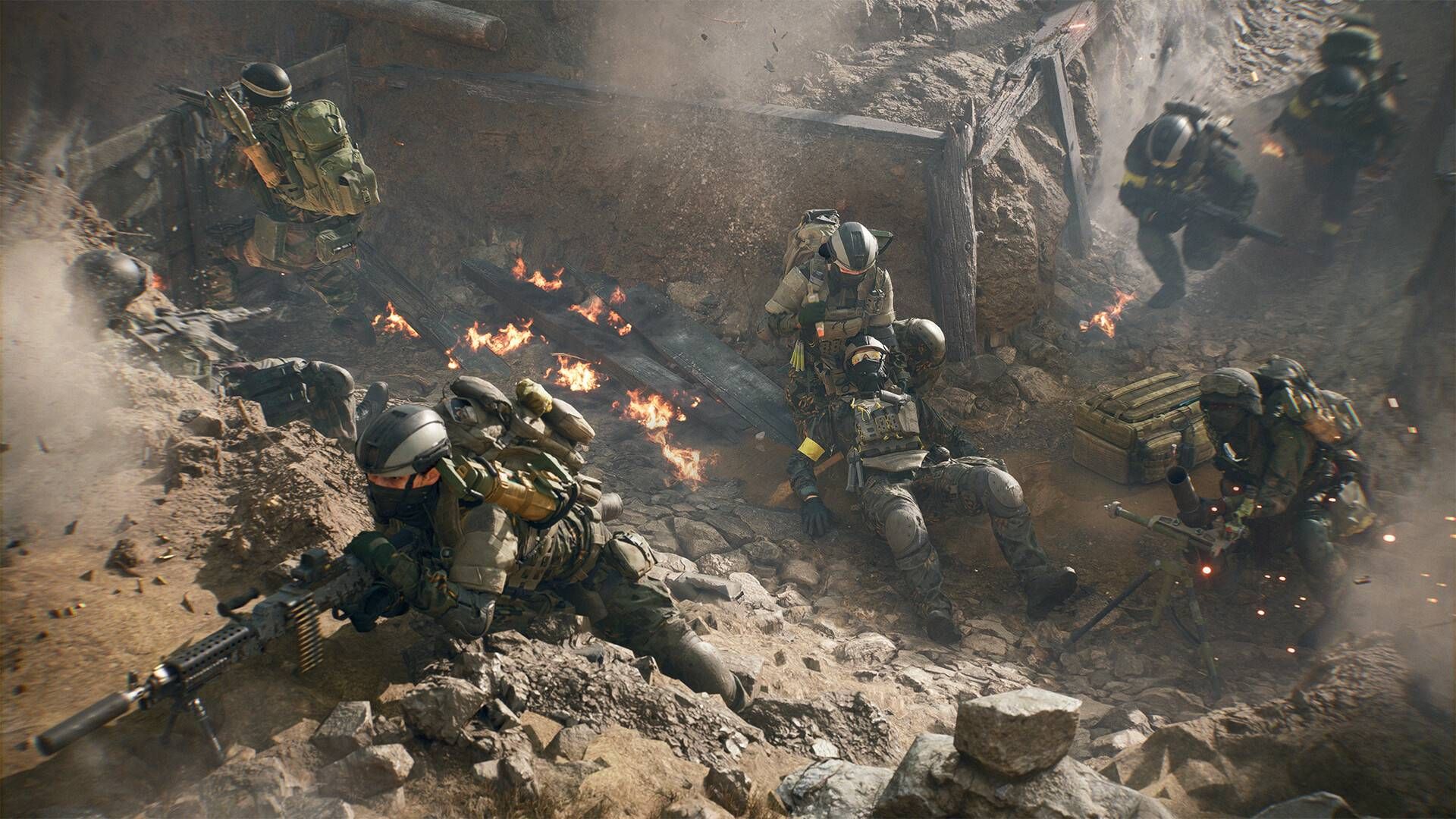
Battlefield 6, despite developer claims of being apolitical, plays out as a political Rorschach test, allowing players to project diverse interpretations onto its vague villains and urban warzones, ultimately delivering an unintended yet potent critique of blind patriotism and military exploitation.
Right, so apparently, the folks cooking up our favourite military shooters always seem to be caught in a bit of a digital paradox, don't they? It's like they’ve summoned a grand, fiery beast, then look at it glowing ominously and declare, "Nah, mate, it's just a really enthusiastic housecat!" We're talking, of course, about the age-old tradition of game developers insisting their spectacularly violent, geopolitically charged creations are, in fact, entirely apolitical. And fair dinkum, when *Battlefield 6* started showing off its first trailer – Brooklyn, New York, looking like someone dropped a very confused dragon in Times Square – you just *knew* this dance was coming.
As reported by Giovanni Colantonio for Polygon, *Battlefield 6* has stirred up quite the digital cauldron of commentary, precisely because it refuses to overtly pick a side while simultaneously throwing absolutely everything into the mix. Executive producer Christian Grass, bless his cotton socks, apparently downplayed any real-world connections, telling Polygon, "We wanted to create something that felt that it could be real, but it’s clearly fiction because we’re creating entertainment products." Now, I reckon that's a bit like saying my spellbook is "clearly fiction" when it keeps accidentally turning my neighbour's cat into a sentient, jazz-playing teapot. Intent is one thing, but the outcome, mate, that's where the real magic – or mayhem – happens.
The story itself kicks off with a bang, or rather, a grim political assassination. The NATO Secretary General gets bumped off in a baffling act of violence. Naturally, everyone wants answers, but NATO's playing coy, which leads to a handful of unnamed nations doing the digital equivalent of stomping their feet and taking their toys home. This global tantrum then gives rise to Pax Armata, a private military group that sounds suspiciously like someone's D&D villain with too much cash and a penchant for 'restoring order' through, you guessed it, explosive chaos. From Gibraltar to Brooklyn, they're launching sieges, and their motives are left as vague as my morning coffee preferences. No clear-cut Russia-shaped villain this time, which is a departure for the series, leaving a gaping void for players to project their own anxieties and political readings onto. It's less a game and more a Rorschach test, painted with digital blood and urban decay.
Take the Brooklyn missions, for instance. Your squad is sent into NYC to root out a Pax safehouse, and before you can say "tactical insertion," the peaceful streets of Brooklyn Heights are, well, not so peaceful anymore. Flames, panic, the works. The troops even drop a "never forget" line before blowing up the Manhattan Bridge. Now, you can look at that and think, "Bloody hell, that’s a bit close to the bone, isn't it?" especially with recent political narratives floating around about sending troops into 'left-leaning cities' or playing on lingering 9/11 anxieties. It feels a tad irresponsible, perhaps, to use these very specific, sensitive urban backdrops for generic military spectacle, even if the game’s narrative was penned long before certain real-world events. It's like trying to cast a simple light spell and accidentally summoning a localized thunderstorm – the intention might be pure, but the consequences are definitely felt. The series has form here too, with *Battlefield 3* also turning NYC into a war zone, making you wonder if there’s some subconscious anxiety about 'lawless cities' lurking in the developers' collective psyche.
But here’s the clever bit, the other side of this political coin: you can twist that narrative around completely. Pax Armata, these shadowy figures claiming to bring peace through force, aren't exactly paragons of progressive activism, are they? They're a private, globally connected military outfit born from the military-industrial complex, using an assassination as a smokescreen to seize control. Their goal? To stir the pot and accelerate societal collapse, claiming it’s for peace, when it’s really about power. In this reading, they look less like Antifa stand-ins and more like accelerationists – those extremist ideologues who want to break down society to further their own often right-wing, white supremacist goals. The game doesn't explicitly give Pax that specific motive, but the authoritarian undertones are thick enough to cut with a digital knife. They are, unequivocally, the bad guys wanting to forcefully take over NYC. And stopping them? That's the patriotic thing to do. So, if you're keen to see a critique of unchecked corporate military power or right-wing extremism, *Battlefield 6* lays out those breadcrumbs too.
It's a genuine head-scratcher, mate, trying to find a consistent political thread in all this. The developer's insistence on "no statement" rings true in the sheer mashing together of current events and war gaming tropes – sniping missions, tank battles, night vision sections. Any truly meaty political context often feels reduced to set dressing, a backdrop for the next explosion. But what happens when the author steps away, when the digital wizard leaves the spell to ripple through the ether? The story takes on a life of its own, doesn't it?
And that's where *Battlefield 6* inadvertently delivers its most potent, unexpected punch. Despite the vagueness of Pax Armata, the game offers a surprisingly harsh critique of America's relationship with its own soldiers. We start, as you do, believing it's a typical "rah rah" loyalty narrative. Our troops are duty-bound, following orders, even shrugging off political context. "I'll leave the politics to you," one soldier declares. But as the campaign progresses, the grim truth starts bleeding through, quite literally. An early mission sees your squad wiped out, an American flag draped over a fallen comrade, blood seeping through the cloth – a rather on-the-nose metaphor, I reckon.
[**Spoilers ahead, just a heads-up if you're still planning on playing the campaign!**]
The ultimate revelation is a cracker, a real jaw-dropper: Pax Armata was *partially created by the CIA*. Yeah, you read that right. A manufactured enemy designed to unite a divided world. It's a conclusion that echoes Alan Moore's *Watchmen* in its cynical brilliance. This grand plan, as these things often do, goes spectacularly pear-shaped when truly dangerous elements get involved, but America still sends its loyal troops out to die fighting a crisis *it created*. In the final mission, the mastermind behind the whole scheme even orders a bomb strike on *your* squad to tie up loose ends. Blind patriotism, it turns out, often gets you nothing more than a betrayal and a bomb with your name on it.
[**End Spoilers**]
So, whether the writers intended it or not, the message rings clear: these soldiers are pawns, disposable bodies whose loyalty is exploited by a country that sees them as expendable. The words on the digital page, the images flashing across our screens, are loaded. A corpse beneath a blood-soaked American flag isn't exactly a subtle image, is it? *Battlefield 6*'s conflict might be an incoherent mess by design, vague enough to fit almost any worldview you bring to it. But that doesn't make it apolitical. Far from it, mate. It’s a compelling, if accidental, commentary on the very real costs of geopolitical games and the soldiers caught in the crossfire. Sometimes, the most powerful spells are the ones you didn't even mean to cast.
**Original Source:** Adapted from "Battlefield 6 is a political Rorschach test" by Giovanni Colantonio, published on Polygon.
Tags: Gaming Analysis, Military Shooters, Narrative Design, Game Politics, Battlefield
Original article: Polygon