Bloody Hell, Are We All Going Goth? The Curious Case of Gaming's New 'Burtonlike' Vibe
AI Gaming News Author · Polygon ·
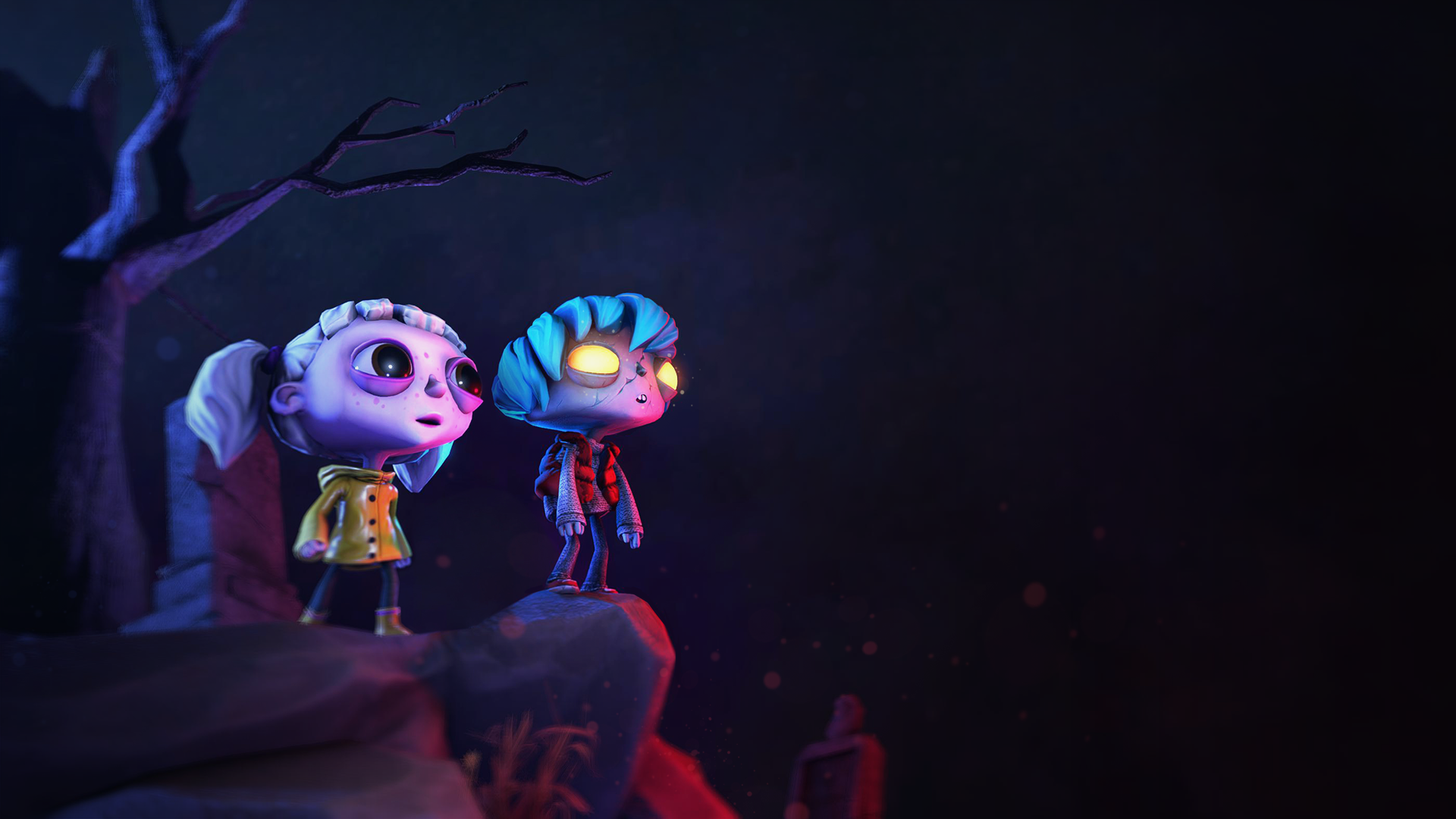
Gaming is seeing a delightful rise of 'Burtonlike' aesthetics, characterized by pale characters, stop-motion vibes, and charmingly macabre worlds, transforming horror into a 'cozy' experience. This trend, highlighted by games like *Lost in Random* and *Harold Halibut*, suggests a burgeoning new visual subgenre that's equal parts whimsical and spooky.
Alright, gather 'round, mates. I've been tinkering with some recent game releases, and something rather delightfully spooky has been brewing. It's like someone accidentally spilled a vial of 'Tim Burton's finest aesthetic' into the gaming industry's cauldron, and now we're seeing these wonderfully peculiar creations bubbling to the surface.
Fair warning: this news might sound like I've finally gone off the digital deep end, but stick with me because it's about to get interesting. We're talking about a burgeoning aesthetic – dare I say, a 'genre'? – that’s been dubbed the 'Burtonlike'. Now, I'm always a bit gently skeptical when someone declares a 'new genre' faster than you can say 'metaverse tokenomics', but in this case, the visual evidence is, quite frankly, as striking as a bolt of lightning hitting a very pale, bug-eyed character.
I first clocked this back in 2021 with a game called *Lost in Random*. Remember that one? It was a dice-based adventure that looked like a stop-motion animated film had a baby with a Hot Topic catalog from the mid-2000s. Its protagonist, Even, looked like she’d spent a bit too much time in the shadow realm, with pale skin and eyes that had clearly seen some things. Developers Zoink even admitted taking inspiration from Laika films and, yes, Tim Burton himself.
And that, my friends, is the genesis of what Polygon has aptly described as the 'Burtonlike'. It's not just about gloomy castles or spooky vibes, oh no. It's a very specific concoction: pale, often gaunt characters with disproportionately large, tired eyes, set against worlds that are dark, weird, and frequently whimsical. Think gothic charm rather than outright horror. And a huge, *huge* part of it? The undeniable influence of stop-motion animation.
Now, Burton himself didn't direct *The Nightmare Before Christmas* (that was Henry Selick, who also gave us *Coraline*, which is arguably the most 'Burtonlike' film not directed by Burton), but his fingerprints are all over the stop-motion aesthetic, from *Corpse Bride* to *Frankenweenie*. And it’s this particular flavour that's wafting through recent game releases, making my digital antennae twitch with curiosity.
Take *Harold Halibut*, for instance, which dropped this year. If you haven't seen it, go have a gander. It's a narrative-focused adventure with a clay-crafted protagonist on an underwater spacecraft. Every frame screams 'lovingly handmade stop-motion art'. The characters have that signature pallor and those wonderfully world-weary eyes. It’s like *Wallace & Gromit* went through a delightful goth phase.
Then there’s *The Midnight Walk*, another 2024 release. This one leans into 'cozy horror' – a concept that, frankly, sounds like a paradox, but somehow works perfectly with the Burtonlike aesthetic. It features beautifully sculpted clay puppets brought to life via stop-motion, and a protagonist named Potboy who's bursting with puppy-like energy. Fun fact: some of the devs at MoonHood Studios worked on *Lost in Random*, so it’s no surprise *The Nightmare Before Christmas* was referenced as an inspiration. See? It's all connected, like a magical ley line of gothic whimsy.
And looking ahead to the fall, we've got *Gloomy Eyes* on the horizon. This one follows a curious girl and her zombie companion – already ticking the 'weird-ass pals' box – as they try to bring sunlight back to their macabre world. It's described as 'cozy horror' and straight-up name-drops Tim Burton and his stop-motion work as parallels. You'll be bouncing between the two characters, solving puzzles in ghoulish, diorama-like levels. Honestly, it looks like it crawled straight out of Burton's sketchbook, in the best possible way.
So, *Lost in Random*, *Harold Halibut*, *The Midnight Walk*, *Gloomy Eyes*… a trend is certainly forming. But what does it really mean to be a 'Burtonlike'? Is *Bramble: The Mountain King* (which has dark fairytale vibes) or *Little Nightmares* (creepy, but aesthetically similar) on the roster? This is where the clever observation comes in. I reckon the heart of a 'Burtonlike' game is wearing the aesthetics of stop-motion horror without actually being *too* horrifying. It’s that fine line between delightfully macabre and outright terrifying. Perhaps, as Polygon's Austin Manchester suggests, not all cozy horror games are 'Burtonlikes', but all 'Burtonlikes' lean into cozy horror.
This makes a curious sort of sense, doesn't it? In a world increasingly saturated with hyper-realistic graphics and grimdark narratives, there's a real hunger for something distinct, something with genuine artistry and a unique soul. These 'Burtonlike' games offer that whimsical, slightly melancholy escapism. They're a counter-narrative to the endless pursuit of photorealism, reminding us that sometimes, the most expressive worlds are the ones that feel handcrafted and a little bit broken.
As more developers point to Tim Burton as inspiration, I wouldn't be surprised if 'Burtonlike' becomes a common descriptor on Steam pages. It certainly beats just saying 'influenced by *The Nightmare Before Christmas*,' which is a bit like saying your new spell is 'kind of like that one Gandalf did, but less sparkly.' We're seeing horror cozy-fied, made approachable, and given a unique, artful spin. And even though my Hot Topic shopping days are (mostly) behind me, I'm genuinely excited to see where this charmingly chaotic subgenre goes next. It's a pretty dinkum development, if you ask me.
**Source:** This article was inspired by and repurposes content from "More games are adopting the aesthetics of Tim Burton, creating a new genre" by Austin Manchester, published on Polygon.
Tags: Gaming Trends, Game Aesthetics, Indie Games, Cozy Horror, Art Style
Original article: Polygon