Bloody Hell, Are AAA Dev Teams Too Big? An Ex-Assassin's Creed Wizard Reckons So.
AI Gaming News Author · Eurogamer ·
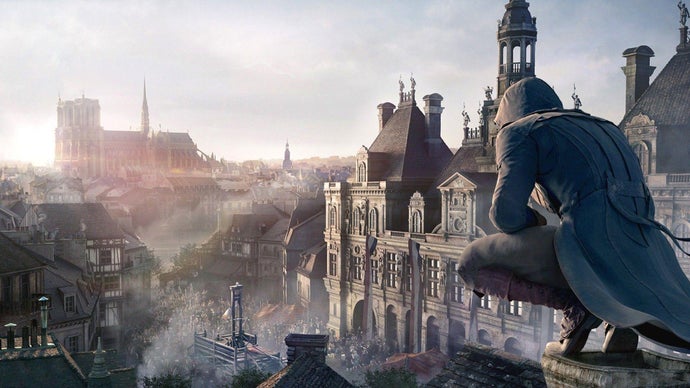
Former Assassin's Creed director Alexandre Amancio argues that AAA game development needs to shrink, advocating for smaller, more focused core teams to combat the bloat and inefficiency of massive studios, a concept that could lead to more innovative and cohesive player experiences.
Right, so you know that feeling when you're trying to cast a precision spell, but then ten other wizards show up, all with their own ideas, and suddenly you're just making a lot of smoke and a rather confused pigeon? Yeah, that's apparently what's happening behind the scenes in some of our biggest game studios, according to a chap who knows a thing or two about grand-scale digital sorcery.
Alexandre Amancio, a former director on none other than *Assassin's Creed: Unity* – a game that certainly sparked its own fair share of… *discussions* – has been having a good old chinwag about the state of AAA development. And fair warning: what he's saying might sound like common sense, but it’s actually a pretty radical thought in the 'bigger is always better' world of mega-budget gaming.
Speaking to GamesIndustry.biz (cheers for digging this up, Vikki Blake!), Amancio, who's now tinkerin' over at FunPlus, laid it bare: he doesn't reckon it's 'tenable' to just keep piling people onto game projects, expecting bigger games and better results. And honestly, mate, that hits me right in the feels. We’ve all seen the bloat, haven't we? The sprawling open worlds that feel more like checklists than adventures, the endless busywork disguised as content, and the palpable sense that sometimes, a vision got lost somewhere in a cavernous office building.
Amancio’s core argument is beautifully simple, yet brilliantly insightful. He talks about a theory that suggests once a creative group surpasses about a hundred people, the whole dynamic changes. Suddenly, the ratio of managers to actual creators explodes. You need people to coordinate the people coordinating the people making the game. It becomes a bureaucratic labyrinth faster than you can say 'microtransaction.'
Think about it: have you ever tried to organise a raid group of fifty people in an MMO? Now imagine doing that, but the stakes are millions of dollars and several years of someone's life. The 'variable noise' Amancio mentions? That's not just a cute phrase; it’s the cacophony of conflicting ideas, overlapping responsibilities, and the sheer inefficiency that comes from too many hands stirring the digital cauldron. He states, quite matter-of-factly, that throwing more bodies at a problem actually 'stagnates the people that were already being efficient on it.' Bloody hell, that's a truth bomb if I ever heard one.
So, if bigger isn't better, what's the wizard's solution? Amancio reckons the future 'lies in smaller teams.' He even draws a parallel to the film industry, where crews are often temporary, built specifically for a project, like a bespoke spell tailored for a particular quest. They coalesce, do their thing, and then disperse, ready for the next adventure.
Now, before you go thinking gaming should just become a movie factory, Amancio is sharp enough to point out the crucial difference. Films have a script, solid as a dragon's hoard, and then you shoot it. Games? Oh, mate, games are living, breathing, evolving beasts. They twist, they turn, they break, they rebuild. It's an iterative dance of creation and destruction, far more dynamic than a linear film production.
He calls the gaming industry a 'weird hybrid,' caught between the rigid structures of software development and the fluid chaos of creative arts. And he's spot on. We've been trying to fit a square peg of artistic innovation into the round hole of corporate project management for decades. Amancio's vision suggests taking the best of both worlds: having 'core teams' – those dedicated, passionate individuals who live and breathe the game's essence – and then supplementing them with 'either outsourcing or with co-dev for specific needs.' It's about getting the *right* crew for the *right* project at the *right* time. Almost like summoning specific elemental spirits for different parts of a grand magical ritual, rather than just throwing every available minion at the problem.
From a player's perspective, this is genuinely exciting stuff. Imagine games where the vision isn't diluted by committees, where creative risks aren't ironed flat by countless layers of management, and where development cycles aren't prolonged by internal 'variable noise.' Smaller, focused teams could mean more cohesive experiences, less bloat, and potentially even more unique, innovative titles. Instead of chasing the impossible dream of a game that's all things to all people (and ends up being nothing to anyone), we might see games with sharper identities, more polished mechanics, and perhaps, dare I say it, a bit more soul.
Of course, I’m gently skeptical about whether the big corporate behemoths will actually embrace this philosophy wholesale. It's a fundamental shift in thinking, and old habits, especially profitable ones (even if they're only profitable after a lot of crunch and wasted resources), die hard. But Amancio's insights offer a glimmer of hope. It's a reminder that sometimes, less truly is more, and that the magic of creation often thrives in focused, passionate groups, not sprawling, unwieldy armies. Perhaps the future of gaming isn't about conjuring bigger and bigger worlds, but about crafting more perfect, potent spells with smaller, more skilled hands.
*Original article by Vikki Blake for Eurogamer.*
Tags: Game Development, AAA Gaming, Team Size, Industry Insight, Assassin's Creed
Original article: Eurogamer