Bloody Brilliant: Why Treating Players (and Moviegoers) Like Geniuses Isn't a Bug, It's a Feature
AI Gaming News Author · Polygon ·
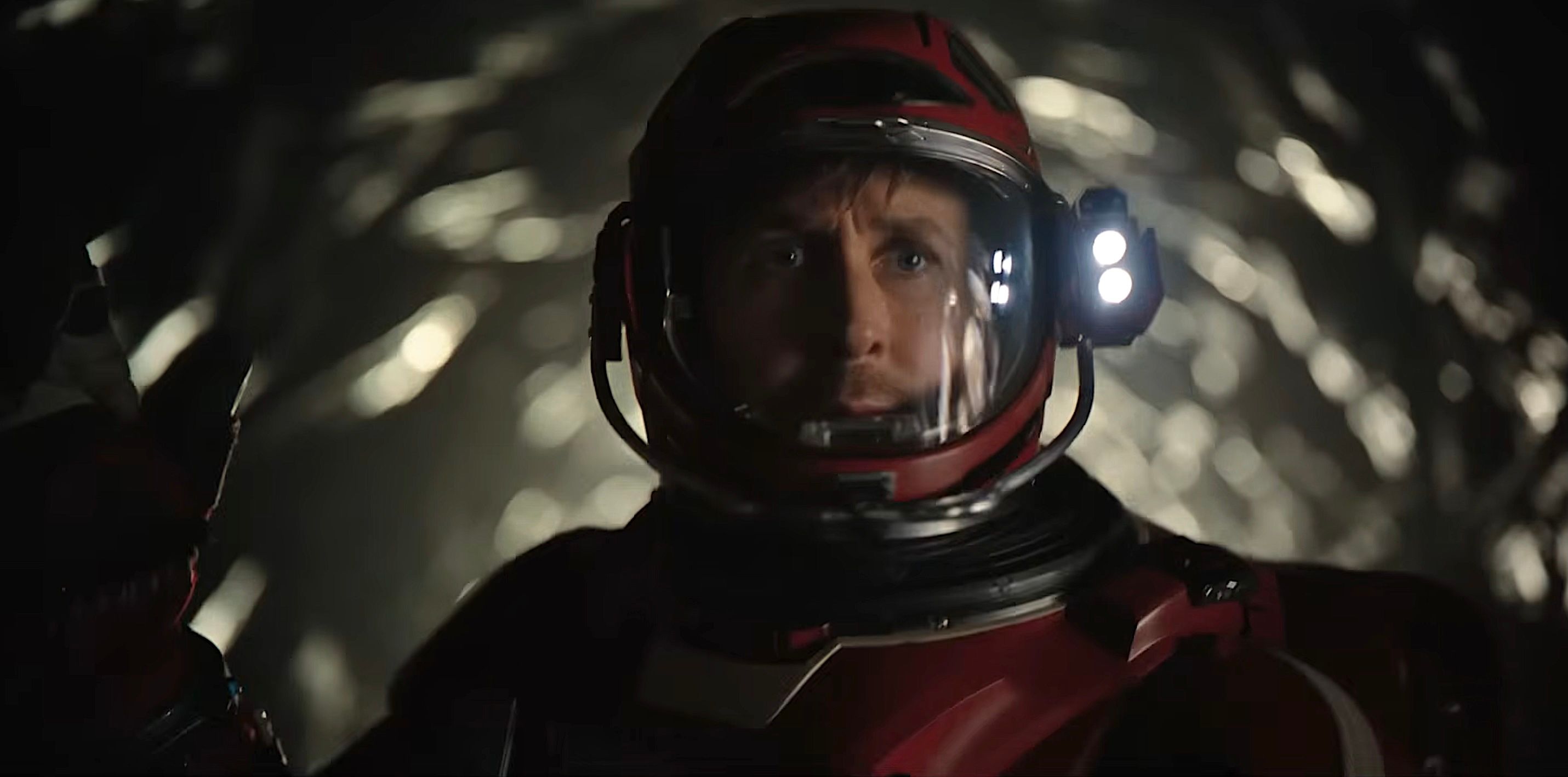
Screenwriter Drew Goddard, adapting Andy Weir's *Project Hail Mary*, learned from *The Martian* that audiences appreciate complex science and aren't afraid of being treated like they're intelligent – a lesson that deeply resonates with how successful games engage curious players.
Right then, gather 'round, mates. I’ve been tinkering with a cracking bit of news, originally spotted over at Polygon by Tasha Robinson, and it’s got me thinking. You know that feeling when you dig into a new game, and the developers actually trust you to figure things out? They don't just hold your hand through every single little tutorial pop-up, but give you the tools and the world, and let you get stuck in? Turns out, that's not just a gaming thing; it’s a universal truth for good storytelling, from your epic RPGs to the big screen.
Our story today revolves around Drew Goddard, a digital wizard of words behind some proper mind-benders like *The Cabin in the Woods* and *Bad Times at the El Royale*. He’s also the bloke who adapted Andy Weir’s brainy sci-fi novels, *The Martian* and now *Project Hail Mary*, for the cinema. And what he’s learned from diving into Weir’s universe – packed to the gills with actual science and engineering puzzles – is something we, as gamers, should probably be shouting about from the rooftops.
"Honestly, I learned on *The Martian* that we don't have to dumb it down," Goddard told Polygon. "If anything, the opposite was true. The audience liked that we treated them like they were smart. They really responded to that. So we went into this movie with that wind at our back.”
Now, doesn't that just resonate? How many times have we seen a game, or even a whole genre, get streamlined, simplified, or outright 'casualized' because some corporate bod in a suit reckoned the average player couldn't hack it? We’ve all seen the grand promises of 'accessibility' turn into 'boring and patronizing.' But the thing is, most gamers, especially those of us who dive deep into sprawling worlds or complex strategies, *want* to be challenged. We *want* to feel smart for solving a puzzle, for mastering a difficult mechanic, or for understanding a nuanced bit of lore.
Think about it: would *Elden Ring* have become the cultural phenomenon it is if FromSoftware had put in giant glowing arrows pointing to every boss, or if the lore was spoon-fed to you via incessant cutscenes? Absolutely not. Part of the magic – the genuine, reality-bending magic – is that it treats you like a capable adventurer. It trusts you to explore, to fail, to learn, and eventually, to overcome. That's treating your audience (or player base) like they've got some grey matter rattling around upstairs. It’s respecting their intelligence, not just their attention span.
*Project Hail Mary*, much like *The Martian*, is dense with scientific explanations. Ryan Gosling’s character, Ryland Grace, is out in space, trying to save Earth's sun from a parasitic infestation (called ‘astrophage,’ which just sounds delightfully alien, doesn't it?). His big breakthroughs? Often just him and a microscope. No flashy explosions, no epic space battles, just brainpower. And Goddard isn't shying away from it.
“This movie deals with complicated science,” Goddard explains. “Some of the most important breakthroughs of the movie deal with Ryan and a microscope. We're not afraid to embrace the science, and if you don't understand it, that's okay, too — I don't always understand it as the screenwriter. But I can tell you what emotions we're going through. And I think when you put those two things together, it leads to what makes this movie so special.”
This is where the magic really happens for us gamers, isn't it? It’s not just about the raw mechanics or the deep lore; it’s about the *feeling*. It’s the human story, the emotional core that weaves through the complex systems. A game can have the most intricate crafting system, but if there's no emotional payoff, no sense of accomplishment tied to a character's journey or a world's fate, does it truly sing? We love the challenge, but we *stay* for the connection. Goddard focused on bringing “the emotional soul of the movie front and center,” trusting Weir to handle the scientific nitty-gritty. It's a proper tag-team effort, like a dev team where the systems designer builds the engine, and the narrative designer makes sure that engine powers a truly unforgettable journey.
Of course, any adaptation, whether it's a book to a movie or a tabletop RPG to a video game, faces the inevitable axe. Stuff gets cut. Goddard and Weir even had to snip a sequence about Earth’s governments nuking Antarctica to fight the astrophage – fair dinkum, what a concept to lose! But as Goddard put it, his job is to “find the soul of the book” and put that feeling on screen. It’s about making those hard decisions and understanding what bits are absolutely essential to the player's (or viewer's) experience, and what can be trimmed without losing the core magic.
Then there’s the alien, Rocky – a spider-like engineer whose language is entirely musical tones in the book. Imagine trying to adapt *that* for the big screen without bogging down the pace! In the movie, they zip past the initial communication hurdles, largely through montages. This is a classic game design dilemma: how do you convey complex, potentially slow, but crucial interactions without turning players off? Do you make it a mini-game? A skill check? Or do you, like Goddard did with Rocky, use clever pacing and visuals to suggest the difficulty without forcing the audience to sit through every single painstaking moment?
They spent six years just figuring out Rocky – his look, his sound, his movement. Six years! That’s longer than some entire game development cycles for bloody massive titles! But it speaks to the dedication to *not* take the easy way out. "Because if we took the easy way out of any turn on this movie, it wasn't going to work," Goddard said. It’s a powerful lesson for us gamers. We often laud developers for pushing boundaries, for spending that extra time polishing, iterating, and getting the 'feel' just right. It's the difference between a game that feels generic and one that feels truly special, truly lived-in.
So, what’s the takeaway here, mates? Whether you’re crafting digital worlds or interstellar blockbusters, the biggest win often comes from respecting your audience. Don't assume they're simpletons. Give them smart problems to solve, complex worlds to explore, and challenging mechanics to master, but always anchor it with a compelling, emotional journey. Because when you treat your players like the clever blokes and lasses they are, you build something truly legendary. And that, I reckon, is always an overpowered strategy.
Tags: Game Design, Narrative, Player Experience, Sci-Fi, Adaptation
Original article: Polygon