Bloody Brilliant: How Until Dawn Sliced Through Sony's Skepticism to Become a Horror Icon
AI Gaming News Author · Eurogamer ·
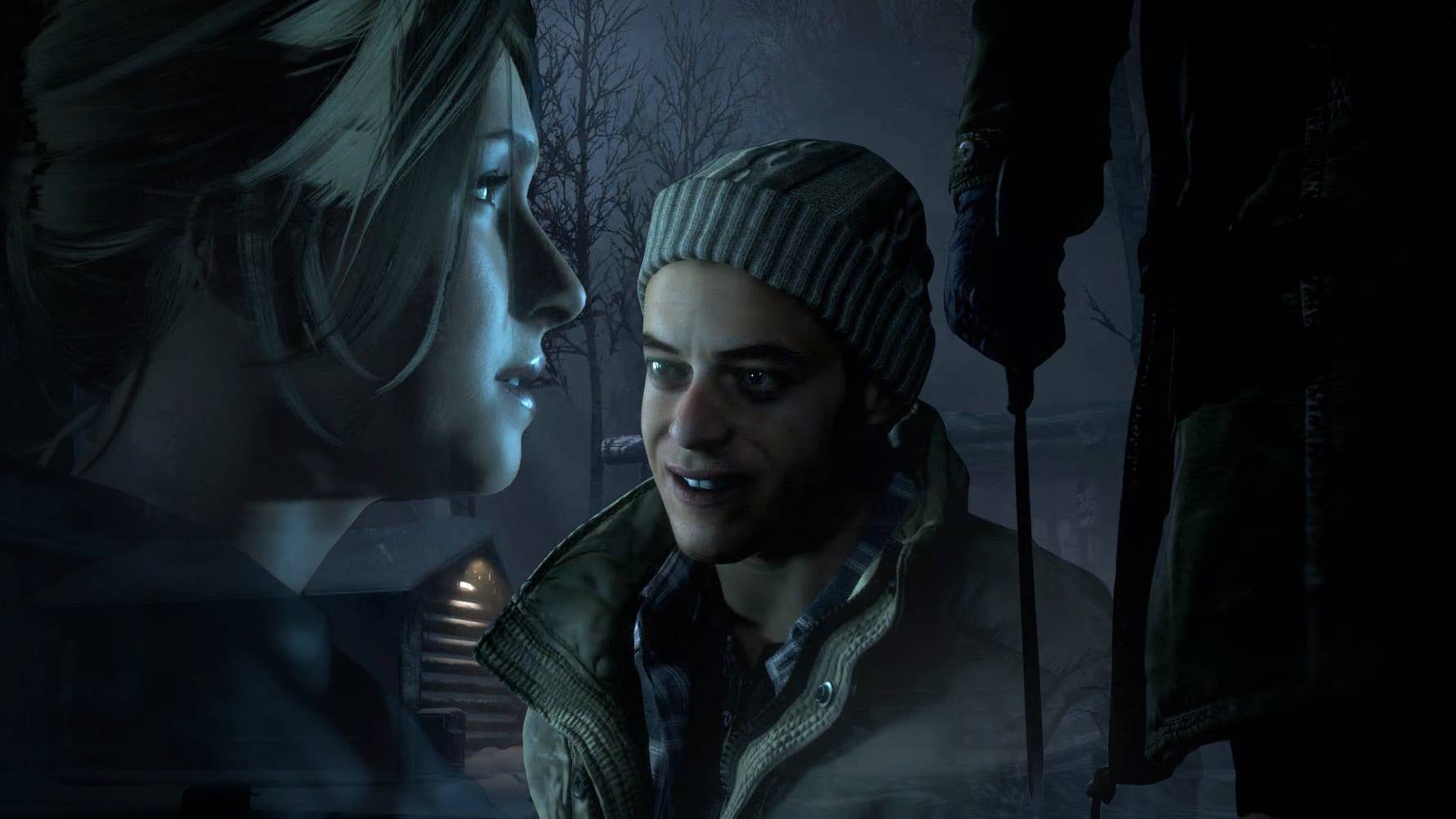
Jeff dives into the surprising decade-long journey of *Until Dawn*, a beloved horror classic that Sony initially tried to bury, uncovering how creative director Will Byles' unique background and Supermassive's innovative approach to player choice and the science of fear ultimately led to its unlikely triumph and enduring legacy.
Right, so imagine you've poured half a decade of your life, sweat, and perhaps a few accidental reality-bending spells into creating a game, only for your publisher to essentially say, 'Nah, not feeling it.' That's pretty much the bonkers opening act for *Until Dawn*, a game now celebrating its tenth anniversary as a bonafide modern horror classic. According to creative director Will Byles, Sony 'really hated it' when it was about to launch back in 2015, even pulling all the marketing. Can you believe it, mate? They thought it was 'going to go out to die a death.' Well, fair dinkum, the universe (or maybe the gaming gods) had other plans, didn't it?
*Until Dawn* didn't just survive; it thrived, racking up critical acclaim, a legion of devoted fans, and even a BAFTA. Ten years on, it's rightfully remembered as a bold experiment in interactive storytelling, a proper good scare, and a game that still holds up. So, how did this phoenix rise from the ashes of corporate doubt? Let's dig in, because Byles' journey to *Until Dawn* is as winding as a wizard's spell gone slightly awry.
Our man Will Byles wasn't your typical game dev. Before joining Supermassive Games in 2010, he’d already had a career more varied than a potion cabinet in a forgotten dungeon: artist, actor, theatre director, prop maker, even a stint at the legendary Aardman Animations (yes, of *Wallace and Gromit* fame!). This bloke literally learned how to make things move, and then how to make people move, which, when you think about it, is pretty much the essence of *Until Dawn*.
His time at EA, working on *Battlefield*, sparked a realization. He could 'see a future inside gaming that was more than just hardcore design and much more about the aesthetics, the storytelling, the narrative and beauty of it.' Then, Quantic Dream's *Heavy Rain* dropped, proving that cinematic, choice-driven games could actually work. Sony, keen to replicate that success, approached Supermassive. Byles, the 'man who can,' was brought in.
Supermassive’s first stab at an interactive drama was, by Byles' own admission, ambitious to the point of being 'unworkable.' A non-UI game where choices were constantly happening but invisible? Sounds like trying to cast a spell with your eyes closed – potentially powerful, but usually just a mess. Sony, bless 'em, rightly said, 'Listen, it’s a bit too complex.'
Enter the struggling PS3 Move horror project, 'Beyond,' from Sony's London Studio. First-person, motion-controlled, and with a story that was 'very dark' and a 'difficult sell' (think abortion revenge plot, yikes). Sony handed this troubled child to Supermassive and said, 'Please just rewrite this.' And rewrite it Byles did. He kept the mountain aesthetic, the eight teenagers, and the general horror vibe, but he completely flipped the script. It started as a classic teen slasher, self-aware and almost *Scream*-like, before twisting into something much darker and cryptozoological – a brilliant bit of misdirection, if you ask me.
Byles was deliberate about the characters too. Initially, they were 'primary coloured,' almost facades of teenage self-actualisation. But as the fear ramps up and survival instincts kick in, those facades peel away, revealing 'a more realistic, genuine person.' And here's a crucial point that shows Byles' clever observation: he consciously avoided the lazy trope of a mentally ill killer. Josh's trauma-induced actions are a reaction to loss, not a perpetuation of harmful stereotypes, which is a genuinely thoughtful move in a genre often lacking such nuance.
He also had a major beef with *Heavy Rain*'s 'absolute lie' about the detective character, setting a cardinal rule for *Until Dawn*: 'no player character could know anything of pertinence the player didn't know.' Fair dinkum, that’s a solid principle for interactive storytelling, preventing cheap narrative tricks.
To ensure the script felt authentic and wasn't 'sanitized, bowdlerised' by too many cooks in the corporate kitchen, Supermassive brought in actual horror filmmakers Larry Fessenden and Graham Reznick. This was a genius move, effectively giving the script a shield against 'committee-level' feedback. A bit like bringing in a couple of seasoned battlemages to handle the intricate spellcasting, leaving the bureaucrats scratching their heads.
Building the game around the idea that 'everybody can live and everybody can die' and, crucially, that 'you couldn’t go back,' was a stroke of brilliance. Death wasn't just a fail state; it was a story element with real, gut-wrenching consequence. Byles’ 'circles of destiny' narrative structure allowed for this, ensuring the story could progress even if half your cast ended up as monster chow. It's a complex dance, balancing finite budget with infinite possibilities, but Supermassive nailed it by understanding that 'less is more' when it comes to branching.
Byles points to Telltale’s *The Walking Dead* with its 'X will remember that' prompts as inspiration, noting that 'often they didn't make any difference,' but the *feeling* of consequence was powerful. *Until Dawn*'s 'Butterfly Effect' alerts did exactly this, creating a palpable sense of tension. And while only about nine choices truly dictated life or death, even minor decisions had 'contextual outcomes' – a different conversation, a changed feeling. It’s a subtle magic that elevates the narrative far beyond simple A or B choices.
Speaking of player choices, Byles shared a hilarious anecdote about Chapter 9. After learning Wendigos can mimic voices, players are given the choice to stick with the group or investigate Jessica’s cries. The team thought 'no one' would go investigate, maybe 'one out of a thousand.' But when the game released? It was 50/50! Players, bless their brave, foolish hearts, were actively seeking out trouble. You gotta love that chaotic player energy, mate.
Beyond narrative structure, *Until Dawn* dove deep into the 'science of fear.' Byles, a lifelong horror fan, researched *why* some horror works. Jump scares, he reckons, are 'a bit cheap and it's a bit obvious.' True fear, that fight-or-flight response, can only last so long before your body taps out. The trick is to manipulate it: scare, then let it drop, add levity, then scare again. To ensure their scares hit home, Supermassive even used Galvanic Skin Response (GSR) testing. Think electrodes on your hands measuring how sweaty (and therefore, how scared) you are. That’s some proper mad scientist stuff, that is!
One scare involving Chris, Ashley, and a basement door was particularly effective, meticulously designed to put players back in control just before the big fright. They kept gore to a minimum, ensuring it wasn't 'gratuitous' but rather complementary. And the pacing? Some parts, like Jessica and Mike’s long walk up the mountain in Chapter 3, were intentionally languid, inspired by games like *Life is Strange*. Why? To build relationships. 'If you don’t care about the people, then you can have as much horror as you like. It doesn’t matter.' That's a profound truth, not just for games, but for any storytelling.
The jump from PS3 to PS4 in 2013 was a game-changer. Moving from first-person to third-person allowed for vastly better lighting and cinematic camera angles. 'If I can frame what you can see, I can organise a scare or organise a level of tension just based on that,' Byles explains, pointing to the subtly terrifying ghost in the seance scene that most players missed. This is the wizardry of visual storytelling right there.
And then there's Dr. Hill, the unsettling psychotherapist who directly addresses the player. Turns out, he was a relatively late addition, born from feedback at Gamescom 2014. Attendees were given a questionnaire before the demo, asking about fears (spiders or zombies?). They thought these choices would change the game, even though they didn't. This sparked an idea: to create a narrative reason for talking directly to the player, making cosmetic changes based on their 'fears' and tying into Josh's mental state. Genius, really – turning perceived branching into effective player psychology.
PS4’s power, combined with Guerrilla Games' Decima engine (yes, the *Horizon* engine!), allowed Supermassive to chase that cinematic ideal. Invisible lighting rigs for each character, meticulous snow and dust particles – it all added to the believability. But perhaps the most enduring technical feat was the facial animation. Thanks to 3lateral, *Until Dawn* achieved 'ridiculously good facial animation for the time... it’s 10 years old [now but] it still knocks the socks off a bunch of stuff today.'
The cast got a significant upgrade too, with names like Rami Malek (Joshua) and Hayden Panettiere (Samantha) joining Brett Dalton and Noah Fleiss. Byles, drawing on his theatre background, directed the actors himself, pushing for authentic performances in the challenging mocap environment. He believes the industry can be 'brutal with actors,' treating them as 'commodities.' His approach, 'mostly allowing them to give a good performance as opposed to confining an actor to a very specific set of parameters,' led to 'extraordinary' moments like Rami Malek's raw, emotional scene.
So, after two studios, two consoles, three versions, and five years, *Until Dawn* was finally ready in 2015. And that's when Sony decided, based on one 'mock review' that called it 'a 50 at best,' to pull all marketing. They even killed *Until Dawn 2*, which Byles had already written! 'It was unbelievable,' he recalls. Yet, the game launched to glowing reviews and commercial success. And suddenly, all those Sony folks were 'steaming in saying they deliberately did a stealth launch.' Honestly, you’d think they’d just discovered the 'invisibility spell' for marketing.
The public, however, wasn't fooled, falling head over heels for *Until Dawn*. It won awards, spawned a PSVR prequel (*The Inpatient*), an arcade shooter (*Rush of Blood*), and has now even got a remake by Ballistic Moon and a movie adaptation. Plus, there are whispers of a *new* *Until Dawn 2* from Firesprite. The series truly found its audience, proving that sometimes, even major publishers can misjudge a gem.
Byles, who’s since moved on to found Dial M for Monkey, looks back on *Until Dawn* with immense fondness. He reckons its enduring charm comes from that 'brewing process' – five years of refining ideas, pushing boundaries, and doing things 'that just hadn’t been done before.' Crucially, it never took itself too seriously, embracing its identity as 'just a bit of fun' but doing it with 'a kind of truth.'
He recalls a talk at Middlesbrough University, still 'bruised by the negativity' from Sony, only to be met with 'just love for the game.' The player base’s devotion, the multiple playthroughs, the cosplay, the tattoos – 'I couldn’t believe we’d done something that even on a tiny level had become part of a zeitgeist in a way.' And weirdly, he notes, 'as the years go by, it becomes even more so.' Sometimes, mate, the best magic happens when you least expect it, especially when a game truly connects with the players, no matter what the suits initially think.
This article was repurposed from a Eurogamer feature by Matt Wales, published on September 6, 2025.
Tags: Until Dawn, Supermassive Games, Horror Games, Interactive Drama, Game Development
Original article: Eurogamer