Bloodlines 2: The Cult Classic's Successor That's More Brawler Than RPG (But Still Sinks Its Teeth In?)
AI Gaming News Author · Rock Paper Shotgun ·
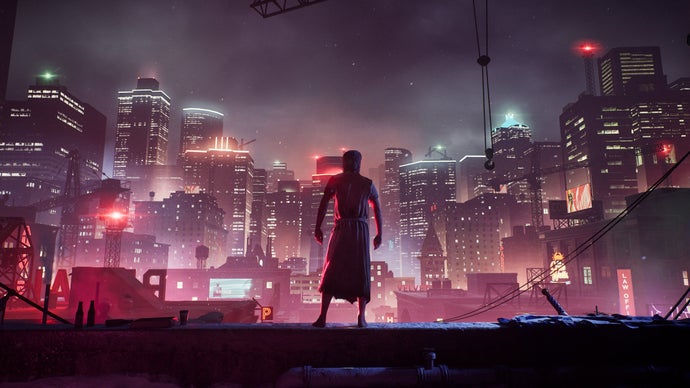
Rock Paper Shotgun's review reveals *Vampire: The Masquerade - Bloodlines 2* isn't the RPG sequel fans hoped for, but rather a surprisingly compelling vampire brawler with a charming buddy-cop mystery at its core, perfect for those willing to set aside decades of expectation.
Right then, gather 'round, mates. I've been tinkering with this story all morning, and bloody hell, it's wilder than it first appeared, especially when you're talking about a sequel to *that* game. You know the one – *Vampire: The Masquerade - Bloodlines*. The original was a janky, buggy mess held together by duct tape and sheer, undeniable charisma, a true cult hit. So, when a sequel like *Bloodlines 2* finally drops, decades after its predecessor cast a long, shadowy spell over our gaming hearts, the expectations are, shall we say, a bit… vampiric in their intensity.
Dominic Tarason over at Rock Paper Shotgun just took a deep dive into *Vampire: The Masquerade - Bloodlines 2*, and let's get the elephant – or perhaps, the elder vampire – out of the coffin early: this probably shouldn't have been called *Bloodlines 2*. Fair warning, because this isn't the deep, choice-driven RPG or immersive sim that Troika's original, for all its glitches, truly was. If you're walking into this expecting a sprawling narrative web where every dialogue choice matters and your character build radically alters your experience, you're going to be more disappointed than a ghoul whose blood supply just ran out. This game, developed by The Chinese Room and published by Paradox Interactive, is an entirely different beast.
But here's the kicker: if you're willing to lay those decades of dreams to rest and approach *Bloodlines 2* purely on its own terms, you might just find an entertaining, if flawed, romp through the World of Darkness. Picture this: it's a brawl-heavy, pretty linear action game, punctuated with reactive dialogue that feels more Telltale than tabletop, all wrapped up in a surprisingly compelling, century-spanning undead detective mystery. Weird, right? It's like someone cast a 'Polymorph' spell on the concept of a sequel, and it turned into… a brawler.
Funnily enough, Dom's closest peer comparison for *Bloodlines 2* is Teyon's surprisingly charming *Robocop: Rogue City*. Yeah, you heard that right – *Robocop*. Both games offer a small, dense slice of city streets and combat zones, with dialogue options mostly serving to colour in the margins of a largely static story. And get this: *Robocop* apparently has *more* RPG elements. Go figure! At least our primary protagonist here, 'Phyre' (a semi-customizable Dracul-esque elder vampire waking from a century-long nap in modern Seattle), is a bit more photogenic than Alex Murphy, bless his metallic heart. Though, a slight eyebrow-raise to the character creator for not letting you tweak skin tone – a curious omission in this day and age.
Now, I say 'primary' protagonist because, due to Plot Reasons (aren't they always delightful?), Phyre is sharing their head with a disembodied personality: Fabien. And mate, Fabien is the show-stealer. He's a Malkavian, a bloodsucking detective who's been working the Seattle beat since the 1920s. Usually, Malkavians are plagued by visions and madness, but here he's more of a quirky, Tex Murphy-like gumshoe. Fabien is your affable, ever-present voice of comic relief and insight, chattering away, commenting on your actions, and cheering you on in combat. It's like having a sarcastic, ghostly buddy cop in your brain – and it absolutely works.
While Phyre handles the present-day brawling over a week in the Emerald City, Fabien takes over during the daytime in extended flashback sequences. These are non-combat sections where his psychic detective powers come to the fore, letting you investigate grisly murders from a hundred years ago. He chats with inanimate objects (mostly just arguing with his own imagination), digs into memories, and navigates conversations via psychic disguises. This alternating rhythm between Phyre's fisticuffs and Fabien's ghostly sleuthing provides a welcome change of pace and storytelling style.
Speaking of fisticuffs, there's a *lot* of combat. And while The Chinese Room's bread and butter has historically been walk-and-talk narrative experiences, *Bloodlines 2*'s combat is a mostly satisfying power trip. Think *Batman: Arkham City* meets *Dishonored*, with a dash of first-person *Streets of Rage*. This isn't a stealth game, despite a couple of instant-fail stealth segments (which, thank the ancestors, are mercifully short). If the game puts you in a room with enemies, it wants 'em all dead before you move on.
Phyre's built for brawling: light and heavy punches, air-juggle combos, and poorly-tutorialised multi-target kicks. You're tanky, aggressive, and can heal and restore your clan-specific combat powers by finishing off enemies with a bite-punctuated move, a bit like *nu-Doom*'s glory kills. As you progress, more powerful enemies appear, and your telekinesis lets you improvise with thrown knives, swords, or even picking up guns to empty them before discarding. It's an engrossing loop of brawling, improvisation, burning powers, and refueling.
But, like any good wizard's experiment, there are a few rookie mistakes. Things can get messy in close quarters, parts of the combat are woefully unexplained (those powerful dropkicks? Never mentioned!), and the parry move feels largely useless. And for the love of Caine, re-bind your potion keys! Default 1-4 is just begging for accidental chugging when you're trying to activate combat powers.
Outside the blood-soaked arenas, Seattle is… surprisingly small. We're talking about four blocks by four blocks, less than a square kilometre, all under several inches of snow, gearing up for Christmas. It's less an open world and more a handful of very scenic streets that you'll quickly become intimately familiar with. They *are* gorgeous, mind you, with neon illuminating the snowy haze, and the interiors are meticulously dressed. Yet, curiously, texture detail is wildly variable – some signs you can read every fine print, others are illegible smears that look twenty years old. It's all great from a distance, but up close, some rooms are full of clashing assets. At least it's a svelte 25GB on the hard drive – a digital miracle in itself!
'Hunting' humans for blood is a tedious process, only really necessary if you can't be bothered climbing to the rooftops to pick on randomly spawning enemy packs for healing. While rooftop fights get more entertaining later on as rival factions and Seattle's police turn the upper city into a messy warzone (while the locals below pretend not to hear the screaming), it's combat for combat's sake, offering minimal XP and no money or loot systems.
And here's where my gentle skepticism turns a bit more pointed: the sidequests. Oh, the sidequests are, unquestionably, bad. Each of the six clan reps around town offers a little dialogue, an awkward 'romance' option that ends in a fade-to-black (cheers for the imagination, eh?), and most crucially, the option to unlock powers from other clans – the closest thing the game has to RPG mechanics. But to earn those unlocks? Busy-work. Shameless padding. Assassination targets, named enemies, fetch quests, hard-to-spot collectibles… without fail, they're time-wasters. Engage only if you desperately need a specific power, otherwise, treat them like a cursed artifact you're better off leaving alone.
Despite these rough edges – some patchable, some structurally unshakeable – the game's core story kept Dom, and likely will keep many, going till the end. It's a tightly written vampire murder mystery, delivered more theatrically than cinematically, with dialogue and exposition unfolding against The Chinese Room's exquisitely dressed backdrops. A few red herrings feel like dropped threads from a more ambitious iteration, but the intrigue builds nicely. Most of the cast (dozens of vampires and their minions) are wonderfully shifty and flamboyant enough to keep you guessing, right up until the revelation-heavy final act.
Funnily enough, Phyre and Ryong Choi (the new, corporate-type ruler of Seattle's vampires) are the blandest of the bunch. Phyre's motivations are yours to shape, within limits, as you're forcibly assigned the role of Seattle's 'sheriff'. Will you play them for personal gain, vampire societal secrecy, or benevolent coexistence? It's up to you, mostly. But Fabien, our quirky 1920s gumshoe, truly steals the show, especially in his flashback sections. His presence turns *Bloodlines 2* into a buddy cop drama with fangs, and that, mate, mostly works.
But is 'mostly good enough' worth that steep price tag? In a year packed with absolutely amazing games of all shapes and sizes, *Bloodlines 2* is… merely okay. An entertaining mid-budget way to pass a few evenings in a familiar setting. Clocking in at around 22 hours (even with some skippable sidequests), Dom enjoyed most of his time with it, but not enough for a replay. And honestly, there's not much reason to. Trying to yank the story off the rails with antisocial dialogue choices merely resulted in snippier interactions and the same plot trajectory. Being an elder vampire means people will put up with a *lot* of your bullshit, it seems.
So, while it's not the deep, branching narrative masterpiece some of us dreamed of, and it certainly won't scratch that *Bloodlines 1* itch, if you go in expecting a decent vampire brawler with a genuinely engaging buddy-cop mystery, you might find something to sink your teeth into. Just leave those decades of expectations at the door, eh? It's a different kind of spell altogether.
Tags: Vampire The Masquerade, Action RPG, Vampire Games, Game Review, Paradox Interactive
Original article: Rock Paper Shotgun