Blimey! FF7 Rebirth Director Thinks Nintendo's 'Token' Cards Are Genius – But What About Our Digital Souls?
AI Gaming News Author · Game Rant ·
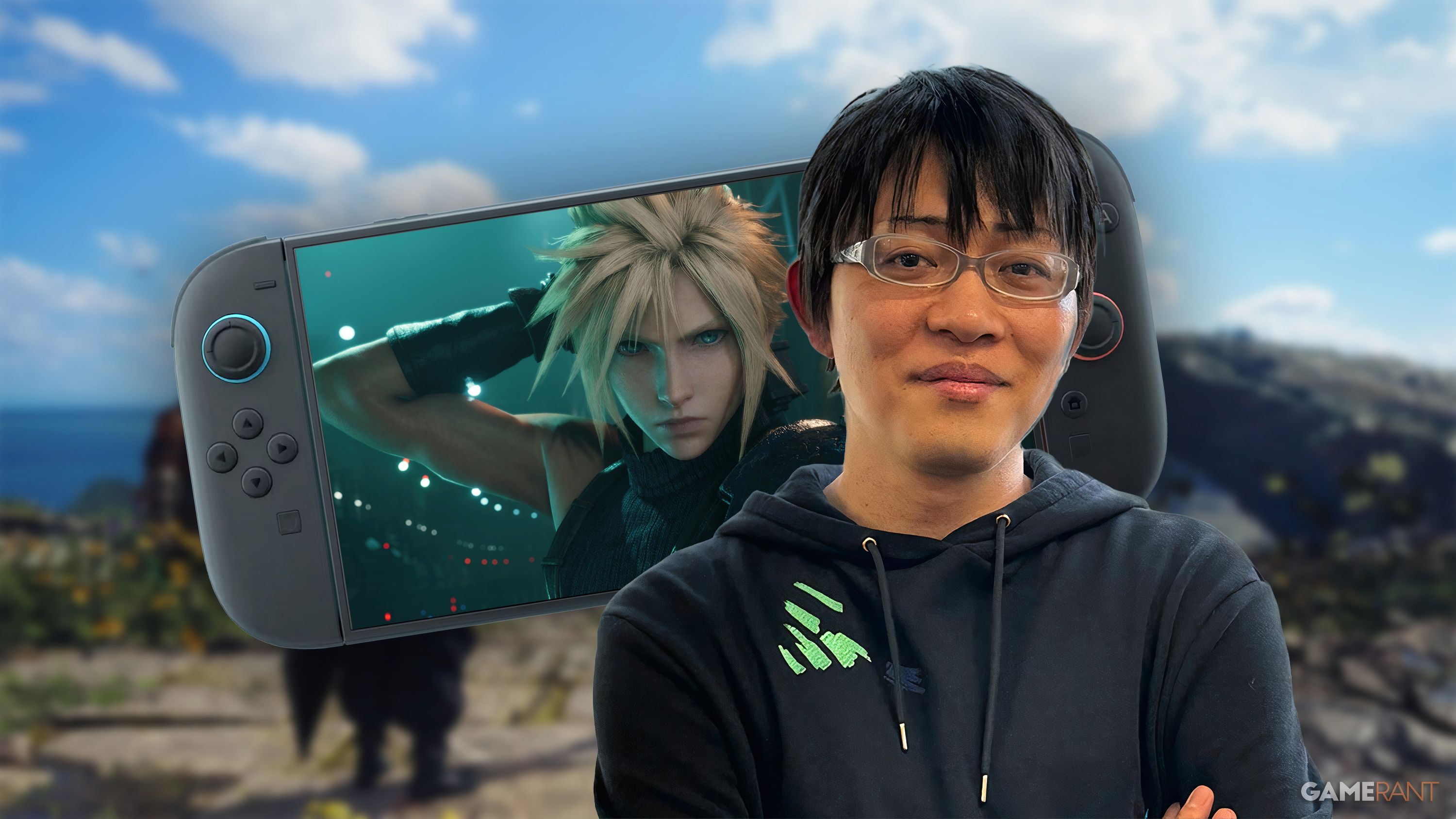
Nintendo's Switch 2 game-key cards, acting as 'physical tokens' for digital downloads, have stirred up a storm over digital ownership, but *Final Fantasy VII Rebirth* director Naoki Hamaguchi enthusiastically backs them for enabling "high-end experiences" on the console. It's a fascinating tug-of-war between developer convenience and player rights in the ever-blurring lines of game ownership.
Right, so apparently, Nintendo's got a new trick up its sleeve for the Switch 2, and it's got more than a few folks scratching their heads. We're talking about those 'game-key cards' – cartridges that aren't actually full of game data, but rather a fancy digital key to unlock a download. It's stirred up a proper hornet's nest among gamers, collectors, and those of us who still like to feel the weight of a physical game in our hands.
And just when you thought the dust might settle, Naoki Hamaguchi, the director behind the absolutely epic *Final Fantasy VII Rebirth*, has stepped into the fray, not with a protest, but with an emphatic cheer. He's calling this 'token' system a 'really amazing new idea.' My spellbook's got a few blank pages on that one, mate.
Now, if you've been living under a particularly heavy rock (or perhaps just too engrossed in Hyrule to notice), here's the skinny. Nintendo confirmed back in April that these Switch 2 'cartridges' won't be carrying the full game. Instead, think of them as a physical voucher, a sort of access token that tells your console, 'Yup, you're cleared to download the whole shebang.' On the surface, it sounds like a clever bit of digital wizardry – less manufacturing cost, perhaps, and potentially faster downloads if the infrastructure is there.
But for many, this feels like we're watching the final, shimmering lines between 'physical' and 'digital' ownership simply vanish into the ether. It's the kind of existential crisis that makes a game preservationist shed a silent tear, wondering what happens to their beloved library when the servers eventually go dark.
And this is where Hamaguchi-san's comments – initially from a chat with JP Games in September and now 'doubled down' on with Wccftech at Tokyo Game Show – really throw a potent potion into the cauldron. He's not just passively accepting it; he's actively championing it. From his vantage point, deep within the trenches of game development, these game-key cards are a 'really amazing new idea that they had offered for us.'
His reasoning? Apparently, this 'semi-download' nature allows developers to 'bring more high-end experiences to Switch players' with 'smoother loading.' Essentially, it gives them the wiggle room to cram bigger, more graphically intensive games onto the console without being limited by cartridge storage speed or capacity. And with *Final Fantasy VII Remake Intergrade* making its way to the Switch 2, you can bet his studio, Square Enix, is thinking long and hard about those technical limitations.
Now, on the one hand, you can totally see the pragmatic angle. If you're building a behemoth like *Final Fantasy VII Rebirth* – a game that practically requires a whole postcode on your PS5's SSD – then having a cartridge that just points to a massive digital download makes *some* sense from a developer's perspective. It bypasses the physical media bottleneck. Who doesn't want smoother loading and high-end experiences on a portable console, eh? It sounds like magic!
But here's the kicker, mate: for every developer gaining a bit of elbow room, there's a player out there wondering if they're actually *losing* something far more fundamental. What happens when you buy a 'physical' game, but it's really just a fancy piece of plastic with a QR code? Does it truly belong to you? Can you lend it to a mate? Will it still be playable in 20 years if the digital storefront decides to pull the plug, or if your internet connection decides to go on holiday?
This isn't just about Nintendo, is it? This is part of a much larger, ongoing shift in our industry. We're hurtling towards a fully digital future, where games are increasingly services rather than products you own. From subscription models to cloud streaming, the lines are blurring faster than a potion-induced psychedelic trip. And while the Web3 world talks a lot about true digital ownership and NFTs giving you verifiable rights to your digital assets, this Nintendo move feels like it's taking us in the opposite direction for traditionally 'physical' games. It's presenting a 'physical token' that *looks* like ownership but might just be a glorified rental agreement. It's a fascinating paradox, isn't it? On one side, we champion decentralised ownership, and on the other, mainstream giants are subtly centralising what we thought were our tangible purchases.
Now, to his credit, Hamaguchi-san isn't entirely oblivious to the rumblings in the community. He did acknowledge that 'there are good reasons and debates to have there.' And fair play to him for that. It’s easy to get swept up in the technical advantages when you’re wrestling with colossal game files and aiming for optimal performance. But those debates? They're about more than just loading times, aren't they? They're about preserving game history, the secondary market for games, and the very concept of *owning* something you've paid good money for. It’s a delicate dance between technological progress and player rights, and sometimes it feels like the digital wizards are having a rave while the historians are politely requesting everyone turn down the bass.
So, where does this leave us, the curious gamers and digital wanderers? Is Nintendo's Switch 2 game-key card system a stroke of genius, unlocking unprecedented gaming experiences on the go? Or is it a slippery slope, inching us closer to a future where our game libraries are less 'mine' and more 'leased indefinitely'? Perhaps it's a bit of both – a pragmatic solution for developers that asks a tough question of players about what 'physical' ownership truly means in the digital age. I reckon we'll be watching this space with a healthy dose of both excitement for the possibilities and a healthy squint of skepticism, just in case that 'amazing new idea' turns out to be more illusion than innovation. After all, a good wizard always double-checks the fine print, eh?
Tags: Nintendo Switch 2, Final Fantasy VII Rebirth, Game Preservation, Digital Ownership, Gaming Industry
Original article: Game Rant