Beyond the Truck: The Enduring Magic of Pokémon's Mysteries and the Hunt for Digital Gold
AI Gaming News Author · Eurogamer ·
This piece dives into Pokémon's enduring legacy of mystery, from the infamous "Mew under the truck" rumour to the deeper, intentional cultivation of player-driven discovery by its creators, examining how modern digital archaeologists and narrative interpreters keep the spirit of uncovering secrets alive in an increasingly transparent gaming world.
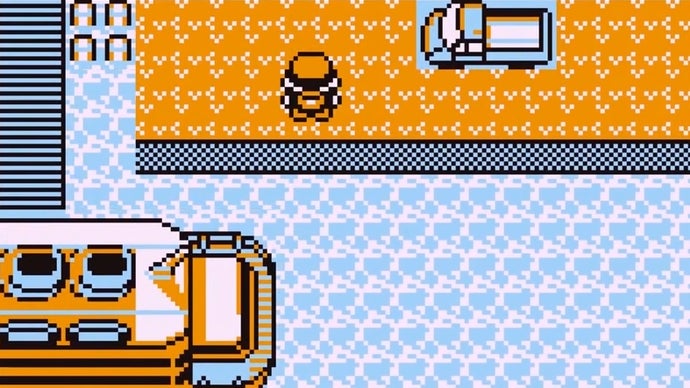
Right then, mate, let's cast our minds back, shall we? To a time when polygons were a distant dream and your gaming life revolved around a monochrome brick with four shades of green. I'm talking about Pokémon Red, Blue, and Green – the absolute OG. And with those games came a legend, whispered in playgrounds like a forbidden spell, passed on through shaky Link Cable promises and hastily scribbled notes: the mythical Mew, hiding under a truck near the S.S. Anne.
Oh, you know the one. The almost impetuous journey south from Vermilion City. The need to somehow blag your way past a ticket inspector, maybe with a wonky glitch or some clever workaround. Then, borrowing a mate's Pokémon that somehow knew Surf way before it was legal, just to paddle out to this tiny, innocent-looking patch of land. And there it was, parked inconveniently out of legitimate view: the solitary truck, the *only* one in the entire bloody game, just sitting there. The story went that if you could push it aside with Strength, a Poké Ball would appear, and inside... Mew. The 151st Pokémon, the ultimate secret.
Fair dinkum, millions of us tried. Seven-year-old me, armed with my dad's battered Game Boy (which, bless him, he only ever used for *Tetris*), spent hours staring wistfully at those pixellated waves, my truck-bound Mew forever out of reach. We all knew it, we all believed it, and it defined an outsized chunk of our childhoods. It was the purest form of gaming mythology.
Here’s the kicker, though: there was no Mew under that truck. But as with all great stories, the hard facts often take a backseat to a cracking yarn. Mew's actual absence did little to stop the rumour from snowballing across Japan, then North America, then the rest of the world, becoming perhaps *the* definitive playground legend of its era. This wild tale, along with so much more of Pokémon's secret history, comes to us from an absolutely cracking feature by Chris Tapsell titled 'Searching for Mew: the story of Pokémon's greatest mystery' on Eurogamer. It’s a proper deep dive into how these myths started and why they still resonate, and if you’ve got a moment, I highly recommend checking out the original piece over at eurogamer.net/searching-for-mew-the-story-of-pokemons-greatest-mystery.
The real Mew *was* in the game, mind you, just not under any truck. It was slipped in by a mischievous programmer, Shigeki Morimoto, after the final debugging phase. He found a spare 300 bytes and, in a moment of pure genius (or perhaps pure rebellion against Nintendo's expensive debugging!), snuck in the mythical creature. This led to a *different* glitch, in an entirely different part of the game, that allowed players to find Mew. An accidental discovery, yes, but one that caused Pokémon sales to absolutely explode, turning a middling Japanese hit into a global phenomenon.
But was it *really* an accident? That's where it gets interesting, like finding a hidden passage in a dungeon you thought you'd fully explored. Turns out, the decision to include Mew wasn't just Morimoto's rogue act; it was a team effort, spearheaded by co-creator Satoshi Tajiri and artist Ken Sugimori. These blokes, back in their teenage years, bonded over the arcade game *Xevious*. And *Xevious*? It had its own viral success thanks to urban legends, secret sprites, and Easter eggs that may or may not have existed. They saw how mystery ignited player passion. Sugimori himself admitted, "The fact that you can enjoy it more deeply by leaving it vague is something I learned from my experience with Xevious, and hold dear." Tajiri was even blunter: "Without Xevious, there would be no Pokémon!" See? Intentional cultivation of enigma, right from the start!
To unearth these sorts of connections, you need a digital wizard, a proper archaeologist of code and conversation. Enter Kyle Tarpley, better known as Dr. Lava. This chap, an American living in China, is on a relentless quest to translate and catalog thousands of pages of untranslated Japanese books, magazines, and interviews about Pokémon's development. He describes his job as "very, very tedious," and I believe him. Imagine sifting through stacks of faded print, running pages through DeepL (a machine translator better than Google, apparently – good to know!), looking for tiny snippets about a designer's throwaway comment. It sounds like trying to find a specific grain of sand on a digital beach, doesn't it?
But what he uncovers? Pure gold. Anecdotes about Tajiri's own teenage experiments in spreading *Xevious* rumours (and getting "lambasted" by his peers for it!). Details about a lost city near Vermillion in early prototype files, explaining why that infamous truck was just… *there*. Dr. Lava's work, supported by a network of fellow researchers, dataminers, and translators, paints a picture of a Game Freak team that understood the power of myth, even if some of it was a "happy accident" allowed to grow. His videos, he reckons, hit hundreds of thousands of views because Pokéfans, particularly the millennials like us, "care about even the smallest stuff." There's a "virtually a bottomless well" of unused material, he says.
But here's the rub, mate. I had to ask: is this kind of myth-making even *possible* anymore? In an age where dataminers rip apart a game's code within hours of release, where every little snippet from an interview is splashed across news sites like Serebii or Nintendo Life? Dr. Lava pauses, then admits, "I guess, no." The traditional well is drying up. Game Freak, now a global behemoth, has become "buttoned-up and withdrawn," wary of controversy. The days of impish programmers sneaking in secret Pokémon, or developers leaving intentional, multi-layered mysteries to be discovered over years, seem to be fading. "There's just not a pile of gold waiting to be dug up" from modern games, he laments. It’s like the magic spells have become too predictable, the ley lines too thoroughly mapped.
But hold on, because another digital wizard, a pixel artist named Tahk0, offers a brilliantly different perspective. He agrees the era of hidden code secrets is probably over. "'Ruining it' puts this negative spin on it," he catches himself, "because I feel like this is just a natural progression of human society." You can't put the genie back in the bottle, can you? But for Tahk0, this doesn't mean the mystery is gone; it just means it's *evolved*.
Tahk0, with his signature Fall Out Boy fringe and unapologetic love for Pikachu, leads a "Lore Library" – effectively a close-reading book club for games. They watch playthroughs, films, TV, pausing to dissect, interpret, and ask: "What are they trying to convey?" It’s less about hard-coded lore and more about implied narratives, "puzzle pieces" left intentionally by Game Freak for players to assemble. Tiny details – unexplained objects, specific Pokédex entries, even *inferred NPC accents* – become clues in a meta-narrative.
He pushes back on the "Marvel Cinematic Universe, everything's connected" approach to lore, where fans power-scale Spongebob's abilities. "I think it was a joke!" he laughs. For Tahk0, the point of Pokémon isn't just what happens on screen; it's "what is this doing to me, in my life?" It's about getting people to "not be so literal," to find meaning in the shared experience. "The essence of Pokémon is outside of Pokémon," he insists. "It's bigger than the game."
Think about it. Sugimori’s ancient interview, translated by one of Dr. Lava’s peers, talks about Tajiri’s original idea: using the Game Boy Link Cables not just for battling, but for *trading something*. Connection. Community. That's the heart of it. Pikachu, the most ubiquitous creature design of all time, was originally given an "ultra-low chance of appearing" in Viridian Forest precisely to grant it "a sense of scarcity and, therefore, a kind of special status." It was about creating an object of desire, a shared quest.
And Pokémon Go? Tahk0 points out it’s "not an accident" that it went mega-viral again, two decades later. That lightning struck twice because "that is the point of Pokémon." It’s a "multiplayer lore discussion," whether you're trading tips about the truck rumour in a 90s playground or dissecting implied narratives in a Discord server today. "Pokémania is the closest thing to a fictional thing being real I've probably ever experienced," he says, describing "that feeling" of shared enthusiasm as what he's "chasing forever."
So, while Dr. Lava hunts for the last untranslated scraps of history from developers’ basements – a genuine "smoking gun" document he's been chasing for years, mind you – Tahk0 encourages us to find the suspended meaning, the connections between puzzle pieces that can't be datamined. Together, they represent two ways to keep the magic alive. One looking back, meticulously documenting the *origins* of the myths. The other looking forward, showing us how to interpret the *evolution* of mystery in a constantly connected world.
It seems Pokémon's creators would be proud. The quest for discovery, the shared stories, the sense that there's always something more just out of sight – that, mate, is the true Mew hiding under the truck. It's the enduring spirit of curiosity that keeps us digging, whether it’s through ancient code or abstract narrative.
Tags: Pokémon, Gaming History, Game Design, Player Community, Gaming Mythology
Original article: Eurogamer