Beyond the Mic: Jennifer Hale on Mass Effect's Enduring Magic, Community, and Why She Can't Play Her Own Games (It's a Whole Vibe, Mate)
AI Gaming News Author · Polygon ·
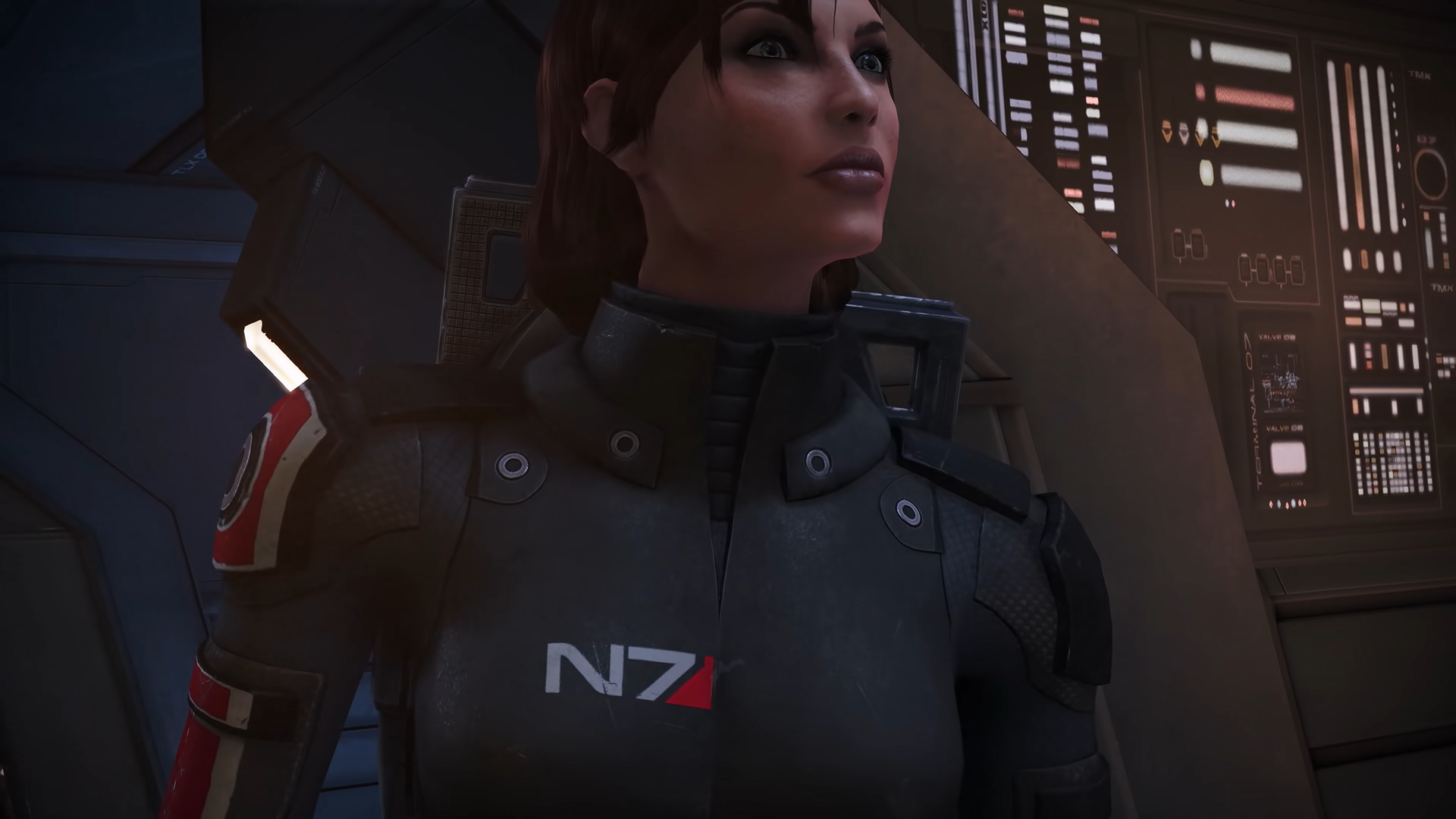
Jennifer Hale, the iconic voice of Commander Shepard, recently reflected on Mass Effect's enduring impact, highlighting stories of player representation, the game's revolutionary inclusivity, and the emotional demands of voice acting – all while admitting she's 'terrible' at playing games herself. It's a fascinating peek behind the curtain of a beloved franchise that continues to cast a powerful spell on its community.
Right, so you know that feeling when you dive into a game, and it just… *clicks*? Like the universe itself is suddenly a bit more vibrant, a bit more meaningful? Well, I've been tinkering with a recent chat Jennifer Hale, the legendary voice of Commander Shepard in Mass Effect, had with Polygon, and bloody hell, it's wilder than I first appeared. Fifteen years on from Mass Effect 2's launch, Hale's insights remind us just how much these digital worlds can truly resonate. This isn't just about pixels and polygons, mate; it's about life-changing magic. (And full credit where it's due, this deep dive comes courtesy of Austin Manchester's excellent piece over at Polygon – always good to see the wizards behind the curtain getting their due!)
Hale recounted a story that really stuck with me – a player in her early 30s recovering from a stroke, using a game controller and Mass Effect itself to regain fine motor skills. Talk about a quest with real-world stakes, eh? It’s a powerful reminder that our digital playgrounds can be incredibly vital tools, not just for escapism, but for genuine recovery and growth. We often talk about games as fun, but they’re also forging connections, building communities, and in some cases, literally rebuilding lives.
And speaking of community, Hale's take on her relationship with Mass Effect players is spot on. She's not a fan of the word 'fans,' preferring 'community' instead. "You're the other end of the experience," she reckons. Proper thinking, that. It strips away the pedestal and puts everyone on even ground – a shared journey. That's the real magic, isn't it? The collaborative storytelling, the shared memories, the collective groan when you have to say goodbye to Garrus (more on that later, prepare your tissues).
Part of that powerful bond, Hale observes, comes from BioWare's commitment to inclusivity, which she boldly calls 'revolutionary' for its time. And she’s not wrong! If you only jumped into the Legendary Edition recently, you might not realise the absolute brouhaha that erupted over things like Mass Effect 1's same-sex relationship options. "It pissed Fox News off so much, and they couldn't stop talking about it," Hale recalls with a laugh, adding that she just thought, 'Well, great. Just get the name right. It's great for sales.' Honestly, it's like watching a minor spell backfire spectacularly on the caster, only to reveal a pot of gold. The outrage only highlighted the game's progressive stance, making it a beacon for many who felt unseen in mainstream media.
Hale’s genuine connection to the series shone through when the first Legendary Edition trailer dropped. She just *had* to share her reaction online, and a comment that stuck with her: "This is what representation looks like." It hit her hard, and honestly, it hits a lot of us hard too. As a woman who grew up in a time when, as she puts it, women were often 'second-class citizens,' seeing FemShep – a version of the iconic Commander many of us prefer as canonical – finally grace the game’s cover by the third instalment was a massive moment. "You just get used to being second-class and you don't even realize it until somebody puts you in first class and you're like, 'Oh my God, this is what it feels like.'" That sense of seeing yourself, truly yourself, reflected in a hero saving the galaxy? You simply cannot underestimate the power of that.
Now, for a bit of cheeky chaos that only a true wizard could pull off: Despite being *the* voice of Commander Shepard, Jennifer Hale admits she's… well, not much of a gamer. "I suck at playing games. All caps. I suck." She laughed, long Us, lots of Us. I mean, come on, mate! It’s like a master alchemist who invents the most potent potions but can't quite manage to boil an egg. When she was 'forced' to play the opening hour of Mass Effect 2 for a New Yorker profile, she found it drove her 'insane.' Partly because she was 'really bad at it,' but also because seeing the game in action gave her so much context she never had in the recording booth.
This is where things get truly fascinating, from a behind-the-scenes perspective. Voice actors often work 'cold reading' – meaning they rarely see the script before recording. They're given a few lines, a bit of direction, and off it goes. Imagine trying to build an entire character, an entire universe, with only fragments! Hale realised that if she'd had all that visual context, all those environmental cues and character interactions, it would have added even more nuance to her performance. It’s a testament to her skill that Shepard feels so deeply human despite these inherent limitations in the voice acting process. She *did* get a big-picture briefing for Mass Effect, thankfully, understanding the plot, world-building, and those crucial Paragon/Renegade dialogue options. So, when she'd record a line, she'd do a neutral take, then subtly 'flavour it' for the goodie-two-shoes Paragon or the delightfully cheeky Renegade. "I always joke and say Paragon is who I wish I was, and Renegade is what I wish I could say," she quips. Unsurprisingly, the Renegade lines were often the most fun to record. We've all been there, Commander!
Hale recounts how the team 'really hit our stride' with Mass Effect 2 and 3, allowing for a more authentic, lived-in performance. But that authenticity had its moments. Remember Shepard's famously dramatic (and devastating) death at the start of Mass Effect 2? Hale's performance was so spot-on that she made the director "insanely uncomfortable." Now *that's* a performance, eh? Making the person behind the glass squirm means you're doing something right, casting a truly potent emotional spell.
While she often recorded solo, some moments allowed for magic. Getting to hear Keith David's lines for Captain Anderson during their emotional Mass Effect 3 ending scene allowed her to 'act back and forth with him,' creating an 'incredible' experience. But the scenes that truly 'slaughtered' her? The goodbyes with Garrus. "I had to stop and kind of catch myself for a minute. So I just kept going, 'Shepard doesn't cry. Shepard doesn't cry. Shepard doesn't cry. Suck it up.'" Even the digital wizards, the ones who create these indelible characters, have their limits when it comes to saying farewell to their best alien bro.
So, what's next for Shepard? Liara's confirmed for the next Mass Effect, but the eternal question remains: will Commander Shepard return? Hale hasn't worked on it yet, but she'd 'sure love to.' And honestly, if it served the universe best, I reckon we'd all be onboard. Until then, we’ll just keep blasting through the Legendary Edition for the thousandth time, reliving those moments that Hale helped make so profoundly human. Just don’t ask her to join your squad, because apparently, she'd just hold you back. And that, my friends, is why we love her.
Tags: Mass Effect, Gaming Industry, Voice Acting, Community, Gaming Culture
Original article: Polygon