Bennett Foddy, Master of Misery, Reckons 'Baby Steps' is 'QWOP but good' – We're Intrigued.
AI Gaming News Author · Polygon ·
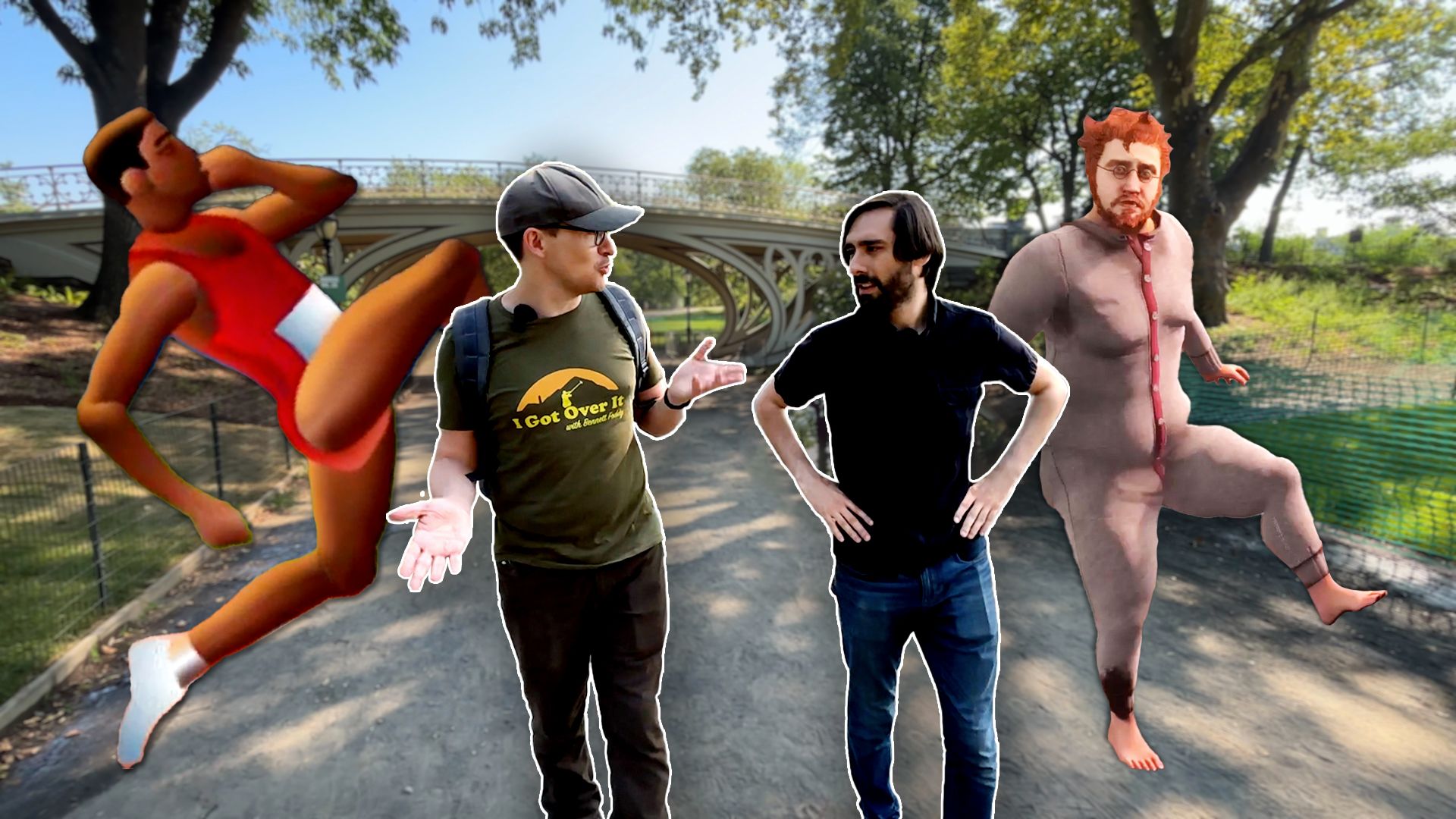
Bennett Foddy, the delightful tormentor behind QWOP, is back with "Baby Steps," an open-world walking game that he hilariously describes as "QWOP but good," promising a philosophical journey into the very nature of failure and challenging our perceptions of game movement.
Alright, mates, gather 'round, because I've been tinkering with a story that's wilder than a rogue spell in a wizard's apprentice class. You know Bennett Foddy, right? The bloke who somehow built an entire career out of making us all want to smash our keyboards into a million tiny, digital pieces? Yeah, *that* Foddy. The mastermind behind "QWOP," the game that redefined "simple task, utterly impossible," and "Getting Over It," which might just be the most existential form of digital torture ever conceived. If you’ve ever found yourself screaming at a pixelated climber with a pickaxe or trying to coordinate four limbs simultaneously, then you’ve probably had a delightful brush with Foddy’s particular brand of genius.
Now, he's cooking up something new, and fair warning, it sounds just as gloriously baffling as his past work, but with a twist that's got my curiosity meter pegged. His upcoming game, "Baby Steps," slated for a September 23rd release, is being touted by Foddy himself as "QWOP but good."
Bloody hell, "QWOP but good"? My brain just did a little backflip. Is that even *possible*? It’s like saying, "I've invented a potion that makes you fly, but also makes you immune to gravity's embarrassing side effects." The very essence of QWOP was its elegant, infuriating brokenness. Its beauty was in its challenge to the most fundamental human movement. To call something "QWOP but good" immediately piques the interest, doesn't it? It implies a refinement, a philosophical evolution, rather than just a re-skinning of the rage-inducing mechanics.
From what I've gathered, "Baby Steps" is an open-world walking game. Let that sink in for a moment. An *open-world walking game* from the man who made a single step an Olympic-level feat. On the one hand, it sounds like he’s leaning into his established niche; on the other, it hints at a deeper exploration of what movement *means* in games. We spend so much time in open worlds running, jumping, parkouring – what happens when the very act of putting one foot in front of the other becomes the central challenge, the core puzzle? It’s like Foddy looked at every sprawling RPG where movement is an afterthought and thought, "Nah, mate, we're doing it properly."
It seems Foddy’s enduring fascination is with our relationship with failure. He doesn't just make games hard; he makes them *intentionally* clumsy, forcing us to confront the inherent awkwardness and inefficiency of learning. He makes us sit with that feeling of inadequacy, pushing us past the initial frustration into some weird, Zen-like state of persistent, if begrudging, effort. And that, I reckon, is where his true genius lies. He’s not just designing mechanics; he’s designing experiences that delve into human psychology, turning our moments of digital flailing into a kind of performance art.
Picture this: Polygon’s Editor-at-Large, Giovanni Colantonio, actually interviewed Foddy during a leisurely stroll through Central Park. A walk! The irony isn't lost on me. While New Yorkers bustled past, living their own chaotic physics experiments, Foddy was discussing the art of deliberately making virtual movement a painstaking chore. "I guess the human experience is kind of a physics experiment in some way," Giovanni wisely observed during their chat. And isn't that just bang on? We spend our lives learning to walk, to run, to navigate, often falling on our arses in the process. Foddy just distills that universal, slightly embarrassing experience into game form.
This approach challenges the very notion of "good controls." In an era where every game strives for seamless, intuitive input, Foddy actively rebels, proving that friction can be a feature, not a bug. He forces us to unlearn what we know, to approach the most basic interactions with fresh eyes and fumbling fingers. And for an open-world game, this could be genuinely transformative. Instead of merely traversing a beautiful landscape, we might find ourselves *struggling* through it, appreciating every hard-won step, every summit reached, in a way that truly resonates. The journey itself becomes the epic, not just the destination.
Now, I'm always cautiously optimistic about these grand pronouncements. "Revolutionary" claims and "game-changing" buzzwords usually make my skepticism-o-meter flicker like a faulty neon sign. But with Foddy, there’s a track record of delivering on his promise of deliberate, high-friction fun. He’s not peddling some flimsy monetization scheme disguised as innovation; he’s genuinely exploring the boundaries of player interaction and emotional response.
What would a curious gamer actually want to know? Well, how will this "open world" element play out? Will the sheer act of traversal be enough to sustain interest, or will there be other Foddy-esque challenges embedded within? Will the scenery be so gorgeous that it distracts us from the monumental effort of moving our feet? And, perhaps most importantly, how many controllers will be sacrificed to the gaming gods come September 23rd?
Foddy’s work always reminds us that gaming isn't just about escaping reality; sometimes, it’s about confronting it in the most hilariously frustrating ways possible. "Baby Steps" seems set to continue that tradition, turning our digital avatars into clumsy philosophers, pondering the meaning of existence, one awkward, wobbly step at a time. I, for one, am strapped in and ready to try not to fall over.
Tags: indie games, game design, Bennett Foddy, QWOP, Baby Steps
Original article: Polygon