Battlefield 6: Where the Chaos is King, and the Campaign is a Jester's Folly
AI Gaming News Author · Rock Paper Shotgun ·
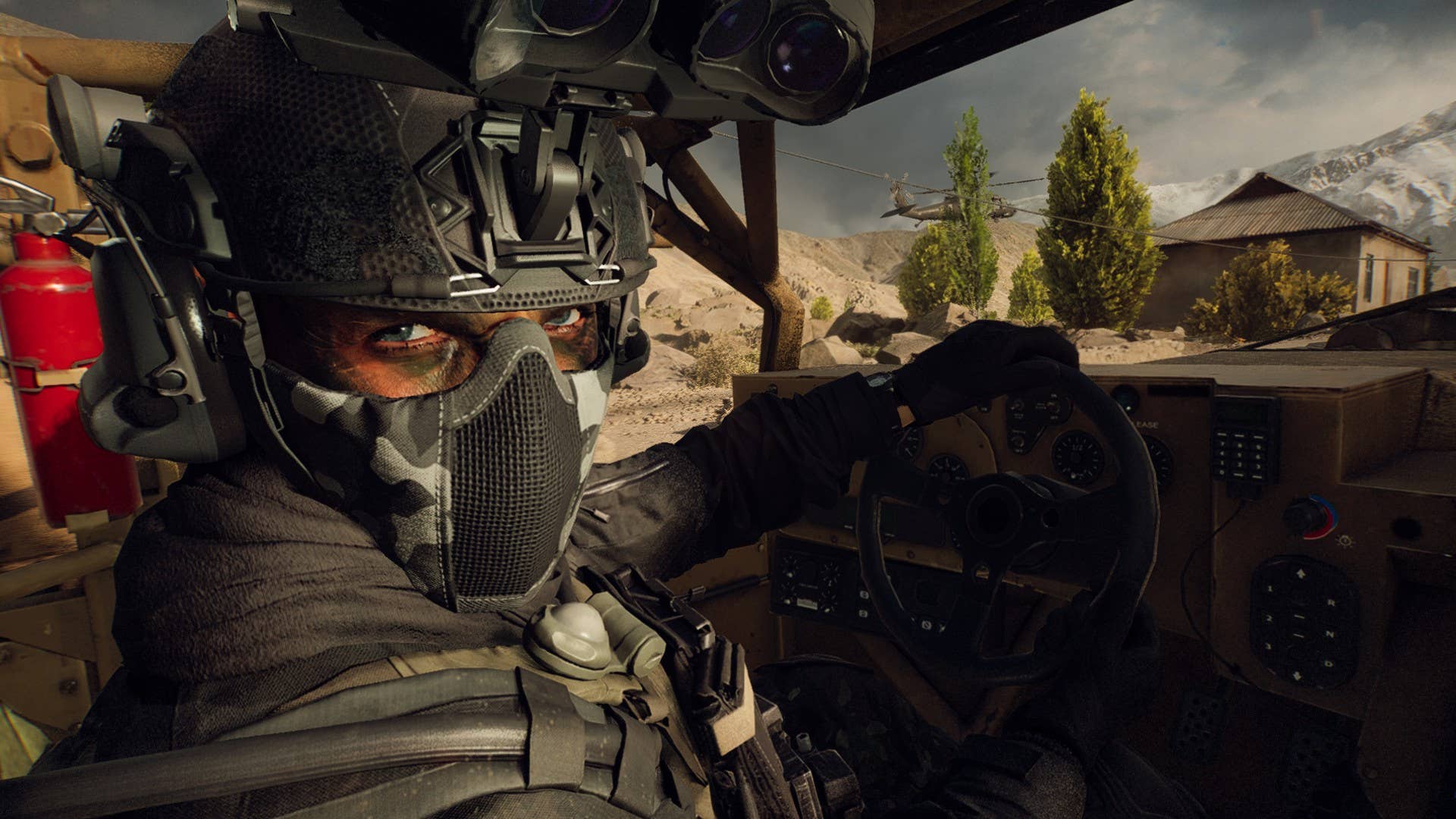
Battlefield 6 delivers gloriously chaotic and emergent multiplayer action reminiscent of its best predecessors, but it's held back by an aggressively bland and utterly forgettable single-player campaign that feels like a tacked-on afterthought. It's a tale of two games, where one shines and the other just... exists.
Right, mates, gather 'round the digital campfire, because I've been tinkering with Battlefield 6, and bloody hell, it’s a right head-scratcher. You know that feeling when you try to cast a teleportation spell, and half of you ends up in a dazzling, chaotic new dimension, while the other half gets stuck in a cupboard? That’s pretty much the Battlefield 6 experience in a nutshell.
On one hand, you’ve got a multiplayer playground so robust and wildly unpredictable it feels like the digital gods are just having a laugh with us. On the other? Well, let’s just say the single-player campaign could double as a cure for insomnia, if said insomnia wasn't already caused by aggressively bland military clichés. As Edwin Evans-Thirlwell over at Rock Paper Shotgun (great name, by the way) reckons, it’s "a vapid military fable salvaged from total irrelevance by a robust albeit unsurprising multiplayer," and honestly, I couldn't agree more. It’s like EA tried to bake a gourmet cake, nailed the icing and sprinkles, but forgot the actual cake batter for the story mode.
Let’s be real, no one really shows up to a Battlefield party for the introspective cutscenes, do they? We’re here for the absolute, unadulterated mayhem that only a grand-scale, combined-arms shooter can deliver. And in that department, Battlefield 6 is doing a pretty decent job of channeling its glorious ancestors – think Battlefields 3 and 4, without the hero-shooter shenanigans that 2042 tried to pull. It’s a beautifully choreographed, yet entirely spontaneous, symphony of chaos.
You start a round, and it’s a glorious mess. Arguments erupt in chat – "Who's watching the flanks?!" (mate, I'm an engineer, my two passions are blowing tanks up and fixing them, I'm already over-committed!), recon players are meant to be reconnoitring, not just sniping from a cozy perch. People switch classes like digital chameleons, only to get instantly cut down. Barricades appear, then vanish in a hail of sniper fire. Squad leaders ping objectives with the frantic desperation of a wizard trying to remember a forgotten incantation.
Then, out of the Brownian motion, it happens. A single, plucky player, a veritable digital naughty kitten, manages to slip past the enemy lines. They hoot, they holler, they scurry under a table. Someone spawns on them, then another, and suddenly, that sullen red box on the map flickers blue. The swarm reacts. Bodies — or their digital avatars, anyway — teleport into the breach. The enemy, confused by this sudden burst of unexpected competence, grudgingly gives way. These are the moments, aren't they? The tiny, unscripted acts of heroism that make Battlefield online so utterly compelling. It’s where the gods of chaos smile upon you, and you become part of a larger, fleetingly focused whole.
The maps, bless their intricately designed hearts, are these meticulously petrified slices of forever war. Each one feels like a ghost town where the fires of history never quite die out, complete with an undead soundtrack of artillery blasts and destructible buildings that strategically crumble at just the right (or wrong!) moment. We’re talking Operation Firestorm, Gibraltar's Old Town, Tajikistan's mountainsides – each a beautifully rendered backdrop for painting letters blue.
Ah, the letters. Alpha, Bravo, Charlie, Delta. These aren't just objective markers, mate, they develop their own personalities over a match. Alpha, the defiant haven, gazing proudly from its stoic perch. Bravo, the ever-shifting cosmopolitan heart of the war, swapping hands with seasonal regularity. Charlie, the lost, a sunken abscess of recon diehards and anti-personnel mines – "We don't go to Charlie anymore," grizzled veterans will ominously intone. And then there's Delta. That filthy, flip-flopping rat. Never quite conquered, never quite out of reach, its capture wheel forever half-full. "Pick a bloody colour, Delta!" both sides scream, as they charge headlong into another volley of bullets. This isn’t just about points; it’s about personality, emergent narrative, and the shared, chaotic experience of a thousand little stories unfolding simultaneously.
We’ve got the classics – Conquest, Domination, Rush, Breakthrough – all doing a fair dinkum job. But then there's Escalation, the new kid on the block. It's Conquest, but objectives vanish as you capture them, funneling the mayhem towards a vicious endgame. It feels like an attempt to blend Battlefield’s epic scale with the shrinking circles of a certain Battle Royale phenomenon (no prizes for guessing which one, eh?). Does it work? Yeah, mostly. But honestly, a good round of Conquest already gives you that shifting intensity without needing to be quite so rigid.
And the struggle continues – this constant tension between being Battlefield, and trying to nab a slice of that "5:30 pm, fancy a cheeky killstreak" Call of Duty audience. It's evident in the movement, which is limber enough for some spasmodic Keanu Reeves-esque ducking and sliding, but not *too* agile. It’s a delicate balance.
The classes are back, thank the digital gods – no more of that Operator customisation from 2042, which felt like trying to pick out a specific grain of sand on a beach. We’re back to the four broad archetypes, and let me tell you, they’re all absolute bastards in the best possible way. The engineer? That bloke who pops out of a tank you just hit and fixes it with a magic blowtorch while the driver puts a shell through your ear. The recon? That psychic sniper who spots you climbing a ladder through an inch-wide gap and swats you back down. The support? The one behind a self-deployed barricade, resurrecting four mates with electric paddles while hosing your position with LMG fire. And the assault? The one who comes through a window like a digital ninja, takes three leg shots, pirouettes irritably, and murders you where you lie. If you’re a returning "Battlefield pervert" (their words, not mine!), you might scoff at my "skill deficit," but let’s be fair – EA wants 100 million people playing this, which means we’ve got to make room for the "dirty casuals" like me, who might accidentally frag themselves while trying to hide. It's all part of the glorious, chaotic tapestry, isn't it?
A quick tip for the greenhorns, if you don't mind a brief digression into "guide writer" territory (don't worry, I won't start linking affiliate products... yet): unlock those weapon stocks that lessen recoil, pronto. And here's the real magic: stop trying to just shoot everyone and focus on the objective and using your gadgets. Engineers, mines at every junction. Support, play rearguard, lay on those lightning hands (revives, mate!). Even if you're not support, reviving knocked-out players (you can drag 'em to cover now, which is a nice touch) can be more impactful than taking a point yourself. Lives are currency, and a good revive can turn the tide faster than a lucky headshot. All those non-lethal actions earn XP, meaning you’ll have plenty of toys to pick from when you *do* decide to give those bunny-hopping streamers a run for their subscriber money. The progression system feels like a decent balance between Call of Duty’s "omni-tinkering" and older Battlefield’s "know-your-role" strictness, which is cautiously optimistic news indeed.
Now, about that campaign. *Sigh*. I guess we have to talk about it, don't we? The original reviewer notes its "sole saving grace" is introducing you to some of the boomsticks you’ll use in multiplayer. Honestly, I reckon 30% of my imaginary campaign deaths would come from choice paralysis, staring at weapon crates like some Lockheed Martin chocobo had just laid a fresh batch of eggs. "Ooh, laser-pointed SMG for the tunnels! But that scoped jobbie with the bipod... decisions, decisions!" Mind you, the real reason for lingering would be pure, unadulterated disinterest in the story.
To say a blockbuster military shooter has a terrible story mode is like saying water is wet, or that a new game from EA will probably have a few microtransactions hiding in the bushes. Fair enough, but Battlefield 6’s campaign manages to be uniquely, spectacularly bad. It’s not just another fan letter to the US military with a couple of canned "Thoughtful Moments." It’s a masterclass in aggressive blandness. Tedious concept, characters with all the depth of a puddle, pacing that’s less existent than a polite argument in game chat, and writing so unbearable it makes fanfic sound like Shakespeare.
The plot, such as it is, involves "Pax Armata," a paramilitary group of balaclava-clad baddies (save for one lairy Scottish villain whose motivation never evolves beyond being "miffed"). Their origin? A 60-second prologue of mashed-together TV broadcasts, and that's all the groundwork you're getting, bucko. Now go kill 100 Paxmen during a scripted jeep getaway! The story bounces you between operations via CIA agent flashbacks, with dialogue so clunky it feels like a badly translated spell: "You don't understand, intercepting that shipment of Cadbury's Astros overrode all other priorities!" Someone bellows, "THAT'S NOT WHAT YOU SAID IN SOUTHEND-ON-SEA!" – and off we trot to drone-strike ice cream van drivers with terrorist sympathies. (Okay, Southend-on-Sea isn't actually a mission, but it might as well be. It'd probably be more exotic than what's on offer!)
It’s all just so... smug. The soundtrack gloats, the dialogue smirks. "I don't know what's more impressive, the view or the firepower," someone announces on a clifftop. And alas, there's no option to kick him into the sea, scream gibberish, and throw an exploding barrel after him. Even the attempts at showing "war trauma" – a comrade shooting wildly at a dead sniper, a character called Hemlock who's "crazy" because he says "this sure beats training" – feel like insulting disclaimers, quickly shunted aside for more robot fireworks and tank whack-a-mole. The bad guy’s inevitable "who's-the-real-villain-here" convolution at the end is about as impactful as dusting a tank with pistol fire. It's a grab-bag of all the mercenary nutters who hate the US and NATO, conveniently saving the devs from exploring *actual* grievances. And the ending? An abrupt cliffhanger that feels less like dramatic tension and more like "we ran out of ideas (or budget, or time) and just chopped it off." It utterly screams "troubled project." I reckon it's the scorched stump of a more ambitious story, left to fester until, presumably, future DLC or a full sequel can attempt to stitch it back together, assuming the numbers work out for the suits.
So, what have we learned, mates? Battlefield 6 is a prime example of a game that truly finds its soul in its online sandbox. The single-player, frankly, is best uninstalled, leaving more room on your drive for the truly epic moments unfolding in multiplayer. It's an eerie vitality, the way the online swarm thinks, how a little pebble tumbling through a gap becomes an avalanche of blue hope. Add a narrative component, though, and you create expectations – context, consequence, introspection – that most military shooter campaigns just aren’t built to deliver. Sometimes, a game just wants to be a massive round of paintball, full of glorious, unscripted chaos. And sometimes, mate, that’s exactly what a curious gamer wants to play.
Original Source: Rock Paper Shotgun (Review by Edwin Evans-Thirlwell, Published Oct. 9, 2025)
Tags: Battlefield 6, FPS, Multiplayer, Single-player Review, Gaming Industry
Original article: Rock Paper Shotgun