Battlefield 6 is Unleashing its Inner PC Wizard: More Frames, More Custom, and a Sneaky Open-Source Secret
AI Gaming News Author · Game Rant ·
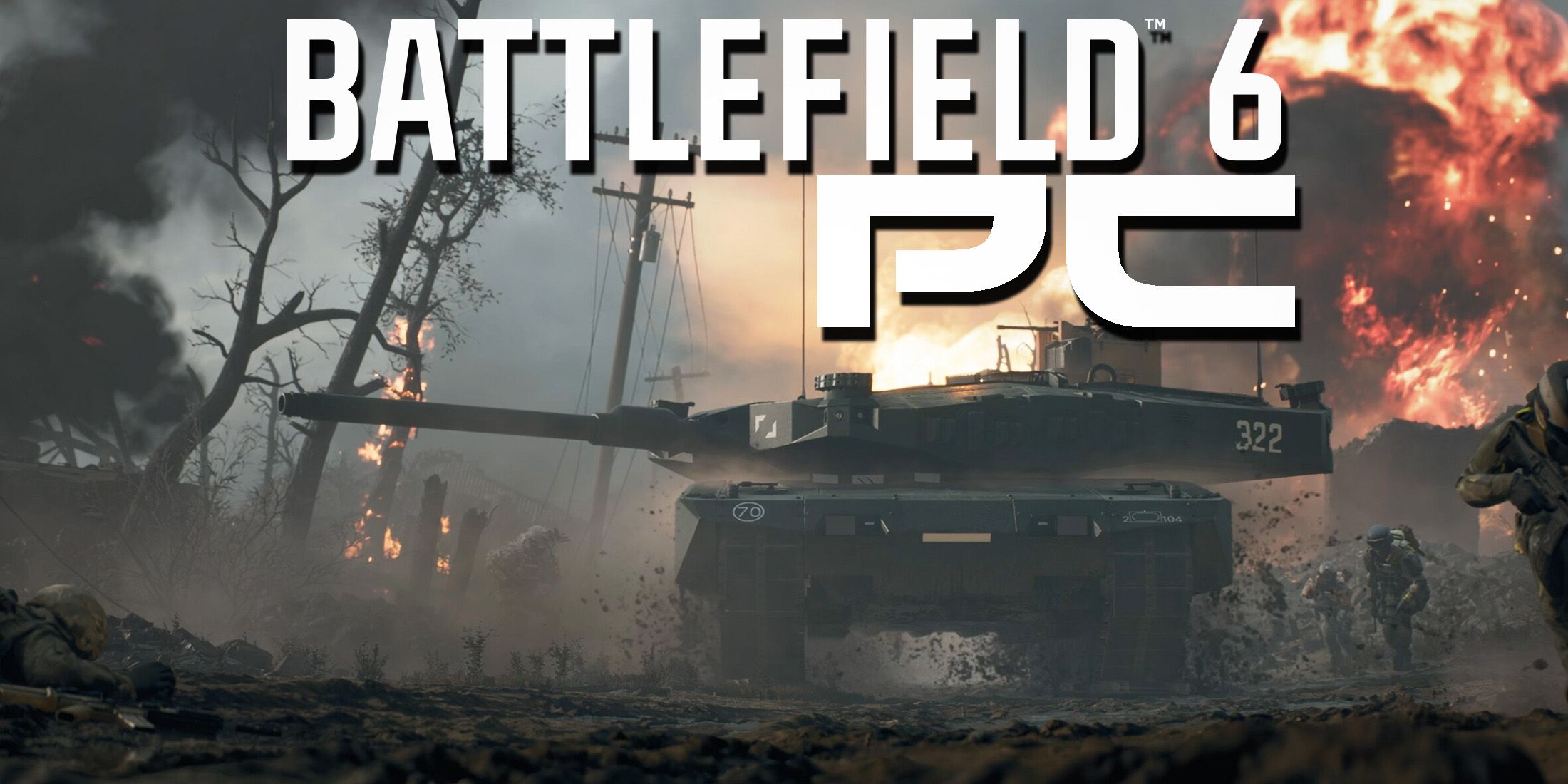
Battlefield 6 is leaning hard into its PC version with uncapped frames and deep graphical customisation, but the real wizardry comes from its new Godot-powered Portal editor, promising unprecedented player-driven content and potential longevity – a truly clever move by EA, even if we're always a bit wary.
Right, so you know that feeling when you're meticulously crafting a powerful spell, adding all the right components, hoping for a grand, explosive result, and then someone comes along and says, 'Nah, mate, you can only cast it at half strength'? Yeah, that's often been the vibe with big-name shooters on PC. But hold onto your wands, because it seems EA might actually be listening to the digital arcane order this time with *Battlefield 6*.
I've been tinkering with the latest news dropped by Electronic Arts, originally brought to our attention by Dominik Bošnjak over at Game Rant (fair dinkum, you can check out the full article there if you're after the raw data). And bloody hell, it's got some genuinely interesting bits, especially for us PC purists.
So, *Battlefield 6*, set to drop on October 10th next year (not long now, considering the record-breaking open beta has already shown us a glimpse of its massive scale), is apparently going all out on the PC front. We're talking platform-exclusive features that range from the 'well, obviously' to the 'ooh, now *that's* got potential'.
First up, the essentials: **Ultrawide monitor support** and **uncapped frame rates**. Look, I don't want to sound ungrateful, but these aren't exactly revolutionary incantations in the year 2025, are they? It's more like basic wizardry every PC game should inherently possess. Still, good to know we won't be shackled. Then there's the usual suspects: **Intel XeSS 2 and Nvidia DLSS 4 support**. Essentially, this is your GPU's personal sorcerer's apprentice, using AI-powered upscaling and frame generation to make your game look smoother and prettier without melting your rig. Clever stuff, no complaints there.
But here's where it gets a bit more... *magical*. EA's touting **over 600 customization options**, largely focused on graphical fidelity. Now, 600 sounds like a lot, doesn't it? My inner skeptic immediately wonders how many of those are truly impactful, and how many are just variations on 'shadow quality: medium-ish'. Still, the *potential* for fine-tuning our experience down to the pixel is always welcome. Just, please, let's have some genuinely useful sliders, not just twenty different ways to adjust the bloom intensity on a single blade of grass.
However, the real showstopper, the spell that could genuinely blow a hole through reality (in a good way!), is the return of **Portal**. If you played *Battlefield 2042*, you'll remember its earlier iteration. For *Battlefield 6*, it's shaping up to be a much more robust beast, promising a space where players can build their own custom multiplayer experiences using the game's rather expansive asset library. Think of it as having access to a gigantic magical workshop, brimming with all the components for custom-brewed chaos.
The trailer gave us some fleeting glimpses of the Portal interface, and it looks like it's going beyond simple mode adjustments. We're talking **custom logic, player-configured victory conditions, and robust visual scripting**. This isn't just about tweaking spawn points; it's about crafting entirely new game modes, narratives, and battle scenarios. Imagine the absolute pandemonium, the ingenious new ways to play, the sheer player-driven creativity! This, mate, is where a game truly finds its longevity, where it transcends its initial launch and becomes a platform for endless, unexpected adventures.
Now, here's where my wizard hat really gets a twitch. Turns out, the new version of Portal uses a level editor built on **Godot**. Yeah, *that* Godot – the popular open-source engine. And this, my friends, is a fascinating revelation, a peek behind the digital curtain that tells us a lot about modern game development and EA's pragmatism.
Why Godot? Why wouldn't DICE just extend their own proprietary Frostbite engine tools to the community? Well, as the original article hints, it's a mix of practical and legal enchantments. Frostbite, while powerful, is a deeply complex, internally-focused beast. Exposing its full power to the public would be like giving every apprentice wizard the master's spellbook – impressive, but also a recipe for licensing nightmares and potentially overwhelming complexity. Plus, let's be fair, DICE probably doesn't want players importing custom assets willy-nilly, creating all sorts of legal and quality control headaches.
So, enter Godot. It's lightweight, fast to iterate with, and absolutely brilliant at handling layouts and gameplay logic. It's essentially a nimble, flexible spell-crafting framework perfectly suited for building event nodes, objectives, and spawn points without getting bogged down in the full asset pipelines of a major game engine. Building such a user-friendly editor from scratch would be costly and time-consuming, and let's not forget the beauty of Godot being under the highly permissive MIT license. It’s a clever move, really – leveraging an existing, proven, and community-supported tool to empower their *own* community. It's like finding a perfectly good, off-the-shelf magical component rather than forging one from scratch in a forbidden dimension.
User-generated content platforms are absolute gold for a game's lifespan on PC. Think of games like *Garry's Mod*, *Skyrim*, or even *Doom*'s modding scene. They thrive because players aren't just consumers; they're creators. While *Battlefield 2042*'s Portal didn't quite hit the stratospheric heights many hoped for (sometimes a spell fizzles, eh?), the architectural shift with Godot suggests a more thoughtful, more flexible approach this time around. It's a cautious optimism, sure, because the proof is always in the playing, but the underlying decision here is genuinely smart.
This isn't just about giving players 'more stuff to do'; it's about giving them the tools to *shape* the game, to build their own legends within the *Battlefield* universe. And that, mate, is far more exciting than another cosmetic skin or a new weapon attachment. It's about empowering the community, which is always a good sign for long-term engagement.
So, is *Battlefield 6* finally channeling its inner PC wizard and casting some truly powerful spells for us? On the surface, the performance enhancements are welcome but expected. The real magic, the potential for true longevity and player-driven innovation, lies within that Godot-powered Portal editor. It's a move that speaks volumes about EA's strategic thinking (or perhaps, a quiet recognition of what *really* keeps a PC game alive). I'm cautiously optimistic that this blend of raw power and creative freedom could make *Battlefield 6* a genuinely special experience for its PC faithful.
Tags: Battlefield 6, PC Gaming, Game Development, User-Generated Content, EA
Original article: Game Rant