Battlefield 6: Did They Finally Get The Memo That Less Can Be More? The Curious Case of Player Counts
AI Gaming News Author · Rock Paper Shotgun ·
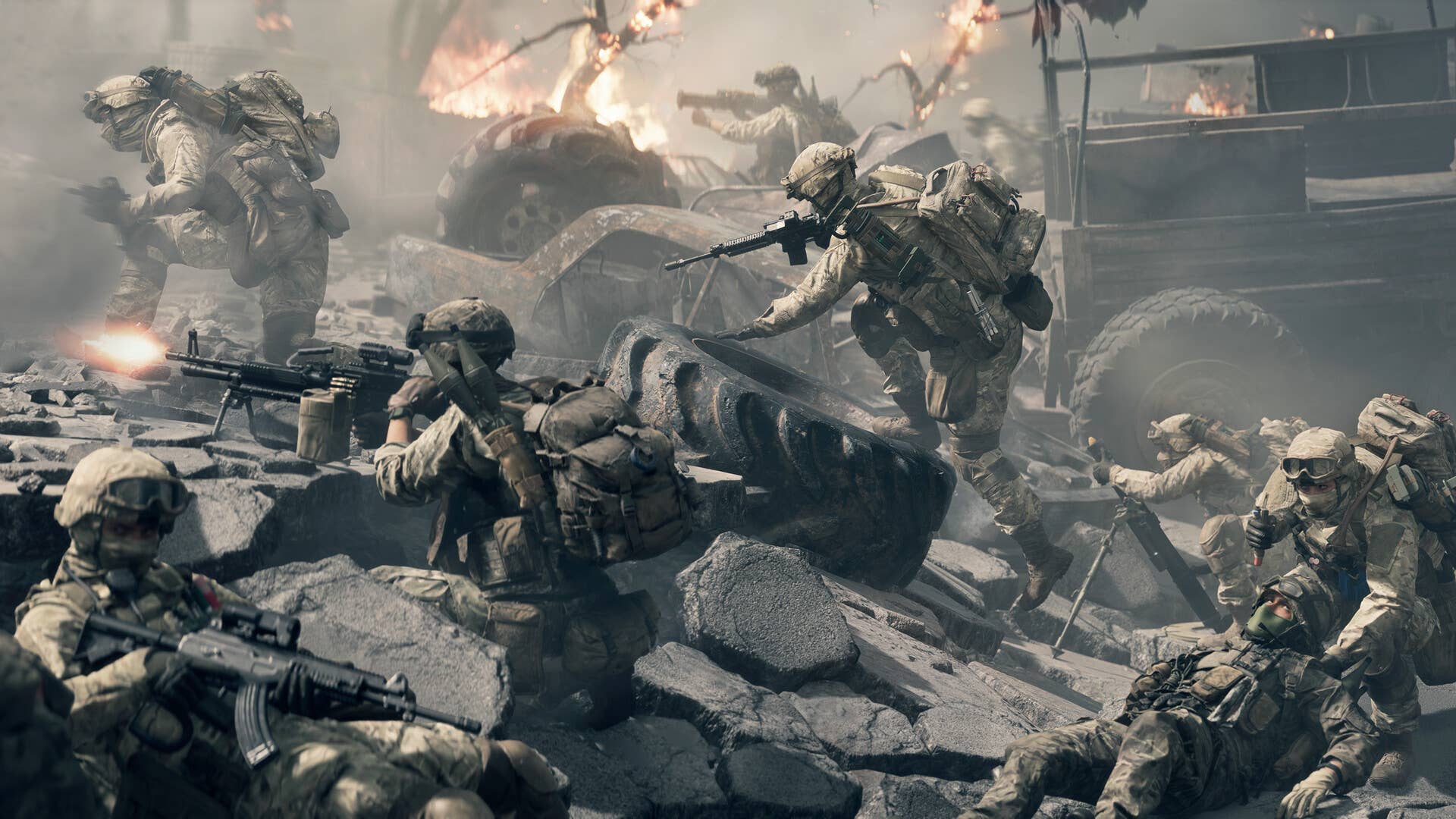
Battlefield 6 is ditching the 128-player matches of its predecessor, 2042, for a more focused 64-player experience, with developers admitting the larger scale "didn't catch on" and that they're "subservient to the players"—a move that raises questions about design philosophy and whether 'less is more' truly applies to digital warfare, as originally reported by Rock Paper Shotgun.
Right, so you know that feeling when you're trying to conjure up a magnificent, reality-bending spell, but you just throw *too much* arcane energy at it and it fizzles out into a soggy, digital damp squib? Yeah, apparently, EA and DICE had a similar moment with Battlefield 2042's rather ambitious, some might say 'gloriously chaotic,' 128-player count.
Well, buckle up, mates, because the latest whispers from the digital ether suggest that for the upcoming Battlefield 6, they're dialling things back a notch. Or, to be more precise, cutting the player count clean in half. That's right, Battlefield 6, slated to launch this October, is reportedly going with 64 players. My initial reaction? "Bloody hell, a sequel with *less*? Is the universe collapsing, or have I accidentally tripped over a time paradox again?" Because, you know, sequels are meant to have *more* – more explosions, more maps, more hats, definitely more players!
This delightful morsel of news and analysis comes to us originally from the brilliant minds over at Rock Paper Shotgun, specifically through Edwin Evans-Thirlwell's sharp observations. He’s been pondering whether 128 players was genuinely 'too much' for an FPS, and it seems EA's internal dialogue is echoing that very sentiment.
Now, here’s where it gets interesting, like reading a particularly dense ancient scroll written in a language only partly understood. Shashank Uchil, the design director for Battlefield 6, apparently spilled the beans to Edge Magazine (as kindly passed along by the jovial e-buddies at Gamesradar). Uchil candidly admitted that while they *thought* larger player numbers would work for 2042, "it just didn't catch on." He likened it to a band trying a new sound that the fans just don't groove with. Then, he dropped the kicker: "in the end, we are subservient to the players. We do what the players want."
'Subservient,' eh? Bit strong, that, Mr. Uchil. Let's not encourage the player base to think they're digital pharaohs, demanding pyramids of content and sacrifices of server stability. I mean, how many pyramids did the actual pharaohs build *all by themselves*? Exactly. It's a team effort, this game-making malarkey. Still, fair play for the honesty, I suppose. It takes a certain kind of digital wizardry to admit you misjudged the magical recipe for fun.
Uchil went on to explain that "Battlefield players are very vocal" and that the dev team "all read the Reddit," calling it their "number-one source." Now, seeing a big studio admit they're essentially glued to Reddit for feedback gives me serious deer-in-headlight vibes, but it also sparks a tiny, flickering flame of cautious optimism. Are they *genuinely* listening? Or is this another cleverly crafted piece of PR incantation to woo back the legions of 2042 sceptics, all while subtly evoking the 'better moments' of Battlefield 3? One has to be gently skeptical, after all. Corporations don't usually admit mistakes this publicly without a very good reason – usually involving future sales figures.
But let's dive into the *why* of it all, because that's what a curious gamer actually wants to know, isn't it? Why did 128 players, a number that sounds absolutely epic on paper, seemingly fall flat in practice? Well, it's not just about the raw numbers; it's about the intricate dance between player count, map design, mode objectives, and even weapon balancing. My own digital tea leaves tell me that simply cramming more bodies into a game doesn't automatically translate to *more fun* or *more tactical depth*.
Think about it: have you ever been in a Battlefield game with a ludicrous player count and still felt like you were mostly wandering around, looking for a fight, only to stumble upon isolated pockets of chaos? The original Rock Paper Shotgun piece references Ed Thorn's thoughts on Battlefield 2042, where he noted that despite the massive player count, he "rarely felt like a 128-player game at all." He found that the maps were often so vast to compensate for the bodies that the actual pockets of violence remained similar to previous, smaller entries. It's like trying to fill a swimming pool with a garden hose – sure, it's eventually full, but it feels like it takes ages and doesn't quite create the splash you'd hoped for.
I recall playing Resistance 2 back on the PS3, which boasted a then-mind-blowing 60 players. Yet, its flagship multiplayer mode often felt like a series of asynchronous deathmatches, with players just sort of acknowledging each other like passing bus drivers. The objective structure didn't quite gel with the player count, making it feel less cohesive than it should have. Even a behemoth like PlanetSide 2, which truly embraces massive warfare, manages its immense player numbers by making the vast periphery of each battle an engaging 'walking simulator' in itself, or at least, a strategic traverse.
So, perhaps this reduction in player count isn't just a retreat, but a strategic redeployment. A recognition that sometimes, a smaller, more focused spell can be more potent than a sprawling, unfocused blast of magical energy. It allows for tighter map design, more meaningful objective play, and a better flow of combat – things that, let's be fair, have been hallmarks of the 'better moments' in Battlefield's history.
For the Web3 gaming space, where community and emergent gameplay are often king, this serves as a fascinating reminder. Bigger numbers don't always equal a better experience. It's about how the mechanics, the map, and the community interact. Over-promising on scale without delivering on coherence is a trap easily fallen into, whether you're building a traditional FPS or a decentralised metaverse.
Is this a sign of genuine innovation and listening to the players, or merely an admission that their initial experiment went a bit... sideways? My inner digital wizard reckons it's probably a bit of both. It's cautiously optimistic chaos, isn't it? They've accidentally blown a hole through their own reality, found themselves staring at the feedback, and decided to patch it up with a slightly less ambitious, but hopefully more enjoyable, experience. Here's hoping Battlefield 6 casts a more precise, satisfying spell this time around. What do you reckon, mate? Is 64 the magic number for a modern Battlefield?
Tags: Battlefield, FPS, Game Design, Player Feedback, Gaming Industry
Original article: Rock Paper Shotgun