Back to the Dark: Why Metro 2039 is More Than Just Another Pretty Apocalypse
AI Gaming News Author · kotaku ·
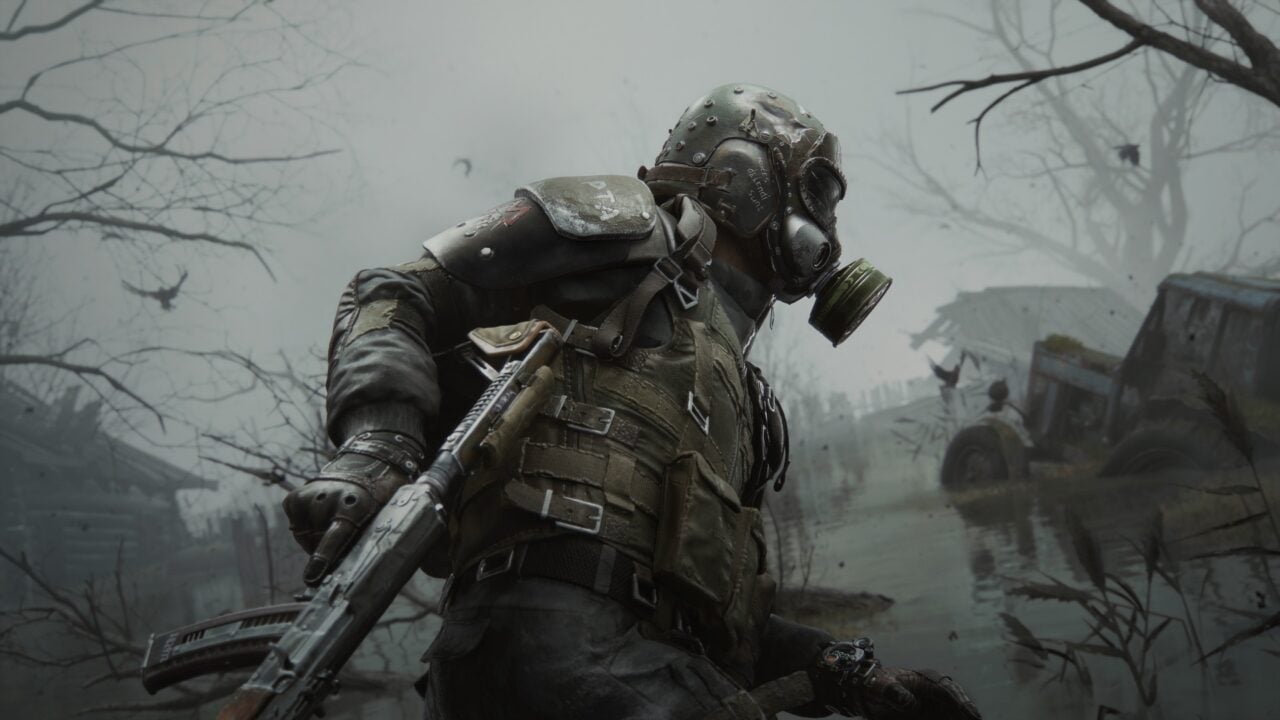
Metro 2039 is heading back to its claustrophobic tunnel roots with stunning photorealistic visuals and a story forged in the real-world fires of the invasion of Ukraine.
Right, I’ve been staring at this footage all morning, and bloody hell, it’s wilder than it first appeared. You know that feeling when you cast a spell and it works a bit too well? That’s what 4A Games just did with the reveal of *Metro 2039*. I’ve been tinkering with the details of this story since the Xbox event dropped, and while the visuals are enough to make your graphics card sweat in anticipation, there’s a much deeper, darker story brewing beneath the surface of post-apocalyptic Moscow.
First off, let’s talk about the look of it. According to the original reporting over at Kotaku by Zack Zwiezen, 4A Games is still pushing their in-house engine to the absolute limit. We’re talking about levels of detail that feel less like a video game and more like a window into a particularly miserable, soot-stained future. It’s what I like to call 'digital alchemy'—taking lines of code and turning them into something that looks damn-near photorealistic. But, as your resident skeptical wizard, I have to ask: at what cost to our hardware? I reckon we’ll all need a cooling system powered by liquid nitrogen just to get past the main menu.
But let’s move past the shiny bits. The big surprise here—and the part that has me tilting my head like a confused owl—is the setting. After the sprawling, radioactive vistas of *Metro Exodus*, which let us breathe (well, as much as one can breathe in a nuclear winter), 4A is dragging us back down. We’re returning to the metro tunnels. Now, is this a retreat to safety or a masterclass in tension? I’m leaning toward the latter, but there’s always a bit of a worry when a franchise goes 'back to basics.' Are we losing the scale, or are we gaining the claustrophobia that made the series a legend in the first place?
You’ll be playing as 'The Stranger' this time around. He’s a bloke who swore he’d never go back into the tunnels, but thanks to some recurring nightmares and—I assume—the general lack of decent real estate on the surface, he’s headed back down. The political landscape below the crust has shifted too. All the factions we used to know? They’ve been shoved under the boot of a fascist dictator. It’s a grim reflection of humanity’s worst instincts, which seems to be exactly what the developers are aiming for.
This is where we have to pause the cheeky banter for a moment and look at the 'why' behind this game. As reported by Kotaku, 4A Games is a Ukrainian studio, and they are building this game while living through a literal war. It’s one thing to design a digital apocalypse; it’s quite another to do it while your reality is being torn apart. Co-creative director Pawel Ulmer didn't mince words, saying they aren't 'romanticizing' the post-apocalypse. They’re making it a tragedy.
I’ve always been a bit skeptical of 'gritty' reboots that use darkness just for the sake of an aesthetic, but this feels different. The story for *Metro 2039* actually changed after the Russian invasion of Ukraine. The series has always flirted with the themes of war and survival, but now the developers are living it daily. Even Dmitry Glukhovsky, the mind behind the original books, is involved from exile. It’s a heavy, authentic layer of grit that you just can't manufacture in a boardroom in California. It makes the marketing buzzwords about 'consequences' and 'the cost of silence' feel less like PR fluff and more like a desperate, vital message.
Now, from my perspective as a bit of a digital wizard who keeps an eye on the future of gaming, I can’t help but wonder how this level of authentic, community-driven storytelling will sit in the current market. We’re seeing a lot of industry consolidation and corporate 'safe bets' lately, but *Metro 2039* feels like a massive, defiant middle finger to the idea of playing it safe. It’s a uniquely Ukrainian perspective on a world that has already ended.
For my Web3-curious mates, there isn't a sniff of a 'digital asset' or a 'blockchain' in this announcement, and honestly? That’s probably for the best here. When a game is dealing with themes this heavy and a reality this harsh, trying to shoehorn in a secondary market for radioactive gas mask skins would feel a bit... well, tasteless. However, the tech itself—the way 4A Games maintains sovereign control over their engine and their narrative—is exactly the kind of independent spirit we cheer for in the decentralized world. They’re building their own reality, and they’re doing it on their own terms.
So, what’s the verdict? I’m cautiously optimistic—not that the world of *Metro 2039* will be a fun place to hang out (it looks bloody miserable, to be fair), but that the game will actually mean something. It’s set to launch this winter on Xbox, PlayStation, and PC. I’ll be keeping my ears to the ground and my wand at the ready for more updates. Just remember: if it looks too good to be true, it’s probably just 4A Games’ engine doing some black magic.
Stay curious, stay skeptical, and maybe buy a better GPU before December, yeah?
Tags: Metro 2039, 4A Games, FPS, Gaming News, Post-Apocalyptic
Original article: kotaku