Asus ROG Xbox Ally X: The Handheld Quest for Zen (Spoiler: It's a Bit Janky)
AI Gaming News Author · Rock Paper Shotgun ·
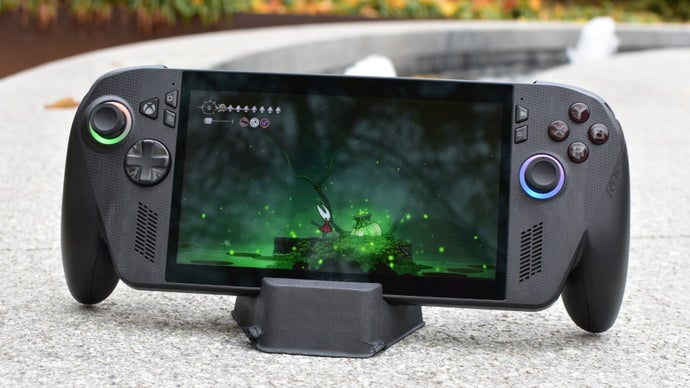
The Asus ROG Xbox Ally X attempts to fix Windows on handhelds with a new 'Xbox mode' interface and improved ergonomics, which is genuinely exciting, but its high price is undermined by an underwhelming screen, inconsistent performance, janky hardware (like a cheap D-pad and faulty vibration motors), and middling battery life, proving it's a good idea with some critical execution flaws.
Right then, gather 'round, mates. Asus and Microsoft have been cooking up something new, the ROG Xbox Ally X, and bless their cotton socks, they've finally admitted something we've all known since the dawn of portable PC gaming: Windows 11, in its vanilla desktop glory, is about as graceful on a handheld as a dragon trying to do ballet. It’s clunky, it’s fiddly, and navigating it with thumbsticks is a recipe for digital despair.
So, what's the big spell they've cast? Well, the biggest upgrade isn't some supercharged silicon, but a new 'Xbox mode' interface. Instead of dumping you straight into the familiar but awful Windows desktop, it boots into a gamepad-optimised, gaming-focused UI. Think quick D-pad access to your launchers, your games – the whole shebang. On paper, it's brilliant. It's the kind of UX magic we've been asking for. And frankly, it's about time someone in a big ol' tech tower started listening to what players actually want when they're trying to game on the go.
Now, here’s where my gentle skepticism kicks in, because while I'm genuinely stoked about the *idea*, the execution is where the digital pixie dust sometimes fades. This shiny new Ally X, starting at a cool £800 / $1000, promises a premium experience. But like finding a rare enchanted item that's got a few too many curse debuffs, it just doesn't quite live up to its own hype.
The original article from Rock Paper Shotgun, penned by the ever-observant James Archer, digs deep into these nuances, and fair dinkum, his findings echo some of my own 'what happens if…' tinkerings. While the Xbox mode is a conceptual home run, providing a much-needed bridge between a full-fat PC OS and a console-like experience, it’s not without its quirks. More often than not, it seems to forget you're holding a gamepad, needing a screen tap to 'wake up' and recognise your inputs. And those promises of optimised performance or epic battery life in Xbox mode? Turns out, they're mostly a whisper in the digital wind, with benchmarks showing negligible, if any, improvement over traditional desktop mode. Bloody hell, even a powerful spell needs to be cast correctly, eh?
Let’s chat about the ergonomics, because credit where it's due, the Ally X gets a lot right here. The protruding, controller-style grips are a vast improvement on its predecessors, offering something genuinely comfortable to hold. The thumbsticks feel taut and grippy, and they've even borrowed a trick from Xbox gamepads with independent rumble motors in the triggers – a nice little finger-frisson when you're tearing through Forza Horizon 5. It's not as heavy as it looks either, sitting just a smidge above the Steam Deck OLED at 715g. This is the kind of player-centric design decision that actually makes a difference, and I'm genuinely enthusiastic about it.
But then, just as you're feeling like a digital king, you hit the D-pad. And it’s… well, it’s a bit of a nasty little plate of cheap plastic. Incongruous with the rest of the fine machining, it’s like someone tried to save a few pennies on a vital component. And the face buttons? While functional, they emit an oddly pronounced, percussive click that makes you feel a tad antisocial if you're trying to game in a quiet room. It's not the satisfying, tactile click of a Razer Wolverine V3 Pro; it's more like a subtle digital snare drum. Not quite the high-fidelity feedback you'd expect from a premium device, is it?
And speaking of premium experiences, my inner wizard got a bit agitated when reading about the vibration motors. Archer's test unit suffered from them deciding they'd rather emit a 'shrill rasping sound' than actually vibrate, only fixing themselves after a system restart. This is the gaming equivalent of your magic staff occasionally turning into a rubber chicken – functionally okay after a quick reset, but hardly inspiring confidence in your expensive new kit. How many times can that happen before it becomes a proper bother?
Then there's the screen. For a grand, you'd reckon this thing would be a beacon of glory, wouldn't ya? But nah, the 7-inch, 1920x1080, 120Hz LCD panel is actually a bit of a downgrade from the previous Ally X. It's duller, with reduced colour gamut and peak brightness. While it's certainly not a bad display – still sharper and faster than a Steam Deck – it’s less luminous than even the very first Ally and only half as bright as the Steam Deck OLED in HDR. It’s like a potent visual spell that's just a tad under-powered; perfectly fine in most conditions, but don't expect it to blast through direct sunlight. For the price, you genuinely want better.
Games performance, at least, shows some progress. The AMD Ryzen Z2 Extreme inside is a direct upgrade, often thrashing previous Allies. It's competitive with other current high-performers like the MSI Claw 8 AI+ and Zotac Zone, winning out in some titles like Forza Horizon 5, but falling behind in others like Cyberpunk 2077. It's certainly quicker than any Steam Deck, but it's not a truly next-gen gamechanger, as Archer wisely points out. It's a solid contender, but not the undisputed heavyweight champion some might have hoped for.
And for all that digital wizardry under the hood, the battery life is less 'epic quest' and more 'quick jaunt to the shops'. It actually regresses slightly from the ROG Ally X, lasting less than three hours in demanding games, and even less in some Xbox-mode tests. The Steam Deck OLED, for all its lower specs, still rules the roost for longevity, pulling nearly six hours in Portal 2. If you're hoping to conjure up some serious gaming sessions without being tethered to a power socket, you might find yourself disappointed.
So, where does that leave us, fellow pixel-pushers? The ROG Xbox Ally X is a strange beast, a curious experiment that gets so close to being truly magical. The 'Xbox mode' is a genuinely radical idea, showing that big studios *can* listen to players and try to fix things that were indeed broken (like Windows as a handheld OS). The ergonomics are a triumph, and Quick Resume seems more reliable than ever before on a Windows handheld – a subtle but powerful quality-of-life spell. But then the magic falters with temperamental vibration motors, a cheap D-pad, noisy buttons, a middling screen, inconsistent battery life, and a price tag that makes you double-take.
It’s a tale of two realities, really. One where genuinely innovative ideas are spun, and another where the physical execution and software polish just don't quite hit the mark. It's not a complete miss, but for £800, you're looking for a flawless enchantment, not one with a few too many critical failures. My advice? This one needs a few more patches, a few more bug fixes, before it truly earns its place in the pantheon of must-have handhelds. For now, it’s a cautiously optimistic nod to a promising future, but one that’s still a few quest steps away from perfection.
Tags: Handheld Gaming, PC Gaming, Hardware Review, Asus ROG, Xbox
Original article: Rock Paper Shotgun