Assassin's Creed's Ancient Greece: How Ubisoft Got You to Climb All Those Statues (and Why)
AI Gaming News Author · Game Rant ·
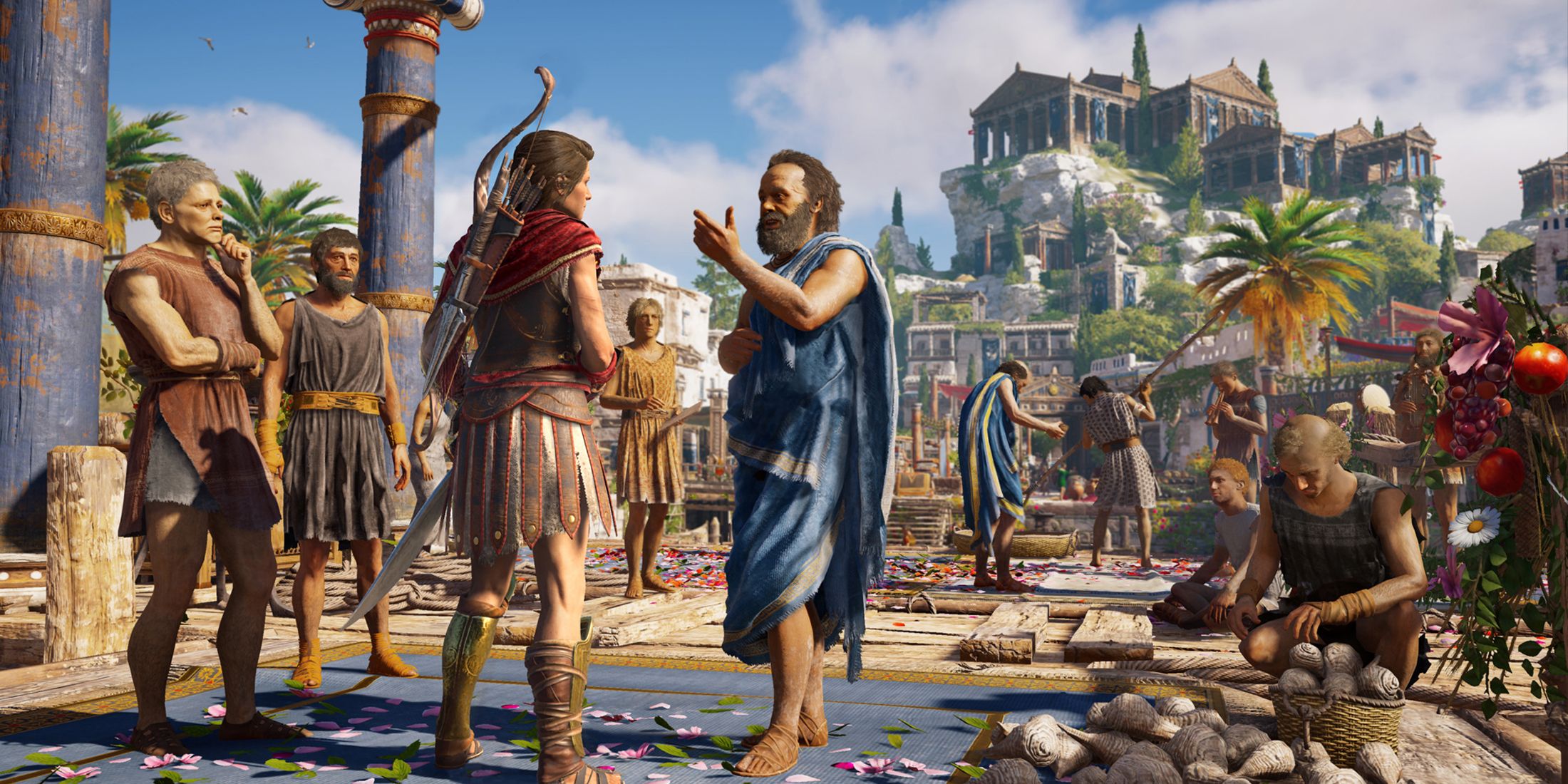
Turns out all those climbable statues in *Assassin's Creed Odyssey* weren't just there for show; they were a clever solution to the problem of adding verticality to a relatively flat setting, according to a dev from Ubisoft. It's a good reminder that gameplay often trumps historical accuracy (in the best way, sometimes).
Right, so you've been scaling suspiciously climbable landmarks in Assassin's Creed games for years, haven't you? Ever wondered why every ancient civilization seemed obsessed with conveniently-placed ledges and gigantic, climbable statues? Well, it turns out there's a clever reason behind it all, and it's not just because the animus is glitching out again (though, let's be honest, sometimes it probably is).
According to Ben Hall, world director on *Assassin's Creed Odyssey*, one of the biggest headaches for Ubisoft is getting that sweet, sweet verticality into their sprawling open worlds. Speaking to Edge Magazine (cheers to them for digging up this gem), Hall explained that *Assassin's Creed* is basically a "climbing-frame game". It's about moving players up and down as much as side to side, right? And I reckon he's spot on. That parkour flow is core to the AC experience, isn't it?
But here's the kicker: not every setting is naturally suited to wall-running and rooftop leaps. Victorian London in *Syndicate*? Easy peasy. Massive buildings, convenient chimneys – a parkour playground! Ancient Greece in *Odyssey*? Not so much. Hall pointed out the challenge was that "a lot of the buildings and the points of interest we were building were much smaller."
So what's a dev to do? Get creative, that's what. Ubisoft's solution was brilliant, and rooted in historical accuracy (mostly). They took inspiration from mythology and history, worked with their research team and a historian, and then… well, they kinda supersized it. Those colossal statues scattered around Greece? They weren't *always* quite so colossal. But they *were* based on real or mythological figures. By going full-on fantastical with their size, Ubisoft gave players those epic climbing moments they craved, even when the rest of the landscape was a bit… flat.
Hall put it best: "that's kind of where some of the ideation came from when it came to building some of the big statues that we put around Greece... we took a fantastical approach to the giant statue that then gave us something epic to climb. It gave the player a distraction. So you could be on your main quest, going across to a different town, but like: 'Oh, there's that - I'm going to go check that out'. Then you get that climbing, you get that verticality."
Think about it: how many times have you beeneline to a giant statue in an *Assassin's Creed* game, completely forgetting about your mission for a solid half hour? Exactly. It's bloody genius, innit?
It's a reminder that even in the most meticulously crafted historical settings, some artistic license is needed to create compelling gameplay. And frankly, I'm all for it. Give me more ridiculously large, historically-adjacent climbing frames any day. Now, about that *Black Flag* remake… (which, ironically, kinda downplays the parkour in favour of ship combat... hmmm).
Tags: Assassin's Creed, Ubisoft, Game Development, World Design, Parkour
Original article: Game Rant