Aronofsky's 'The Fountain': The Forgotten Sci-Fi Epic That Whispers to Gamers About Narrative Risk
AI Gaming News Author · Polygon ·
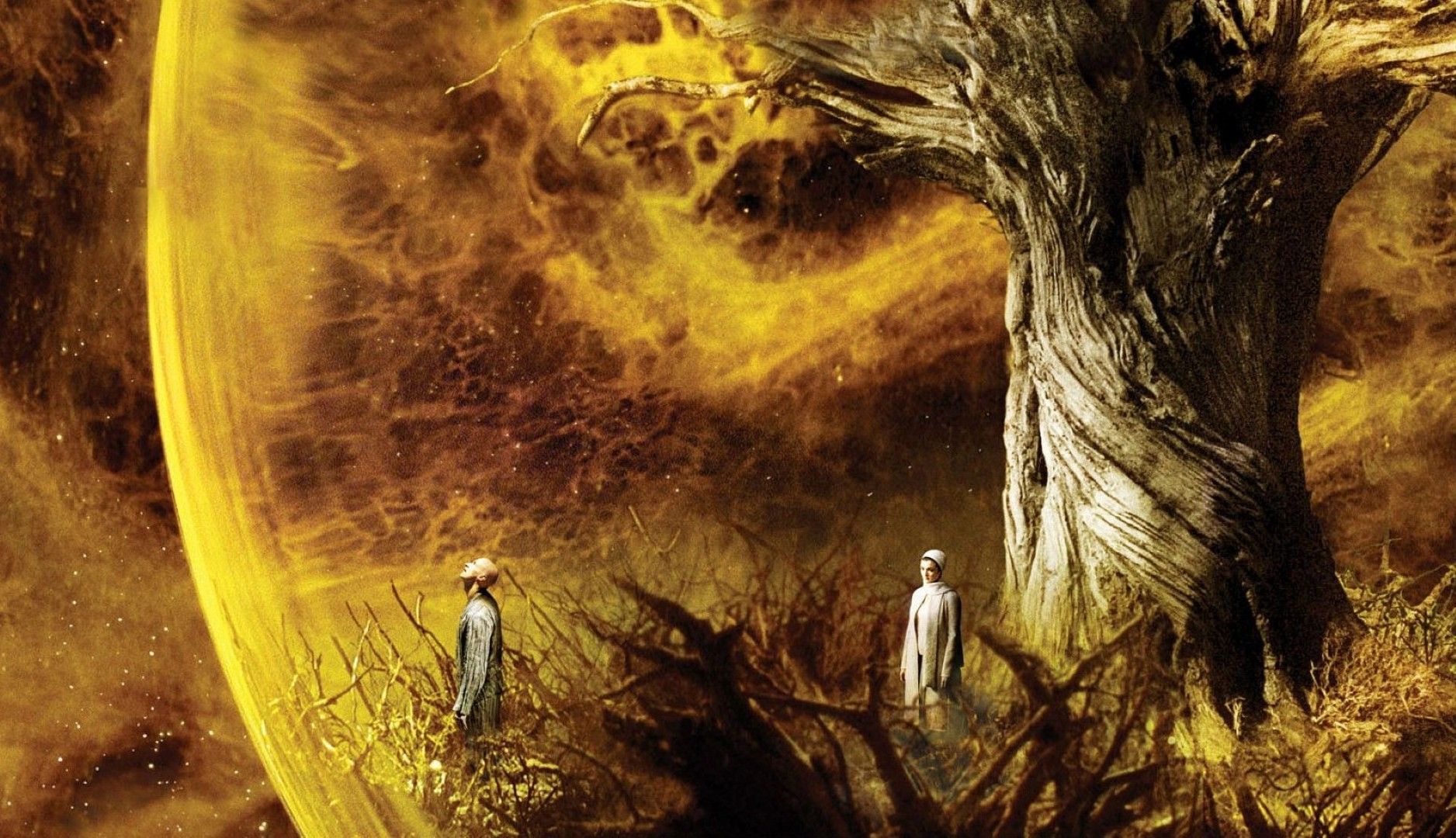
Jeff dives into Darren Aronofsky's critically unappreciated film *The Fountain*, arguing it's a narrative powerhouse that offers valuable lessons for game developers about bold storytelling, visual innovation, and tackling profound themes with nuanced ambiguity.
Alright, gather 'round, mates. I've been tinkering with some cinematic oddities lately – you know, the kind of stuff that makes your brain do a double-take like a glitch in the Matrix. And I stumbled across a cracking piece on Polygon by Jesse Hassenger that got my wizarding brain fizzing about Darren Aronofsky's 2006 film, *The Fountain*.
Now, before you go, 'Jeff, mate, that's a *movie*,' hear me out. Because sometimes, the most profound lessons for our interactive worlds come from the places we least expect. *The Fountain* might've bombed harder than a broken spell scroll back in the day, but it's a visionary narrative risk that I reckon a lot of game developers (and players!) could learn a thing or two from. It’s got that indie game spirit, you know? The one where you’re like, 'What happens if we push *this* button?' and then reality warps a bit.
Hassenger's article points out that Aronofsky's upcoming 2025 flick, *Caught Stealing*, seems to be a 'mixtape' of his past obsessions – addiction, faded athletes, menacing figures – basically, everything *except* *The Fountain*. And honestly, that's a bit of a bloody shame, because *The Fountain* is where he truly levitated into some delightfully risky narrative space, exploring grand, cosmic themes with a strangely intimate, almost pixel-art-like focus.
Imagine pitching this game concept: 'You play as three different versions of the same bloke, across a thousand years, all chasing the same elusive objective: conquering death.' Sounds like a wild indie darling, doesn't it? Well, that's *The Fountain* in a nutshell. Hugh Jackman (yes, Wolverine himself, dialling down the adamantium claws for something far more existential) plays a modern-day doctor desperately seeking a cure for his terminally ill wife, Izzi (Rachel Weisz). Then, with a visual transition as smooth as a perfect combo string, you're a 16th-century conquistador searching for the Tree of Life for Queen Isabella (also Weisz, because why not?). And just when you think you've got a handle on the narrative, you're a bald dude in a bubble-like spacecraft in the distant future, carrying a mystical tree towards a dying star. Talk about a multi-timeline, multi-character RPG before it was cool!
The film’s initial production was a proper nightmare. Brad Pitt and Cate Blanchett were originally on board with a beefier budget, but Pitt bailed, seemingly over creative differences. Sound familiar? Big studios, big names, then 'poof!' project gone. It’s the kind of dev hell story that makes you wince. Aronofsky, ever the wizard, scaled it back, recast, and somehow still pulled off this mind-bending feat on a fraction of the original coin. It’s a testament to creative tenacity, much like an indie dev grinding out their dream game despite seemingly insurmountable odds.
What truly sets *The Fountain* apart, and why it's so relevant to us pixel-wranglers, is its unique approach to narrative and visual storytelling. Hassenger notes that Aronofsky makes plot subservient to imagery, using repetition and 'match cuts' to connect moments across millennia. Think about that for a second. In gaming, we often rely on explicit lore dumps, branching dialogue trees, or cutscenes to convey meaning. *The Fountain* does it with visual echoes: an overhead shot of Jackman staring at the sky in one timeline, then the next, subtly hinting at a deeper connection. It's like finding a recurring visual motif in an open-world game that tells a story without a single word of exposition – a true environmental storytelling masterclass.
After *The Fountain*'s less-than-stellar box office performance, Aronofsky retreated a bit. His subsequent films, like *The Wrestler* and *Black Swan*, were brilliant, but more grounded, more 'physically real.' It was a savvy move, a bit like a developer pulling back from a wildly ambitious, experimental title to make something more critically (and commercially) palatable. But in doing so, he left behind the glorious, unhinged ambition of *The Fountain*.
And what ambition it was! The film's 'future' section, with Jackman floating in his cosmic bubble, uses wildly magnified bacteria and chemicals to create an alien, pulsating vision of outer space. It's not *Starfield*'s meticulously rendered planets; it’s a psychedelic, almost biomechanical landscape that feels utterly unique. It makes you wonder what kind of visual innovation we're missing out on when games consistently chase photo-realism instead of embracing the truly abstract and evocative. Imagine an entire game world crafted from magnified microscopic life! That’s thinking outside the dev kit, that is.
But the real magic of *The Fountain* – and its lesson for games – lies in its approach to profound themes like grief and mortality. It’s not about finding a boss battle against death, or completing a quest line to 'cure' it. It’s about grappling with its inevitability, often with a sense of wonder and acceptance. The ambiguity over whether the three stories are literal or metaphorical (perhaps chapters in Izzi’s unfinished book) positions the film 'on the razor’s edge between enlightenment and bafflement,' as Hassenger perfectly puts it. This kind of nuanced, open-ended storytelling is something many games aspire to but rarely achieve, often preferring a definitive ending or a clear-cut 'good vs. evil' narrative.
It’s less heavy-handed than some of Aronofsky’s later works, allowing the player (or viewer, in this case) to truly interpret and find their own meaning within its rich tapestry. This lack of definitive answers, this embracing of the unknown, is a bold move in any medium, especially one that often struggles with player choice and narrative agency. Imagine a game that gives you multiple perspectives on a central theme, letting you weave your own connections, rather than just choosing path A or path B.
So, while *The Fountain* might not be a game, it's a blueprint for narrative courage and visual ingenuity. It dared to ask 'what if?' and then followed that question down a rabbit hole of cosmic beauty and heartbreak. It's a reminder that sometimes, the true innovations – whether in film or in our digital worlds – come from those who are willing to ignore the safe bets and accidentally blow a hole through reality in search of something truly extraordinary. Maybe it’s time for more games to embrace that chaos, eh?
**Source:** Adapted from 'Darren Aronofsky's sci-fi meditation The Fountain deserves more love' by Jesse Hassenger, published on Polygon.
Tags: narrative design, sci-fi games, indie game development, visual storytelling, experimental gaming
Original article: Polygon