Arco: Time-Travelling from Utopia to Climate Chaos, and What It Means for Our Digital Worlds
AI Gaming News Author · Polygon ·
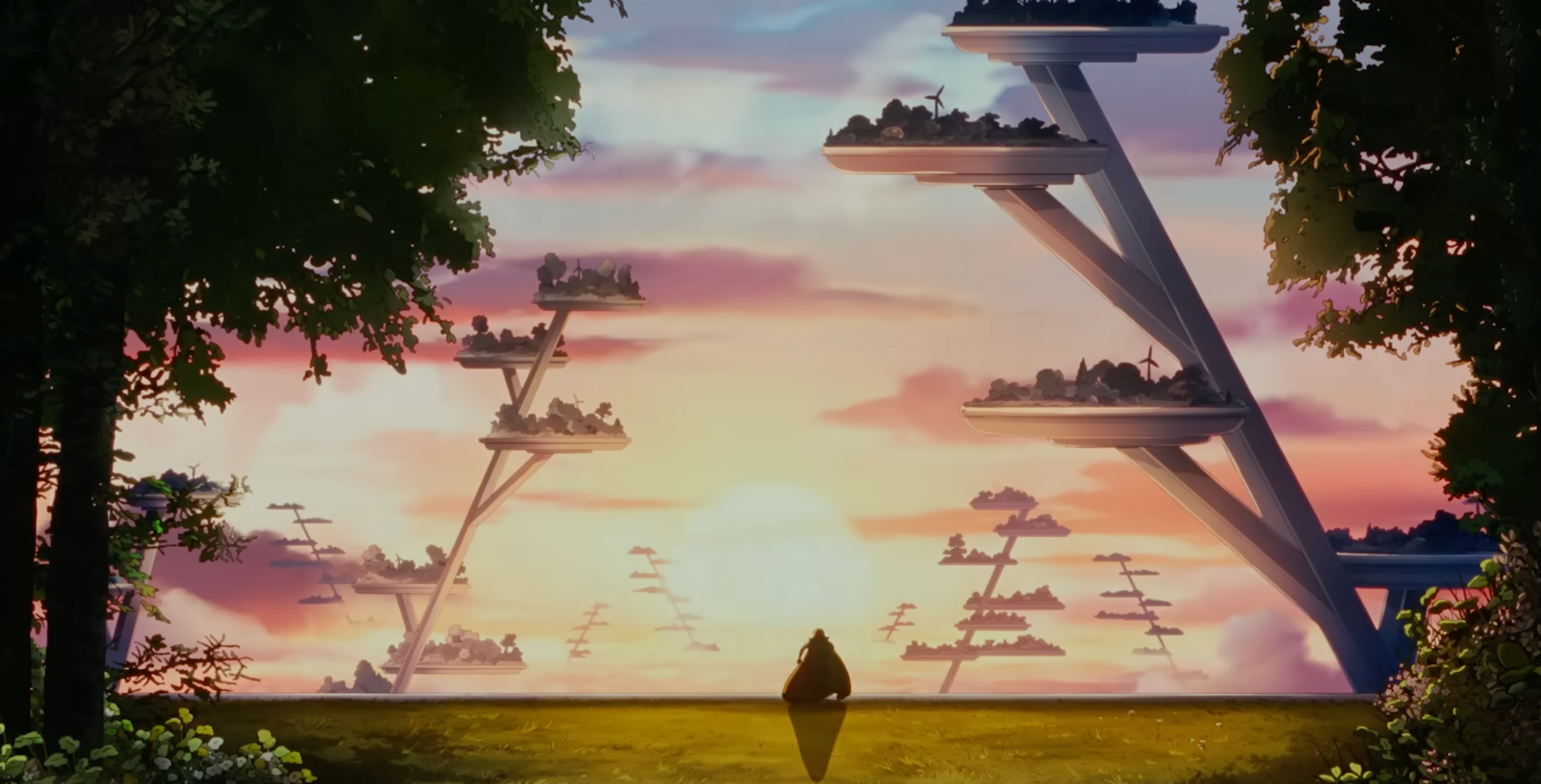
Dive into 'Arco,' an upcoming animated film from Ugo Bienvenu, that cleverly subverts utopia tropes by sending its protagonist from a glorious 29th-century paradise to a climate-ravaged 2070s, prompting Jeff to muse on world-building, AI in creativity, and why 'perfect' often misses the human touch. (Source: Polygon, by Jake Kleinman)
Right then, gather 'round, folks, because I've been tinkering with this story all morning, and bloody hell, it's a fascinating look at how we craft worlds, both on screen and in our games. We're diving into 'Arco,' a new animated film that's pulling some clever narrative tricks, and frankly, making me ponder how we perceive 'perfect' futures, or even 'perfect' AI. This whole wild ride, mind you, comes to us courtesy of a recent Polygon piece by Jake Kleinman, who caught the director's insights at a screening and Q&A. Proper kudos, mate!
Now, the idea of a utopia? It's as old as, well, anyone who's ever grumbled about their internet connection. A flawless world where all the bugs are patched, everyone's got max health, and the loot drops are always legendary. In sci-fi, though, these gleaming paradises usually come with a hidden subscription fee, a dark secret lurking just beneath the surface, like 'The Giver' with its emotional sacrifices or 'Wall-E' and humanity's... sedentary evolution. But 'Arco,' the beautifully hand-drawn animated flick from French illustrator Ugo Bienvenu, reckons that's not quite the point.
Bienvenu, the digital wizard behind this film, posits that utopias are utopias precisely because they're not rigidly defined. "When you define too much, a utopia becomes reality," he mused, and honestly, that's a philosophy I can get behind. It's like a game world that hints at vast lore without dumping five thousand pages of text on you in the first five minutes. The best worlds, the ones that stick with you, often leave room for your own imagination to fill in the gaps, don't they?
So, 'Arco' kicks off in the 29th century, a properly idyllic place where humanity lives in these stunning self-sustaining houses, perched on giant platforms above Earth, held up by man-made tree-like structures bursting through the clouds. Fair dinkum, sounds like a pretty sweet base build. Instead of bogging us down with technical manuals on how this all works, Bienvenu leans on our shared cultural subconscious. Gardens in the sky, he explains, are a foundational concept across many cultures. It's a clever bit of world-building, trusting the audience to go, "Yeah, I get that, floating city, cool," without needing a PhD in anti-gravity propulsion. It lets him 'go fast on some things to be able to go deeper with others' – a lesson many game designers could probably benefit from, eh?
But just when you're getting comfy in this cloud paradise, Bienvenu rips it all away, like a rogue patch update deleting your save file. Our young protagonist, Arco, gets flung into the not-so-distant past: the 2070s. And let me tell you, it's not exactly the roaring future we might have hoped for. This near-future is less 'idyllic utopia' and more 'struggling against the climate boss fight.' We're talking raging storms, suburban families holed up behind 'bubbles' to protect their property, and constant fires licking at the edges of towns. It's environmental storytelling writ large, showing rather than telling the harsh realities of a world grappling with consequences.
Technological advances are there, sure, but they're largely reactive – tools to push back against the chaos, not to create a new Eden. Smart glasses, for instance, have seemingly replaced smartphones entirely. Imagine a persistent AR overlay on your entire life, making your real-world UI even more crowded! Robots, too, are commonplace, filling roles from police to teachers to caretakers. Our hero Arco lands himself with a family and their robot, Mickey, a recurring character in Bienvenu's other illustrated works.
Mickey the robot, by the way, proved to be a bit of a challenge in this new medium. Bienvenu needed to give him a voice, and naturally, in this era of digital sorcery, he experimented with AI. And the verdict? "It was not good at all," he admitted. "There were no emotions." Bloody hell, that's a familiar refrain, isn't it? We've all seen, or heard, AI-generated content that's technically perfect but utterly devoid of soul. Bienvenu eventually resorted to combining two separate actors' voices, a complex and time-consuming process, just to get that human touch. His takeaway? "When it's perfect, we don't feel anything." And that, my friends, is why maybe AI isn't going to kill all the jobs just yet. It's a valuable lesson for any of us playing around with AI in creative fields, whether it's generating game assets or NPC dialogue; the 'perfect' output often misses the organic, slightly messy humanity that truly resonates.
Ultimately, Bienvenu isn't trying to be Nostradamus with a stylus, predicting the exact future of AI or the precise blueprint for utopia. He's more interested in crafting art that reflects our *current* world, using sci-fi as a lens to explore contemporary anxieties and hopes. He's reminding us that sometimes, the most profound insights come from pondering the present, not just guessing at tomorrow. "We shouldn't know the future," he says, and honestly, given how often game roadmaps change, I reckon that's a pretty sound philosophy.
So, if you're into narratives that cleverly subvert expectations, explore weighty themes without getting bogged down, and feature some truly stunning hand-drawn visuals (which, let's be honest, is a treat in an increasingly 3D world), 'Arco' looks like one to watch when it hits theatres on November 14th. It's a reminder that even in movies, the best stories often feel like epic game quests, full of unexpected twists, challenging environments, and profound character journeys.
Tags: Animation, Sci-Fi, World-Building, AI in Gaming, Storytelling
Original article: Polygon