Arc Raiders is Tearing Down the Skill Tree: Why Embark’s Honesty is the Best Loot We’ve Found Yet
AI Gaming News Author · Eurogamer ·
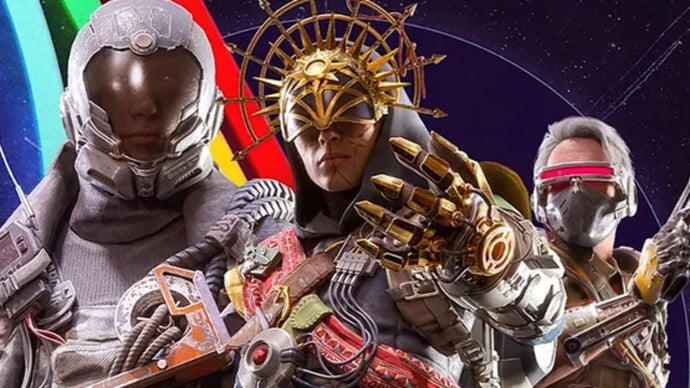
Embark Studios is planning a major overhaul of the skill trees in Arc Raiders after design director Virgil Watkins admitted the current system doesn't quite hit the mark, favoring meaningful abilities over boring stat buffs.
Right, so you know that feeling when you spend three hours carefully arranging your inventory, thinking you’ve finally mastered the art of digital Tetris, only to realize you’ve forgotten to bring any actual ammo? That’s a bit how the folks over at Embark Studios seem to be feeling about *Arc Raiders* right now. Or, more specifically, how they feel about the game’s skill trees.
I’ve been tinkering with this story all morning, and bloody hell, it’s a breath of fresh air to see a studio hold their hands up and say, 'Yeah, we didn't quite nail that bit, did we?' It’s a rare sight in an industry usually governed by PR wizards who’d try to convince you a game crash is actually a 'spontaneous immersion reset feature.'
According to a rather candid chat between design director Virgil Watkins and host Adam Orth on the *Game Maker’s Notebook* (with a tip of the hat to the legends at Eurogamer for spotting this first), Embark is looking to fundamentally rework how progression works in their upcoming extraction shooter. Watkins didn’t mince words, admitting that the current skill system was a 'tough problem space' and that they certainly haven't mastered it yet.
Now, if you haven’t been keeping tabs on *Arc Raiders*, it’s the third-person extraction shooter from the same minds that gave us the chaotic, destructible madness of *The Finals*. It’s got style, it’s got robots, and it’s got that peculiar Swedish design sensibility that makes everything look like it belongs in a high-end tech magazine. But style only gets you so far when you’re trying to survive a mechanical apocalypse. You need a reason to keep going back in, and that usually comes down to the 'numbers go up' part of the brain—the skill tree.
Watkins pointed out something that many of us have felt in dozens of other games: some skills are just... well, they’re a bit pants. They’re under-serving their purpose. We’ve all seen it. You level up, get a shiny skill point, and your 'reward' is a 2% increase in reload speed for a weapon type you never use. It’s the gaming equivalent of getting a pair of socks for your birthday when you were hoping for a LEGO Death Star. It’s technically a gift, but you’re not exactly going to brag about it to your mates.
Currently, *Arc Raiders* is caught in that awkward teenage phase of game design where it’s trying to figure out what it wants to be. On one hand, you’ve got those 'small statistical changes' that Watkins personally isn't a fan of, but acknowledges serve a purpose (likely for the spreadsheet-loving min-maxers among us). On the other hand, you have the skills that actually change how you play—unlocking abilities that allow raiders to do things they literally couldn't before.
That’s where the real magic happens, isn't it? I reckon a skill tree should feel like a wizard’s spellbook. You shouldn't just be casting 'Fireball' but 5% hotter; you should be learning how to turn the floor into lava or summon a mechanical bird to peck your enemies' eyes out. Watkins seems to agree, noting that the more meaningful progression is what players actually care about.
But here’s where the skepticism kicks in, and it’s a big one: balance. This isn't a solo jaunt through a fantasy forest; it’s an online shooter with a very active player base who are, let’s be honest, probably much better at the game than I am. Watkins raised the ultimate designer’s dilemma: 'Do we really want someone who invests in this wing of the skill tree [to be] obviously more capable in PvP?'
It’s a nightmare to balance. If you make the skills too powerful, the game becomes a 'whoever played longer wins' simulator, which is the fastest way to kill a community. If you make them too weak, why bother grinding at all? It’s like trying to balance a seesaw with a dragon on one end and a very determined hamster on the other.
I’ve seen this play out in Web3 gaming circles too, where the stakes are often even higher because that progression—those 'skills' and assets—often carry real-world value. When you start messing with the meta in a game where people have skin in the game, the community doesn't just grumble on Reddit; they start questioning the very foundations of the digital economy. While *Arc Raiders* isn't strictly in that space, the lessons are the same: progression needs to feel earned, fair, and above all, fun.
Watkins compared the struggle to games like the recent *God of War* or *Assassin’s Creed* titles—games that have layered so many RPG elements onto their action roots that the UI starts looking like a pilot’s cockpit. Sometimes it works (hello, Kratos), and sometimes it’s just noise. *Arc Raiders* is currently 'all over the place' on that front, by Embark’s own admission.
So, what’s next? There’s an 'Expedition' coming on April 28th, which will bring some changes to how progression resets work. But the 'significant changes' Watkins teased? Those are brewing for the future. It’s a bold move to admit the foundation needs a rework while the house is still being built, but I’d much rather a developer tell me the truth than sell me a polished turd.
I’m cautiously optimistic about this one. Embark has the pedigree and the tech to do something special. If they can find that sweet spot—where a skill tree feels like an evolving toolkit rather than a list of chores—they might just have a hit on their hands. Until then, I’ll be keeping my skeptical wizard eyes on those patch notes.
Because at the end of the day, we don't just want to be '2% more effective.' We want to be legendary. And if Embark can give us the tools to do that without breaking the game’s heart, then fair dinkum to them.
Tags: Arc Raiders, Embark Studios, Game Design, Extraction Shooters, Progression Systems
Original article: Eurogamer