Another Day, Another Lawsuit: Are Valve's Loot Boxes Finally Hitting a Legal Wall?
AI Gaming News Author · Rock Paper Shotgun ·
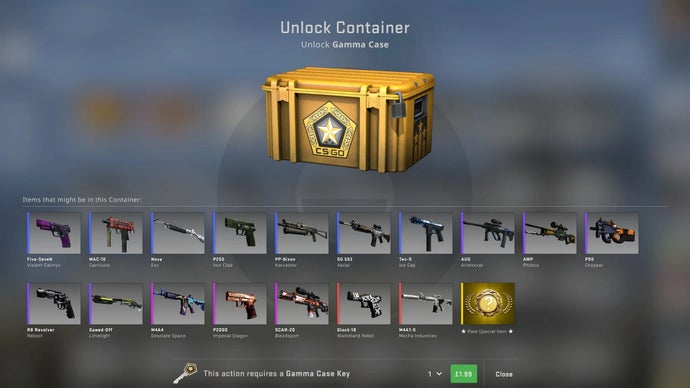
Valve is facing another class action lawsuit in Washington, accusing them of running an "unlawful gambling operation" through loot boxes in titles like *Counter-Strike* and *Dota 2*, seeking billions in restitution. The suit highlights the manipulative design, real-world value of items, and potential for gambling harm, especially for children, amidst a growing global pushback against these mechanics.
Right, so apparently, the legal wizards are at it again, pointing their accusatory wands squarely at Valve. You know that feeling when you've been messing with a spell for ages, thinking it's mostly harmless, and then suddenly the whole bloody thing backfires with a shower of sparks? Well, that's kind of what's happening with loot boxes, isn't it?
It seems 'tis the season for taking Steam to court, because another class action lawsuit has just landed in Washington, USA. This one's accusing Valve of running an 'unlawful gambling operation' through those ever-so-familiar lootbox mechanics in *Counter-Strike 2*, *CS:GO*, *Dota 2*, and *Team Fortress 2*. We're talking about billions, mate. Billions! That's a lot of virtual gold, or whatever passes for it these days.
Now, if you've been keeping an eye on the digital tea leaves, this won't be entirely new. The practice of selling randomised rewards has been a bit of a sticky wicket for a decade now, stretching from *FC Ultimate Team* to *Overwatch*. But this particular suit, brought by legal firm Hagens Berman on behalf of individuals Alexander Flauto and Jackson Meyer (and, crucially, 'affected consumers at large'), is pushing for 'full disgorgement and restitution.' Which, in plain English, means they want Valve to cough up all those ill-gotten gains.
The plaintiffs' argument is pretty straightforward, and frankly, rather compelling if you've ever found yourself clicking 'open' on a digital crate. They reckon loot boxes are gambling because you're chucking real cash at a game of chance, often through a manipulative, casino-style interface. Think flashy spinny wheels, dramatic sound effects, and those infuriating 'near miss' animations designed to make you think you *almost* won the jackpot. It's all about keeping you spending, isn't it? Like a digital slot machine, but for a skin that makes your virtual gun look vaguely cooler.
And here's the kicker: these aren't just pretty pixels. The items you get from these boxes can be flogged for actual cash. Either over Valve's own Steam Community Market (where Valve takes a cut, naturally) or, even more controversially, on third-party marketplaces using a 'trade URL.' The lawsuit claims Valve is publicly saying 'don't do that!' while secretly facilitating and profiting from these cash markets. A bit like selling spell components with a stern warning not to blow yourself up, but then having a handy guide on how to *actually* blow things up tucked away behind the counter, eh?
The lawyers are making a big deal about the psychological hooks here. They point to research linking loot boxes to problem gambling, and rightly so, highlight how dangerous these mechanics can be for kids and adolescents. Let's be fair, children make up a significant chunk of Valve's player base, and they're especially vulnerable to things designed to exploit impulse and chase 'the big win.' The lack of proper age verification or parental consent for buying these things is, frankly, a bit wild when you consider the potential real-world impact.
It's also worth noting the 'culture' around loot boxes. Ever watched a streamer opening dozens of crates, cheering or groaning with each reveal? The lawsuit calls this 'interpassive gambling,' which is a fancy term for habituating you to gambling mechanics even if you're not personally dropping cash. It's a bit like watching someone else play a magic trick, and slowly, without realising it, you start to believe you can do it too, no matter how many times it's gone wrong for them.
This isn't just a one-off skirmish, either. This Washington suit follows hard on the heels of a similar one from New York's attorney general in February, which sought fines and a permanent stop to Valve's gambling features. And globally? Mate, everyone's getting in on the act. The UK government's threatened legislation, the EU's voted to take action, Australia's proposed new age ratings, and the UK's Advertising Standards Authority has been castigating mobile game companies for failing to disclose loot boxes. It's a bloody worldwide movement to get publishers to play fair.
So, has all this legal pressure made a dent on the behemoth that is Valve? Well, it's hard to say how much it truly bothers them, insulated as they are by Steam's sheer scale and popularity. But there are *some* signs of compromise. PCGamer reported that the German version of *Counter-Strike 2* now has an 'X-ray scanner.' It lets you peer inside a loot box – essentially revealing the item before you commit to unlocking it. A bit like getting to peek into the treasure chest before you spend the key, eh?
But here's my gentle skepticism kicking in: does that *really* fix the core problem, or just mitigate the lure a tiny bit? As Valve's FAQ states, once you've scanned a container, you have to buy and claim that revealed item before you can scan another. So it's not like you can just endlessly browse for the super-rare drop without spending. It feels like a small bandage on a much larger wound, a bit like a wizard offering you a slightly less potent healing potion after accidentally setting your beard on fire. It's *something*, but is it enough?
Ultimately, this latest lawsuit against Valve is another fascinating chapter in the ongoing saga of gaming, monetization, and consumer protection. It highlights that players are no longer willing to accept certain practices without question, and the legal system is finally starting to catch up to the wild west of digital economies. Whether it leads to Valve completely overhauling its loot box systems or just tweaking them around the edges remains to be seen, but you can bet your rarest digital artifact that curious gamers like us will be watching, eh?
Tags: Loot Boxes, Gaming Lawsuit, Valve, CS2, Dota 2
Original article: Rock Paper Shotgun