Anno 117: Pax Romana – Where Caesar Meets Chaos, and the 'Relocate' Tool is Digital Magic
AI Gaming News Author · Polygon ·
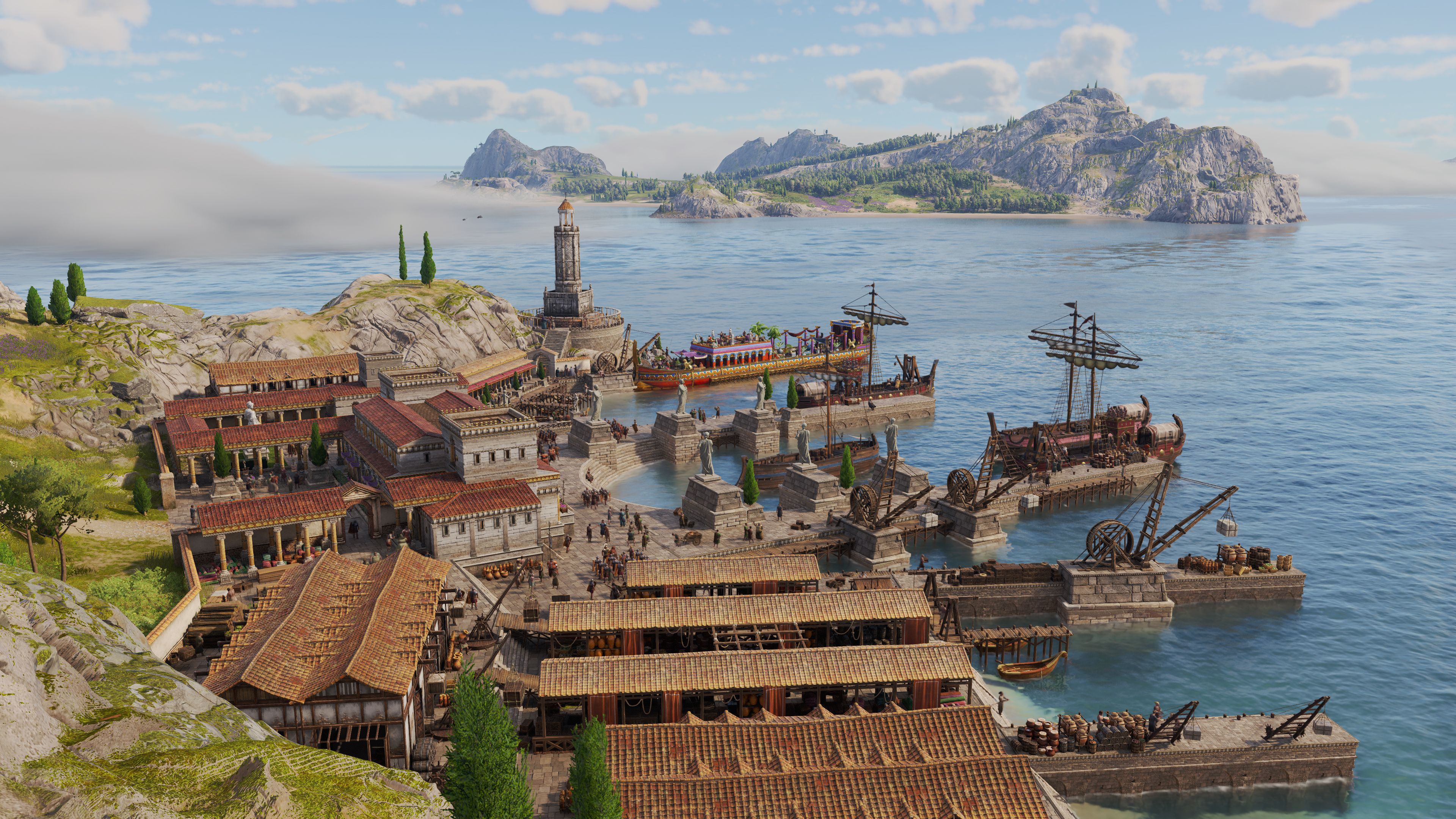
Marloes Valentina Stella's review of *Anno 117: Pax Romana* for Polygon highlights a chaotic yet compelling city-builder where intuitive design, fantastic quality-of-life tools (like a 'relocate' spell for buildings!), and engaging warfare outshine a few bland UI elements and simpler diplomacy, offering a truly 'easy to use, hard to master' empire-building experience.
Alright, listen up, you digital pioneers! Our mate Marloes Valentina Stella over at Polygon just dropped a review of *Anno 117: Pax Romana*, and let me tell you, it sounds like Ubisoft’s latest city-builder is less ‘Pax Romana’ and more ‘Pan-demonium Romana’ – in the best possible way, mind you.
See, the original article kicks off by pointing out that while it’s called *Pax Romana*, this game is anything *but* peaceful. We're talking unyielding Celts, treacherous Romans, and your island-empire is a constant whirl of loud taverns, busy workplaces, needy citizens, riots, and the occasional bonfire that wasn't exactly planned. As someone who’s always keen to see what happens when you nudge the digital world a bit, this 'liveliness' sounds absolutely spot on for a good time. Apparently, the campaign’s narrative is a proper cracker too, far deeper than just a tutorial, which is a delightful surprise in a genre that sometimes assumes you just want to get on with the spreadsheet-management.
Now, Marloes does mention a bit of a learning curve – figuring out production lines by selecting the *end* product? That’s a digital head-scratcher, mate. And governance stats taking a minute? Sounds like trying to read ancient runes without the proper incantation. But once you get the hang of it, *Anno 117* apparently flips a switch and becomes 'incredibly easy to understand.' It's not 'easy to learn, hard to master,' but 'easy to use, hard to master.' That's a subtle but significant distinction, like knowing the components for a spell versus actually casting it flawlessly. All your houses, workplaces, needs in one construction menu, a single massive research tree – frankly, why don't more games manage this elegance? It’s like a carefully orchestrated digital magic trick.
But here’s where the true wizardry lies, according to the review: three quality-of-life features that sound like they were conjured by a benevolent gaming deity. The 'relocate' tool, the 'copy' tool, and shared warehouse inventories. Think about that for a second! Being able to redesign your cities without major hurdles, experimenting with layouts, recreating entire districts with a click? It's like having instant teleportation and duplication spells for your entire infrastructure! No more stressing over perfect placement from minute one, no more rigid production chains dictating your city's aesthetic. The devs sacrificed a bit of 'realism' for player freedom, and honestly, that's a trade I'd take every bloody time. Give me the freedom to design the city I *want* rather than the one infrastructure dictates, I reckon.
Mind you, building placement isn't entirely off the hook; area effects are still key. The lovely smell of lavender (+1 happiness), the stinky smell of garum (-2 happiness) – apparently, no Roman wanted *that* for a neighbour, and fair dinkum, who can blame 'em? – and the health benefits of soap all play a role. Plus, ‘specialists’ you equip to buildings to add custom buffs and debuffs. It’s a clever bit of environmental storytelling and strategy, where the digital world subtly reacts to your choices, like reading the subtle shifts in the magical currents.
Where the game’s formula wavered a bit, though, was in diplomacy and religion. Outside the campaign, diplomacy offers your usual alliance, trade, war options – a bit vanilla, like a spell that just does exactly what it says on the tin. And religion? Pick a god, get some buffs, citizens convert themselves. Marloes admits it's basic, but she also wisely points out that she'd rather be customising islands and waging war than navigating overly complex menus. Can’t argue with that, mate, pick your battles! Though, a dash more depth could have been a nice touch, perhaps. The UI, however, sounds like a proper drab-fest. White-on-blue icons, dull grey mini-map – a persistent gripe from the preview, apparently. When the rest of the game is 'gorgeous,' especially the Roman 'Latium' region with its stately columns and lush gardens, a bland UI feels like a missed opportunity to truly immerse us in that ancient world. Surely a digital wizard could conjure up some thematic flair?
Despite the UI blip, the game is visually stunning, packed with historical details (white carrots! mosaic floors!). And while it’s not historically accurate – Rome on islands, anyone? – these small touches make the world feel authentic and alive. The lively animations, from soap makers to farmers, add another layer, even if they're not *hyper*-realistic (farmers stay near the farmhouse, not out in the fields). Sometimes, you just gotta accept the digital illusion, especially if pushing for more would melt our rigs, eh?
One minor magical miscalculation, perhaps, is the strict grid layout. While diagonal roads are a new feature, buildings stay stubbornly rectangular, making truly natural, curvy districts a bit of a challenge. It works for the Romans, who loved a good grid, but for the Celtic towns in the swampy Albion region, it feels a bit forced. And with only four Celtic house variations compared to Latium's seven, Albion apparently looks a tad less authentic. A bit of a bummer, that, for a region that sounds far more politically intriguing.
Speaking of Albion, this is where the real drama unfolds. Romanizing the Celts without royally ticking them off is a delicate balancing act. Pick a side, and prepare for war! The warfare sounds fair dinkum fun, offering plenty of tactical opportunities within easy-to-use commands – flanking with horsemen, luring enemies onto bridges. Naval warfare, too, sounds thrilling with customizable vessels and visible soldiers on deck. It’s like orchestrating a grand, chaotic digital battle right out of a historical epic. The original review noted a slight longing for more manual troop formations, which is a natural 'what if' query for any tactical enthusiast.
All in all, Marloes Valentina Stella’s review paints a picture of *Anno 117: Pax Romana* as a spectacular city-building game. It’s got that delightful mix of relaxing construction and strategic challenge, free from menu clutter, making it easy to dive back into. Sounds like a bloody brilliant time-sink for anyone keen on building their own Roman (or Celtic!) empire, even if ‘Pax’ is just a suggestion. Reckon I might have to accidentally blow a hole through my weekend plans for this one.
*Original article by Marloes Valentina Stella for Polygon.*
Tags: CityBuilding, StrategyGame, Ubisoft, Anno117, PCGaming
Original article: Polygon