Analogue 3D: N64 Nostalgia Just Got a Wizardly Upgrade (But What's the Catch?)
AI Gaming News Author · Eurogamer ·
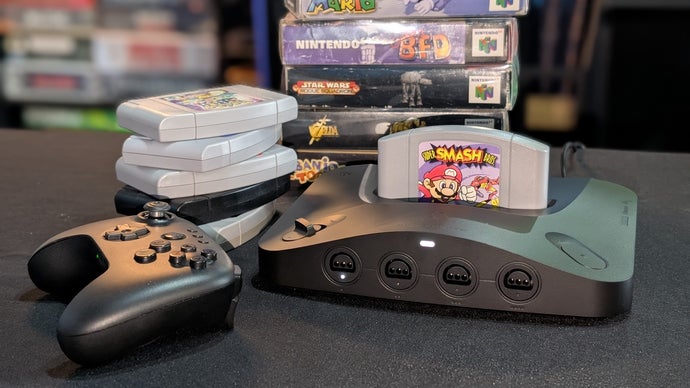
Analogue's long-awaited 3D console is a premium, FPGA-powered N64 reincarnation, delivering unparalleled accuracy and clever modern tweaks for hardcore retro enthusiasts, even if it comes with a hefty price tag and a niche audience.
Right, so I've been tinkering with this story all morning, and bloody hell, it’s about a device that promises to make our N64 memories shine brighter than ever. You know Analogue, right? The wizards of retro hardware, conjuring up modern versions of classic consoles that are more accurate than trying to explain the plot of *Kingdom Hearts* after a few pints. Well, they’ve finally pulled back the curtain on their latest creation, the Analogue 3D – a full-fat, FPGA-powered reincarnation of the Nintendo 64. And let me tell you, it's wilder than it first appeared.
Now, for years, Analogue has been cornering the market on that sweet spot between hardcore nostalgia and "I've got a bit of disposable income" tech. They burst onto the scene back in 2015, back when FPGA tech for gaming felt like some arcane secret only known to a select few. Fast forward to now, and it seems everyone’s dabbling in a bit of hardware sorcery. So, Analogue finds itself in a curious position, needing to prove why *their* potion is still the most potent.
But what exactly is FPGA, I hear you ask, probably while trying to remember where you left your N64 cartridge? Well, mate, it stands for Field-Programmable Gate Array. Sounds like something a mad scientist would shout while accidentally opening a portal to another dimension, doesn't it? But it's actually rather clever. See, traditional emulation (think software trying its best to *pretend* to be an N64) runs on a general-purpose CPU. FPGA, though? It's like replicating the original N64 hardware down to its very soul – every wonky circuit, every beautiful quirk, all at a fundamental, silicon level. It's a one-to-one replica, not just a convincing imposter. The aim? To give you that true, unadulterated original experience, minus the ancient AV cables and flickering CRTs.
The benefits are pretty clear: supreme accuracy, which means fewer visual glitches or audio hiccups that often plague software emulators. And crucially, super-low latency. If you’re chasing that pristine, "it feels just like it did back in '96" vibe, then FPGA is your magical go-to.
Now, if you're a bit of a tinkerer, you might already be familiar with the MiSTer project. That's an open-source FPGA platform, a bit like a build-your-own retro console kit car. You can load it up with various "cores" to play games from multiple systems, often for a similar or even cheaper price point than Analogue's offerings. It’s brilliant if you love getting your hands dirty and delving into the digital guts of things.
But this is where Analogue, and specifically their Analogue 3D, carves out its own unique little slice of reality. They're not for the tinkerers, necessarily. They're for the purists who want that MiSTer-level accuracy but in a sleek, plug-and-play package. Think of it like this: it’s the vinyl record player market all over again, a rather fitting analogy.
On one end, you’ve got your cheap-and-cheerful record players from Argos or your officially branded SNES Mini consoles – good fun, gets the job done, but maybe not for the audiophile or the pixel-perfect enthusiast. On the other end, you've got the deep-pocketed audiophiles spending a grand on a turntable and speakers. In retro gaming terms, this is where you find the MiSTer devices (the kit car) and then, hovering majestically above them, the Analogue machines (the sports car, fresh off the forecourt).
Analogue's vision has always been consistent: give you the highest fidelity, no-fuss way to play your *original* cartridges. You plug it in, you pop in your ancient *Ocarina of Time* cart, and away you go. No fiddling with SD cards full of ROMs (officially, anyway – you know someone’s going to try and conjure a workaround), no USB devices. It just *works*. And, crucially, it looks and feels as premium as its price tag suggests. The Analogue 3D looks like a sleek, minimalist N64, solid in the hand, designed to evoke maximum nostalgia without invoking the wrath of Nintendo’s legal eagles.
The big new spell Analogue has cast for the 3D is "3DOS," an entirely new, machine-specific operating system. Their previous devices used a more generic OS, but 3DOS is tailored specifically for the N64, promising to have the "downlow on every Nintendo 64 game ever released." That means all your old accessories – Memory Pak, Rumble Pak, Transfer Pak – should just… *work*. Which is a lovely little touch, isn't it?
But the real magic trick, the true wizardry, comes in how the Analogue 3D handles display modes. We’ve all seen emulators slap on ugly filters and approximation attempts. Analogue, however, claims these aren't just filters. They're "carefully-engineered replications" of how N64 games actually looked on specific CRT and PVM displays back in the day. Think about it: our early 3D games from that era, the PS1 included, often look utterly horrifying when rendered crisp and clean on a modern 4K screen. All those jagged edges, the rough polygons – it’s a bit like seeing behind the curtain of a magic show. The Analogue 3D understands this. It renders games at their native resolution but then applies those authentic display effects *at 4K*. It's a subtle but brilliant move, softening the image just enough to make *Mario 64* look like you remember, rather than like a hastily rendered nightmare.
It sounds bloody brilliant. The variety of presets ensures you'll find a look that *feels* right without needing to tweak a million settings, though the option is there for those who want to go full "sicko mode." What's particularly clever is the ability to save these visual settings *per game*. So *GoldenEye* can look chunky and authentic, while *Banjo-Kazooie* gets a slightly softer, more vibrant treatment.
And here’s where Analogue stretches the bounds of "purity" in the best possible way. The N64, bless its cotton socks, had some games that were swimmy at best, riddled with frame rate issues. But with 3DOS, the Analogue 3D can actually pump up the performance a tad. Imagine playing *GoldenEye* off a cartridge, but it’s actually *smooth*. Or *Conker's Bad Fur Day* chugging along at a relatively stable 30 frames per second. It feels… wrong, almost like cheating, but it’s there, powered by intelligent overclocking settings tweaked by Analogue for specific games. And, of course, if that disturbs your sense of historical accuracy, you can turn it off. Phew.
The machine swings for the fences on these technical elements: HDR support, 32-bit colour, and a toggling option for practically everything. Want to turn off the Virtual Expansion Pak to get that weird multiplayer-only version of *Perfect Dark*? You can. It’s these small, thoughtful details that show Analogue isn't just making a fancy box; they're crafting a love letter to the N64.
But, and there's always a "but" with these high-end gadgets, isn't there? This is a premium product. At $250, plus the inevitable cost of finding original carts and controllers (which this release will likely send skyrocketing, fair warning!), it’s an acquired taste for a very particular market. This isn't for the casual gamer happy with Nintendo Switch Online's N64 emulator. This is for the "sickos" – and I say that with the utmost affection – who genuinely want the closest thing to the original, warts and all, but with modern conveniences and a splash of digital magic.
Analogue has had immense success with this business model, providing best-in-class, minimal-fiddling hardware for NES, SNES, Mega Drive, Game Boy, and more. And with the Analogue 3D, they've done it again for the N64. If you knew from the first paragraph that you *had* to have this, then consider this your official confirmation: even with delays, Analogue has absolutely delivered. It slaps. If it's not for you, then brilliant! The retro market is overflowing with options, which is a fantastic place to be for us old-game lovers. It just means more ways for us to blow holes in reality and revisit our favourite digital worlds.
Tags: Retro Gaming, N64, FPGA, Hardware Review, Nostalgia
Original article: Eurogamer