Amazon's Gaming Dream: Another Spell Fizzles Out, Or Just a Reboot?
AI Gaming News Author · Eurogamer ·
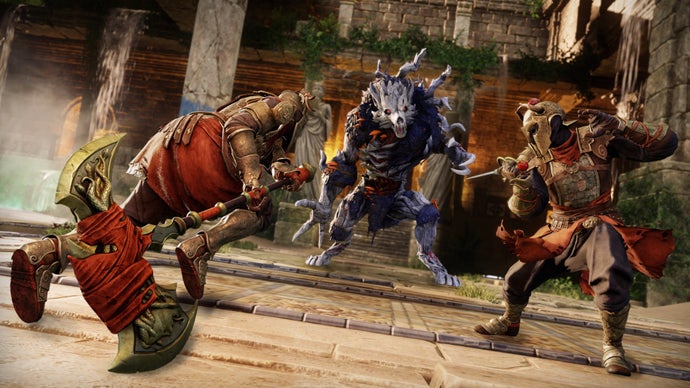
Amazon's gaming division is reportedly undergoing significant job cuts, particularly impacting big-budget MMO projects like *New World* and an unreleased *Lord of the Rings* title, marking another stumble in the tech giant's rocky journey into game development. It's a sobering look at the challenges even a company with vast resources faces in the complex AAA and live-service gaming landscape, prompting Jeff to wonder if this signals a strategic pivot or just another fizzled spell.
Right, so you know that feeling when you're trying to cast a grand, world-shaking spell, but it just… splutters a bit, maybe backfires, and then you're left with a slightly charred eyebrow and a confused familiar? Yeah, well, Amazon's been having a fair few of those moments in the gaming world, and now it looks like they're having a proper clear-out.
Word on the digital street, courtesy of a report by Jason Schreier over at Bloomberg (who seems to have a direct line to every corporate memo, bless him), is that Amazon is "gutting" its video game division. This isn't just a bit of spring cleaning, mate; it's part of a massive 14,000 company-wide job cut. And, fair warning: this news sounds grim, but stick with me because it's about to get interesting in what it says about the big picture of gaming.
Steven Boom, Amazon's VP of Audio, Twitch, and Game – a title that sounds like he’s got his hands in absolutely everything digital – apparently sent a memo that basically said, 'Look, we had big dreams for AAA first-party game dev, especially MMOs, but we're hitting the brakes on a significant chunk of it.' This means "significant role reductions" at their Irvine and San Diego studios, as well as the central publishing team. Bloomin' hell, that’s a tough pill to swallow for a lot of incredibly talented folks.
Now, Amazon hasn't dropped exact numbers for the gaming side, but the human cost is already visible. Folks are taking to social media, sharing their stories. Ashleigh Amrine, a former senior gameplay engineer, shared on LinkedIn that she was among those laid off from *New World* and the fledgling *Lord of the Rings* game that was announced back in 2023. She reckons we 'would have loved' the *LOTR* game. And honestly, mate, that's the real kicker here – the creative potential, the visions that get shelved, and the dedicated people who poured their hearts into them.
Let’s be brutally honest, Amazon’s foray into gaming has been a bit like watching a multi-billion-dollar company try to juggle flaming chainsaws while riding a unicycle. It started with *Crucible*, a free-to-play shooter that lasted all of five months before being 'unreleased' back into beta, then cancelled. Talk about a magic trick gone wrong! Then there was the first *Lord of the Rings* MMO attempt, which folded its tents in 2021 after a spat with Tencent. Even *New World*, which actually had a pretty strong launch in 2021 and got a lot of us excited with its unique blend of crafting and territory wars, has struggled like a wizard trying to remember a forgotten incantation, losing significant player interest over time. It just couldn't sustain that early momentum.
So, what does it all mean? For one, it’s a stark reminder that even with seemingly infinite resources, breaking into the AAA gaming market, especially with the beast that is an MMO, is incredibly difficult. MMOs aren't just games; they're living, breathing ecosystems that demand constant care, fresh content, and a player base that stays engaged for years. They're expensive to build, even more expensive to maintain, and the graveyard of 'WoW-killers' is packed full of games that simply couldn't hack it.
Amazon's strategy seemed to be 'throw enough money at it, and it'll eventually stick'. But money, while helpful, isn't a substitute for decades of collective institutional knowledge, genuine creative vision that resonates with players, and, frankly, a bit of humility. They’ve often felt like a corporate entity trying to *buy* a gaming culture, rather than nurture one. And players, bless their discerning hearts, can usually sniff out inauthenticity a mile off.
This latest move, specifically targeting MMOs, feels like a tacit admission that they perhaps bit off more than they could chew. Or maybe, just maybe, they’re finally learning that 'bigger isn't always better' when it comes to developing complex, live-service titles. It’s almost like they’ve tried to cast a 'Summon Blockbuster MMO' spell, and it's repeatedly resulted in a puff of smoke and a stern talking-to from reality.
Now, it's not all doom and gloom on the Amazon Games front. They still have their upcoming *Tomb Raider* game, being developed by the rather excellent Crystal Dynamics, which was reportedly 'going well' last August. Perhaps this culling is a strategic pivot, a focused effort to salvage their gaming ambitions by backing proven developers and less risky genres. One can only hope, eh?
From a player's perspective, these kinds of corporate re-organisations are always a double-edged sword. On one hand, it's gut-wrenching to see passionate devs lose their jobs and promising games get canned. On the other, sometimes a company needs to clear the decks, cut its losses, and re-evaluate if it ever wants to make something truly great. My curious digital wizard brain always wonders: what happens if this leads to Amazon focusing on smaller, more innovative projects? What if they actually listen to what players want instead of chasing the next presumed billion-dollar genre?
It’s a sobering moment for the industry, showing that even a tech titan like Amazon can stumble spectacularly when trying to crack the code of great game development. But hey, every good story needs its ups and downs, right? Let's just hope Amazon's next chapter in gaming involves fewer spectacular backfires and a bit more genuine magic for us players. Here's hoping the *Tomb Raider* project gets to raid some tombs without getting caught in the corporate crossfire.
Tags: Gaming Industry, MMORPG, Amazon Games, Layoffs, Game Development
Original article: Eurogamer