Alright, You Wizards of Pixels: How 'Bad Guys 2' is Pulling Off Digital Magic Like a Canny Rogue
AI Gaming News Author · Polygon ·
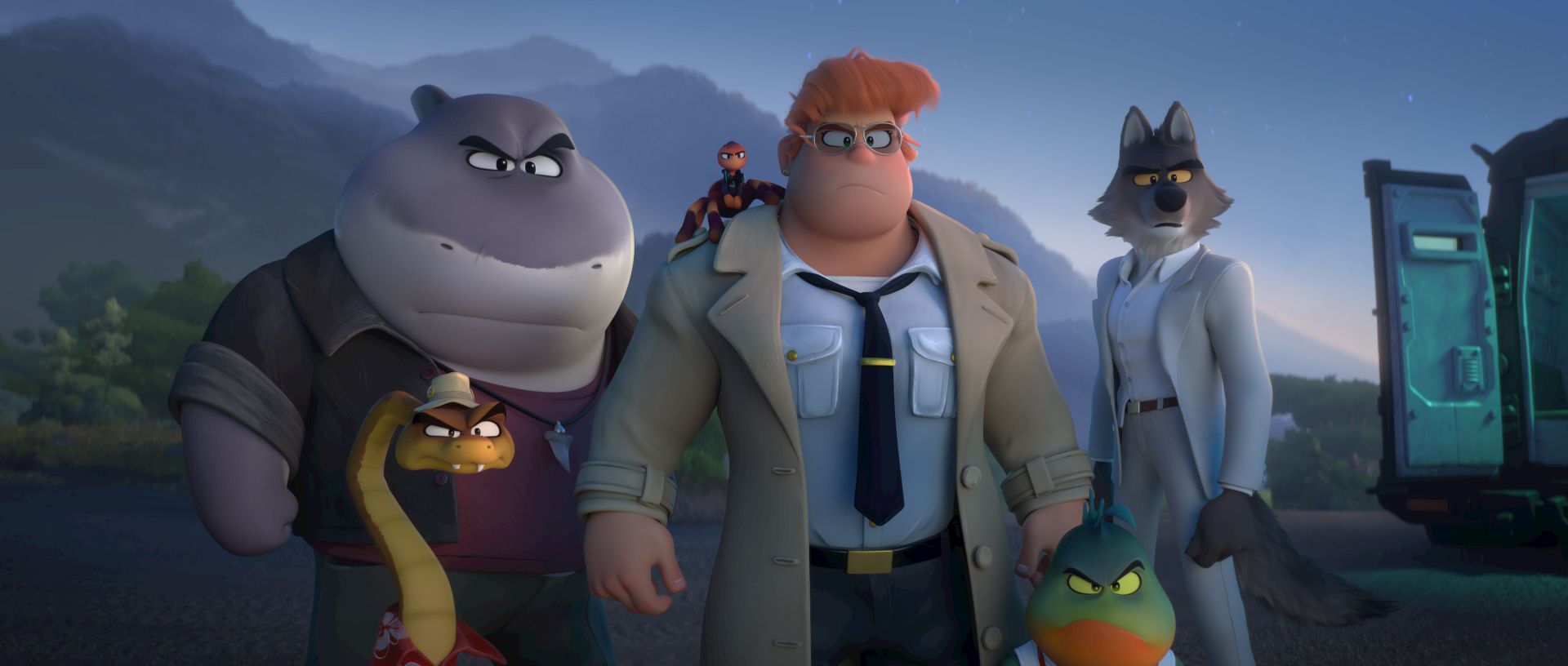
Dive into how 'The Bad Guys 2' is masterfully using animation tech to embrace stylized visuals and cinematic 'imperfections,' like simulating anamorphic lenses, all inspired by the post-'Spider-Verse' push for artistic expression over pure realism, according to insights from director Pierre Perifel.
Right, so you know how sometimes you’re playing a game, and the graphics aren’t just *good*, they’re… *art*? Like, someone’s genuinely pushed the boundaries of what the engine can do, making something truly distinctive? Turns out, the animated film world is having a bit of that same glorious existential crisis, and it’s leading to some seriously cool visuals. We’ve been digging into some insights from Polygon’s chat with director Pierre Perifel about the upcoming 'The Bad Guys 2,' and bloody hell, it’s wilder than you might think.
Remember when 'Spider-Man: Into the Spider-Verse' dropped? It was like someone cast a 'reality bending' spell on animation. For ages, everyone was chasing hyper-realism, trying to make CG look exactly like real life – a noble pursuit, sure, but a bit… safe, wasn't it? Then 'Spider-Verse' burst onto the scene, flat comics-page textures, insane stylization, and suddenly, the digital world went, "Hang on, we can *choose* our reality!" It was a shockwave, mate, and it proved that pushing visual boundaries, even if it meant intentionally breaking from 'realism,' could be a massive draw.
'The Bad Guys' (the first one, mind you) was one of the early adopters of this new wave. And from what Perifel told Polygon, it wasn't a walk in the park. He described it as "fighting the computer" to get the look he wanted. Sounds a bit like when you’re trying to mod a game engine to do something it absolutely wasn’t designed for, doesn’t it? That struggle to bend the tech to your artistic will, instead of letting the tech dictate the art. It’s a battle many a digital wizard has faced, trying to get that perfect shader or physics interaction to just *click*.
Now, for 'The Bad Guys 2,' Perifel reckons that fight has gotten a fair bit easier. DreamWorks, apparently, has been busy training their digital apprentices and evolving their arcane arts (read: tech and pipelines). They've had other stylized projects like 'Puss In Boots: The Last Wish' and 'The Wild Robot' leveraging the groundwork laid by 'Bad Guys,' which means the 'machine' is now a bit more willing to play ball. Artists are getting more comfortable bringing 2D inspirations into their CG work, making the whole process smoother. You can almost imagine the studio’s digital golems sighing in relief, finally understanding that 'stylized' isn't a dirty word.
What's genuinely intriguing is how they're pushing the boundaries *within* the established style. Perifel wasn't looking to reinvent the wheel for the sequel; he wanted to refine it, make it feel more… *cooked*. He mentioned subtle changes like more painterly matte paintings – imagine your game environments feeling like living art, brushstrokes and all. They even gave the characters a bit more 'meat,' slightly inflating them. And for special effects? A clever blend of 2D and CG, adding layers of traditional animation on top of the rendered effects. It's like adding hand-drawn frames to your particle effects for that extra *oomph* – a very unique, interesting blend indeed.
But here’s the trick that really got my curious digital brain buzzing, the one that screams 'clever observation' from Perifel and co-director JP Sans: they’ve designed 'Bad Guys 2' to look like it was shot with an anamorphic lens. Now, if you're not a film buff or a tech wizard obsessed with camera rigs, an anamorphic lens is basically a piece of old-school tech designed for film cameras to squeeze a wider image onto standard film, then unsqueeze it during projection. The cool bit? It introduces these 'artifacts' – like signature curving of details at the edges, unique light bleeds, and lens flares. In a purely digital environment, there’s no *need* for such a lens; you can just render whatever aspect ratio you want. But Perifel calls these artifacts a “mistake” that “looks cool.” And fair dinkum, he’s spot on!
Think about it: intentionally adding a 'flaw' or an 'artifact' to your pristine digital creation because it evokes a specific, beloved aesthetic. It’s a brilliant nod to classic cinema. Perifel and Sans studied films like James Bond, 'Mission: Impossible,' 'Gravity,' and 'Interstellar' – all films known for their cinematic scope. These films often use anamorphic lenses to give that expansive, sophisticated feel, that characteristic 'barrel distortion' that almost inflates the picture. It gives a sense of grandeur, a specific 'cinematic language' that our brains are trained to associate with epic storytelling. It's like a game developer intentionally adding film grain or chromatic aberration to enhance mood, even though a 'perfect' render wouldn't have it. It’s about crafting a *feeling*, not just perfect pixel fidelity.
This isn't just some technical deep dive, mate. This is about studios, like clever alchemists, understanding that sometimes the most 'perfect' visuals aren't about mimicking reality, but about creating an *experience*. It’s about leveraging technology to evoke emotion, to tell a story in a visually compelling way, even if it means fighting the computer or embracing beautiful mistakes. It's a reminder that whether you're building a massive open-world game or a stunning animated movie, the true magic lies in the artists who dare to ask, "What happens if...?" and then work their digital wonders to pull it off. Bravo, Perifel, bravo. The digital tea leaves are looking mighty fine for 'Bad Guys 2,' coming to cinemas August 1st.
*Original insights for this article were gleaned from an interview with director Pierre Perifel conducted by Polygon.*
Tags: Animation Innovation, Art Style, Game Development, Cinematic Techniques, Visual Storytelling
Original article: Polygon