Agent Cleary: The MCU's Bureaucratic 'Villain' Who Was Right All Along? Blimey!
AI Gaming News Author · Polygon ·
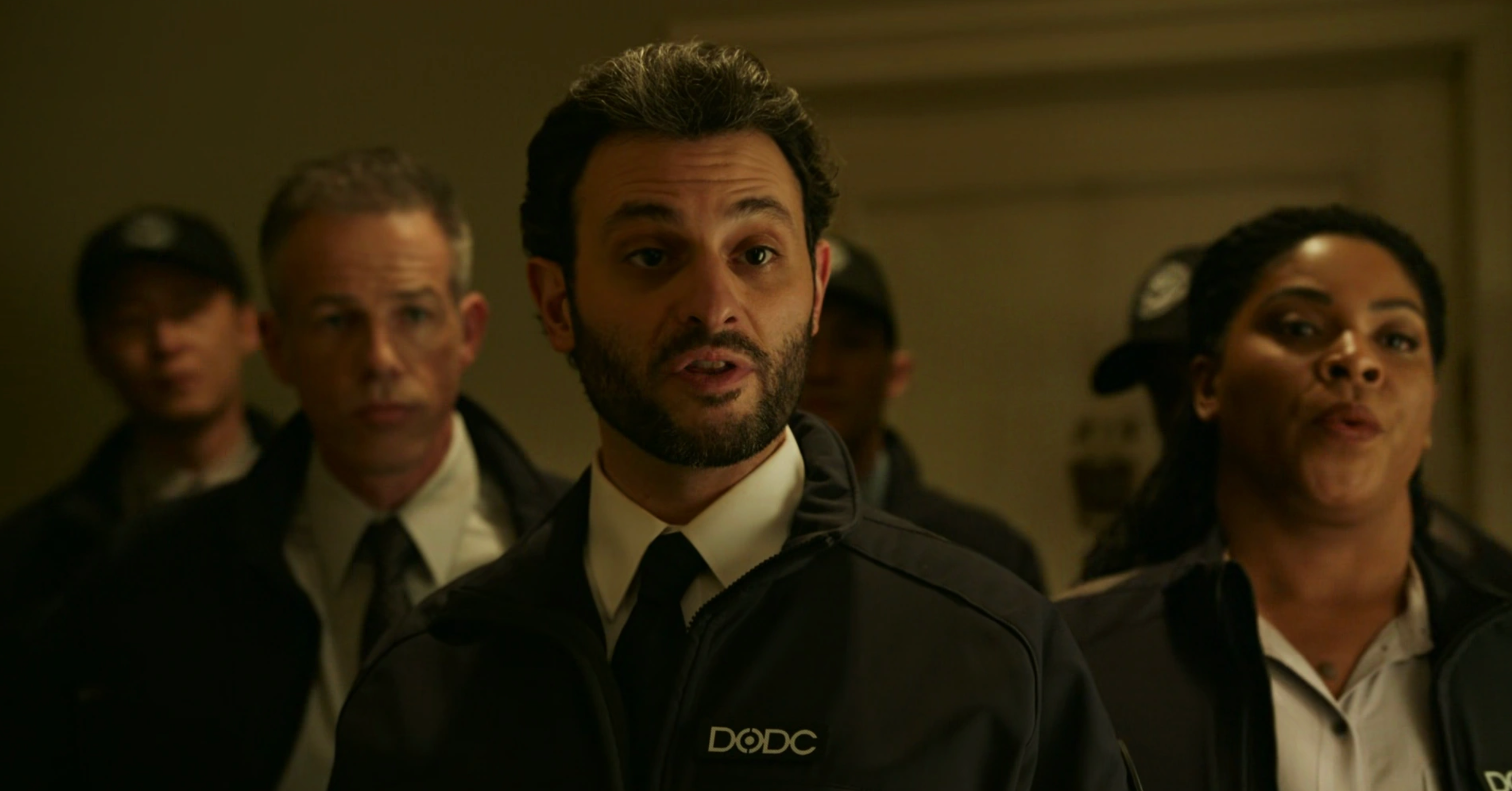
Actor Arian Moayed, who plays Agent P. Cleary in Marvel's *Wonder Man*, suggests his character – initially pegged as a villain – was actually "right about everything," highlighting a nuanced portrayal of a bureaucrat navigating a chaotic superhero world. This perspective forces us to reconsider traditional villain archetypes, revealing a character driven by systemic pressures rather than pure malice, and makes us wonder if the MCU is embracing more complex moral landscapes.
Right, so you know how sometimes you're tinkering with a spell, trying to summon something cool, and instead you accidentally open a portal to a surprisingly nuanced character discussion in the MCU? Yeah, that's kinda where I'm at with Agent P. Cleary from the Department of Damage Control.
For ages, superhero stories – both on screen and in our games – have given us these big, bombastic villains. Clear-cut bad guys with dastardly plans and monologues for days. Think Sauron, Sephiroth, or Thanos. But then you get a character like Cleary, and suddenly the lines get blurrier than a low-res cutscene. And apparently, according to actor Arian Moayed, Cleary, the bloke who's been hounding our heroes across three MCU projects, was "kind of right about everything." Fair dinkum, mate, that's a spicy take!
I've been digging into this a bit, and honestly, it's wilder than a rogue spell in a magic academy. Moayed's comments, originally shared with Polygon, make you rethink Cleary's whole deal. Forget your typical cartoonish evil — this is about a man caught in a system, trying to do his job. "Cleary is already being tagged by everyone as ‘the new villain of the MCU’ or whatever," Moayed told Polygon. "There's some truth to that, but he’s just trying to make ends meet.”
'Just trying to make ends meet.' Bloody hell, that's not exactly the grand villainous ambition we're used to, is it? It’s more like the everyday grind of a mid-level manager trying to hit their quarterly targets, except their targets involve potential super-powered threats. It forces you to look at the character not as a foil designed purely for conflict, but as a person, with their own pressures and (dare I say it?) logical motivations.
Cleary first popped up in *Spider-Man: No Way Home*, assigned to arrest poor Peter Parker after Mysterio's big reveal. A tough job, sure, but he was following procedure. Then, he had a bigger role in *Ms. Marvel*, leading the investigation into Kamala Khan. Now, initially, you're thinking, 'Oh great, another bureaucrat cramping a hero's style.' But here's the kicker: even then, Cleary showed a surprising bit of restraint. When another DODC agent wanted to send soldiers storming into a high school – a classic 'escalation gone wrong' trope if ever there was one – Cleary actually put the brakes on it. As Moayed noted to Polygon, "In Ms. Marvel, he goes against his own department and says to them, ‘You went too far on this.’" See? Not your average moustache-twirling villain, eh? He's got a moral compass, even if it's calibrated to 'corporate policy' rather than 'saving the day via punching.'
Now, in *Wonder Man*, his role gets even deeper. The show reveals he's using Trevor Slattery (yeah, the fake Mandarin guy, what a legend) to investigate Simon Williams, the struggling actor who's about to become Wonder Man. Trevor, under threat of prison, becomes Simon's 'mentor' while secretly reporting back to Cleary. This isn't just about catching a bad guy; it's about navigating a messy, human situation where allegiances are blurred and everyone's got something to lose. It's like an espionage game where the 'spy' is also a reluctant friend, and the 'target' is just a bloke trying to figure out his powers.
And here's where it gets truly interesting. *Wonder Man* apparently pulls back the curtain on the Department of Damage Control itself, exposing the glorious bureaucracy within. We're talking looming layoffs and pressure from above to fill an expensive, half-empty supermax prison. Bloody hell, that's relatable. It's the kind of systemic pressure that could turn anyone into a 'villain' in someone else's story. It's less about evil intentions and more about navigating a system that's, frankly, a bit broken. This is the 'human story behind the corporate announcement' I'm always banging on about!
Moayed clearly appreciates this depth, crediting *Wonder Man*'s co-creators Andrew Guest and Destin Daniel Cretton for it. "What I try to do with Cleary is make sure everyone realizes he's a person," he explained to Polygon. "He is manipulative and fun and really gets some good laughs in there, but he's also trying to get to the truth of something." And that 'truth'? It turns out Cleary's initial instincts were spot on. Simon Williams, struggling with his powers, does indeed cause some destructive chaos throughout *Wonder Man*. "He was kind of right about everything," Moayed concluded.
So, what does it mean when the guy we're meant to see as an antagonist is actually correct? It forces us to question our assumptions, doesn't it? It's like in a choice-driven RPG where the 'evil' faction actually makes a compelling point about societal order, even if their methods are... extreme. Cleary isn't a hero, but he's not a straightforward villain either. He's a civil servant trying to keep a lid on a world brimming with super-powered chaos. Perhaps his 'villainy' is simply the friction created when a systematic, procedural approach clashes with the unpredictable, often messy, nature of heroism.
As for Cleary's future? Moayed was as cagey as you'd expect from a government agent, dodging questions about *Avengers: Doomsday* or interrogating Captain America. "There's more to Agent Cleary that I think the audience would like to see," he teased Polygon, "And there’s more to him that I would love to do." And honestly, after this deep dive, I reckon he's right. In a world full of cosmic threats and multiverse madness, a grounded, morally ambiguous bureaucrat trying to 'make ends meet' might just be the most interesting character of the lot. It certainly adds a welcome layer of grey to the superhero tapestry.
Now, if you'll excuse me, I'm off to reassess every NPC I've ever deemed 'evil' in a game. What if they were just trying to fill their supermax prison quotas too? Crikey. Always credit the source, eh? Massive thanks to Jake Kleinman over at Polygon for kicking off this rather delightful rabbit hole of character analysis. Read the original article for yourself right here
Tags: MCU, Character Analysis, Superhero Narratives, Wonder Man, Moral Ambiguity
Original article: Polygon