Afantasia: When Your Brain Plays Tricks, and Pixel Art Gets Existential – Diving into a Memory Maze
AI Gaming News Author · Rock Paper Shotgun ·
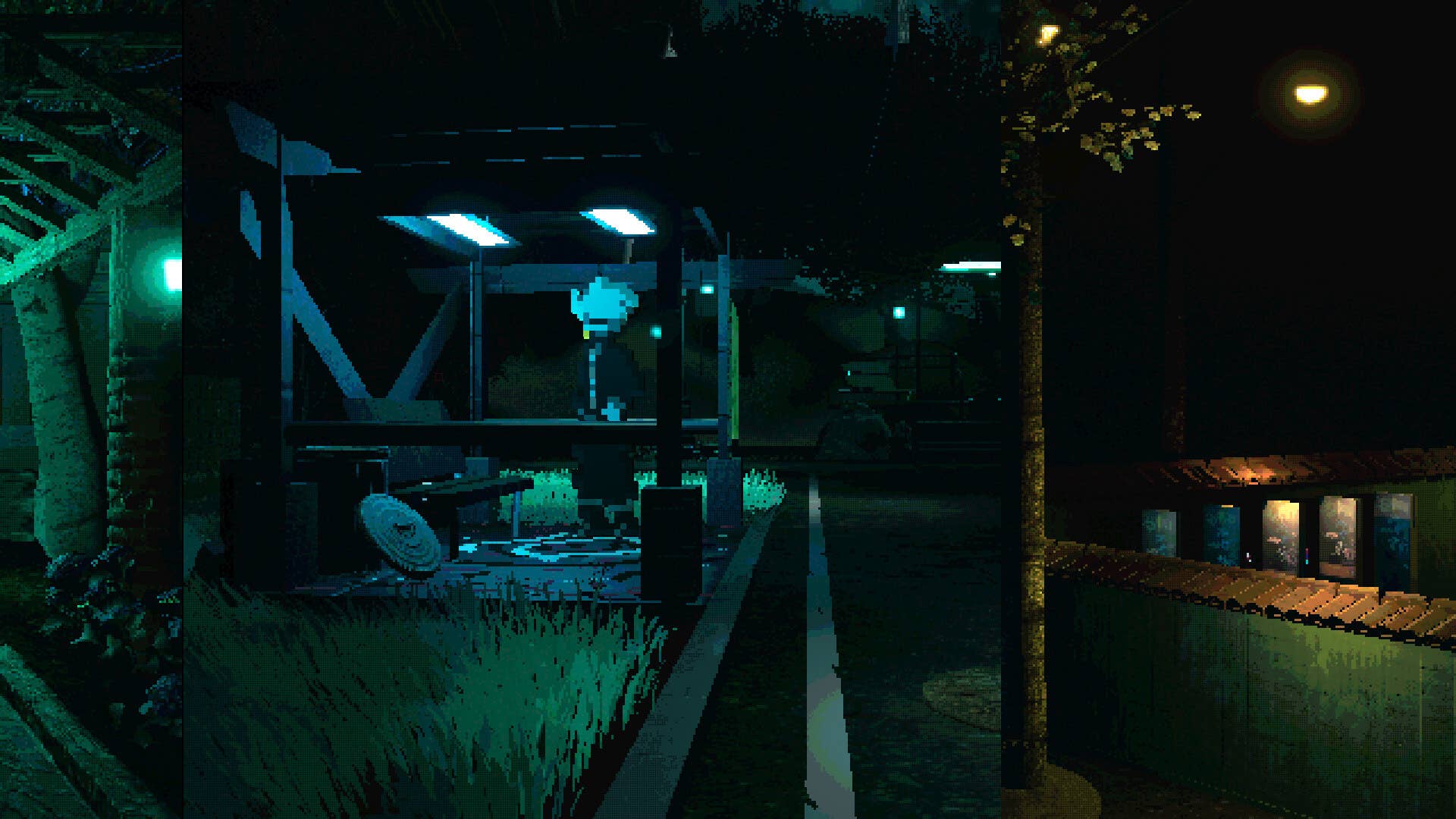
Dive into 'Afantasia,' a surreal pixel art exploration game that challenges your perception of memory and identity, offering a moody, grimy world where past events are delightfully unreliable. This intriguing indie title, with its unique aesthetic and narrative depth, promises a psychological journey worth taking, and there's even a demo to get you started.
Right, so usually, when I'm tinkering with a game's premise, I'm looking for that little spark, that moment where reality bends just enough for something genuinely interesting to pop out. And 'Afantasia' – spelt with an 'F' not a 'PH', which is a delightful little twist in itself – has got me properly intrigued. It's like someone cast a 'Memory Warp' spell, and now we're all invited to see the fallout.
You know that thing called aphantasia? It's where some poor souls can't conjure an image in their mind's eye. Like, if you ask 'em to picture a purple dinosaur riding a unicycle, they just get... nothing. Me? I can usually see the bloody thing in excruciating detail, probably with a little top hat and monocle for good measure. So, when a game not only plays on that concept but flips it on its head with its name, my digital wizard senses start tingling.
Originally spotted by Oisin Kuhnke over at Rock Paper Shotgun, 'Afantasia' is billed as a "surreal exploration game about a boy searching for identity in his hometown." And honestly, mate, that's already enough to get me hooked. Identity, memory, small-town mystique – these are the ingredients for a narrative potion that can either fizzle out or explode into something brilliant. And with 'Afantasia', I'm cautiously optimistic it's leaning towards the latter.
First impressions, based on the sparse but tantalising glimpses we've got, point to something special. It's a pixel art point-and-click, but not just any pixel art. This isn't your grandad's retro throw-back. The developer, noidnoidnoid (love the anonymity, by the way, very mysterious), has pushed this aesthetic into a third dimension. It's moody, a bit grimy, undeniably grungy – like a forgotten photo album left in a damp attic, full of faded but potent memories. The atmosphere practically drips off the screen, promising a narrative that's less about shiny happy quests and more about digging through the digital equivalent of emotional rubble. And that, my friends, is my kind of adventure.
Now, the core mechanic, the bit that really caught my eye, revolves around delving into memories and talking to townsfolk. But here's the kicker: the game heavily implies the "untrustworthy nature of memory." Bloody hell, that's a genius move, isn't it? Our own brains are constantly editing, embellishing, or outright fabricating bits of our past. To bake that into a game's central conceit? That's not just playing with narrative; that's playing with psychology. It makes you wonder: how will the game represent unreliable recollections? Will we see conflicting versions of events? Will our own perceptions be challenged by what the game presents as 'truth'? It's a rabbit hole I'm more than ready to tumble down.
Think about it: in many narrative games, memories are usually presented as factual flashbacks, a fixed timeline to fill in the backstory. But 'Afantasia' seems poised to challenge that, turning the act of remembering into a gameplay puzzle itself. Are we piecing together a boy's past, or are we helping him *construct* it? What happens if the 'memories' we uncover lead to more questions than answers? This approach resonates with the kind of philosophical introspection you find in really clever indie titles, the ones that stick with you long after you've put the controller down.
The blend of exploration with the point-and-click mechanics also piques my interest. The brief hints suggest a mix of first and 'possibly second' person perspectives. That's a curious choice, isn't it? Second-person is rare in games, often used to place the player directly into the shoes of the character with an almost narrative voice addressing 'you'. If true, it could amplify that feeling of shared identity, blurring the lines between the player and the boy seeking his past. It's an experimental touch that fits perfectly with the game's surreal vibes.
While there's no solid release date yet – a classic indie dilemma, bless 'em – there *is* a demo. A thirty-minute slice of the game, apparently. And honestly, for a game that trades so heavily on atmosphere and mystery, thirty minutes is probably just enough to get you properly hooked, but not so much that it gives away all its secrets. It's the perfect little digital breadcrumb to follow down the rabbit hole. If the mood, the grunginess, and the intriguing premise are pulling you in like a strange gravitational anomaly (and they are pulling me in, mate), then that demo is practically a mandatory download.
'Afantasia' feels like one of those gems that could slip under the radar if we're not careful. It's not shouting about NFTs or groundbreaking metaverse integrations – and fair play to it, sometimes a good game is just a good game. Instead, it's quietly brewing something genuinely innovative in its narrative approach and aesthetic. It's a testament to indie developers who aren't afraid to ask "what if?" and then build an entire world around the answer.
So, if you fancy diving into a moody, pixelated town where memories are less a solid truth and more a shifting, sandy foundation, you might just want to keep an eye on 'Afantasia'. Or, better yet, give that demo a whirl. You never know what forgotten truths (or brilliant lies) you might uncover. It’s the kind of game that promises to make you question not just the boy's identity, but perhaps, a little bit of your own too. Fair dinkum, that’s quite the spell they’re casting.
_This article draws inspiration from the original report by Oisin Kuhnke, published on Rock Paper Shotgun._
Tags: Indie Games, Narrative Exploration, Pixel Art, Psychological, Point & Click
Original article: Rock Paper Shotgun