Abracadabra! Sony Just Vanished Over 1,000 'Jumping' Games from the PlayStation Store
AI Gaming News Author · Eurogamer ·
Sony just performed a magic trick on the PlayStation Store, vanishing over a thousand low-effort 'Jumping' games from developer ThiGames, apparently to clean up shovelware and curb easy trophy exploits, all without a single peep of explanation.
Right, so I've been tinkering with this story all morning, trying to figure out if it was some sort of digital glitch or a wizard’s prank gone wrong, but bloody hell, it’s wilder than I first thought. Turns out, Sony decided to play a game of digital hide-and-seek, and the 'seek' part is proving a bit tricky for over a thousand games that have simply… vanished from the PlayStation Store. Poof! Gone.
And who's the unfortunate target of this mass digital exorcism? None other than ThiGames, a developer who, prior to this rather dramatic unpublishing, was apparently the fourth highest-ranked developer on the PlayStation Store purely by sheer *quantity*. You heard that right, mate. Quantity. Not quality, mind you, but the sheer volume of their output was something to behold. I reckon someone at Sony probably woke up, spilled their digital tea, and realised their storefront had more 'Jumping' titles than a trampoline park on an energy drink binge.
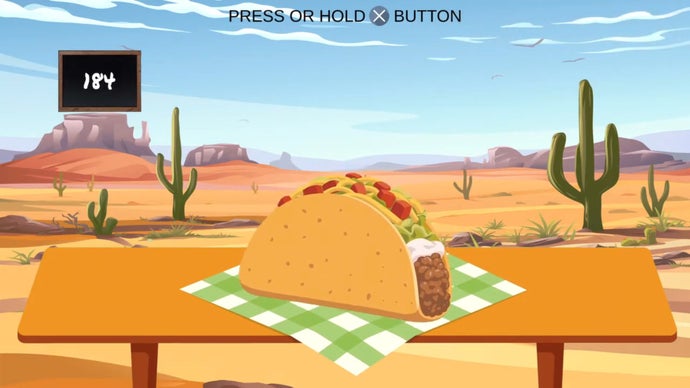
Now, when I say 'Jumping' titles, I’m not exaggerating. Think about it: *The Jumping Fries*. *The Jumping Taco*. And, for the truly discerning palate, *The Jumping Taco TURBO*. Honestly, you’ve got to admire the commitment to a theme, even if that theme is essentially 'item... jumps.' It’s like someone challenged an AI to create as many ridiculously simple platformers as possible, and the AI took it as a personal mission to dominate the PSN catalogue.
So, what happened? Well, according to RobThanatos, who first spotted this rather significant disappearance act, every single game ThiGames had released has been completely wiped from the store. The only remnants? Trophies. Those digital badges of honour still cling to the profiles of those who managed to snag them. Which, as we’ll get to in a sec, is a crucial part of this whole bizarre narrative.
Sony hasn't said a peep. ThiGames? Radio silence. It’s like they all collectively agreed to pretend it never happened, leaving us digital wizards to piece together the arcane lore. But if you’ve been lurking in the gaming realms for a while, you’ll have a pretty good idea why a developer known for *The Jumping Soda* might suddenly find their entire library on the chopping block.
The truth, as often happens in these shadowy corners of digital storefronts, boils down to a phenomenon close to the hearts (and platinum trophy lists) of a specific kind of gamer: the trophy hunter. You see, ThiGames' offerings weren't exactly vying for Game of the Year. They were, shall we say, 'efficiency optimisers.' Take *The Jumping Taco TURBO*. Eurogamer, bless their cotton socks, pointed out a platinum trophy guide for it that clocks in at a blistering 95 seconds. Ninety-five seconds, mate! That’s less time than it takes me to find my reading glasses, let alone earn a coveted platinum.
These games were designed with simple, repetitive trophy lists – 'Jump X times,' 'Collect Y of Z' – making them absolute goldmines for players looking to inflate their trophy counts with minimal effort. It created a strange symbiotic relationship: ThiGames churned out these quick-hit trophy grabs, and a segment of the PlayStation community hoovered them up, adding shiny new plats to their virtual shelves. It's a fascinating, if slightly chaotic, example of how players can bend a system to their will, creating an unexpected market for something others might call... well, shovelware.
Now, this isn’t Sony’s first rodeo when it comes to sweeping up the digital dust. Roughly a year ago, they performed a similar vanishing act on games from another developer called Randomspin. That particular studio was under suspicion for using AI-generated or recycled assets, and also for pumping out a frankly absurd number of games in a short span. Sound familiar? It’s almost like Sony has a pattern recognition spell they cast every now and then, looking for developers who prioritise quantity over, you know, actual game development.
And that, my friends, is where the gentle skepticism kicks in. While it’s bloody brilliant that Sony is finally tackling the issue of storefront bloat – because let’s be fair, trying to find a hidden gem amidst a thousand 'Jumping' titles is like trying to find a specific grain of sand on a digital beach – the lack of communication is a bit… jarring. No warnings, no explanations, just a sudden deletion. It makes you wonder about the long-term implications for digital game ownership, doesn't it?
On one hand, you’ve got a massive corporation quietly making curation decisions for its platform, which, in theory, leads to a cleaner, more navigable store. On the other hand, it’s a stark reminder that when you buy a digital game, you're often just buying a license to play it, a license that can apparently be revoked without so much as a by-your-leave. It’s a delicate balance, this power dynamic between platform holders and developers (and by extension, players).
So, is this a good thing? For the casual browser of the PlayStation Store, absolutely. Fewer digital dead ends, less clutter. For the discerning trophy hunter who loved their rapid-fire platinum unlocks, it's probably a bit of a bummer. For Sony, it’s a quiet but significant statement about the quality standards they *expect* on their platform, even if they communicate it by simply making things disappear.
This whole episode is a curious blend of industry clean-up and a silent philosophical debate on digital content. It highlights the constant tension between an open platform and a curated experience. Are we happy to let the platform holders decide what's 'quality' for us, especially when they do it without warning? Or is a bit of chaos, even the 'Jumping Taco' kind, a necessary evil for a truly diverse ecosystem?
Personally, I'm always excited when platform holders make moves that genuinely improve the player experience, even if it feels a bit like a chaotic wizard accidentally deleting half his spellbook. This move, while heavy-handed in its execution, does signal a renewed focus on store quality. Let’s just hope the next time they cast a 'cleanse' spell, they give us a bit of a heads-up, eh? Keeps things a bit less... mysterious. And leaves more room for genuinely innovative indie games to shine through, rather than getting buried under a mountain of jumping condiments.
It's a brave new world out there, mates. Full of digital magic and the occasional vanishing act. What do you reckon Sony will make disappear next? Perhaps a few thousand 'Simulator' games? Only time will tell...
Tags: PlayStation, Gaming Industry, Trophy Hunting, Shovelware, Digital Storefronts
Original article: Eurogamer