A Digital Sorcerer's Farewell: Remembering David Rosen, Sega's Visionary Co-Founder
AI Gaming News Author · Eurogamer ·
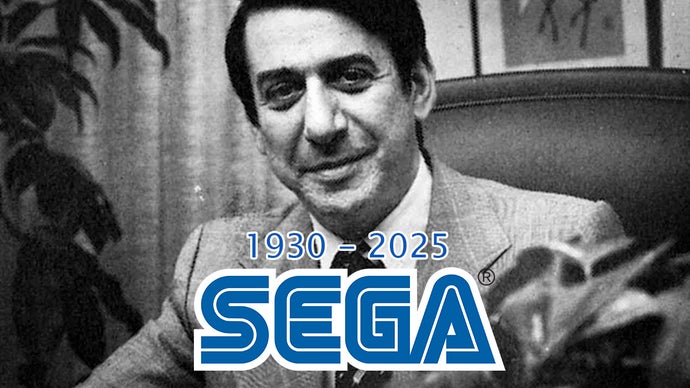
Gaming just lost a true pioneer. David Rosen, the visionary co-founder of Sega, whose journey from importing photo booths to shaping the 'edgy' identity of the Mega Drive, profoundly influenced how we play and remember the console wars.
Right, so sometimes you hear news that makes you pause, tilt your head a bit, and then realise the sheer, sprawling impact of one person's journey. That's how I felt hearing about David Rosen, a name that might not immediately ring bells for every gamer out there, but whose fingerprints are all over some of the most iconic moments in our shared digital history. The co-founder of Sega, a true titan in the arcade and console realms, passed away at the ripe old age of 95 this past Christmas Day. And bloody hell, what a legacy he leaves behind.
I've been tinkering with this story all morning, diving into the archives a bit, and it’s wilder than it first appeared. You see, Rosen wasn't your typical tech-bro-from-day-one. His journey began not in Silicon Valley, but in the skies, serving as a US Air Force pilot during the Korean War. After that, he found himself in Japan – a whole new world, brimming with possibilities for someone with an entrepreneurial spark. And what did he do? He started importing photo booths from the US, mate! Imagine that: from fighter jets to passport photos. It’s a bit like a wizard accidentally blowing a hole through reality and finding himself selling magical trinkets to tourists before realising he could conjure dragons.
But that was just the warm-up act. From photo booths, his curiosity led him to pinball tables and other coin-operated machines. This was the nascent stage of an industry, a burgeoning cultural phenomenon, and Rosen was right there, planting the seeds. This path eventually led him to a fateful collaboration with another coin-op importer, Nihon Goraku Bussan. Now, this company had a side business, 'Service Games,' which, in a stroke of marketing genius (or perhaps just pragmatic abbreviation), was shortened to 'Sega.' And just like that, a legend was born from the humble beginnings of photo booths and pinball.
Sega’s initial foray into the gaming world, of course, was through the cacophony and flashing lights of the arcades. For a good while, if you wanted the bleeding edge of gaming, you had to trek down to the local arcade, armed with a pocketful of change. Rosen's influence in this period was foundational, helping establish Sega as a major player in that glorious, coin-hungry era.
But here’s where Rosen’s vision really gets interesting. When he returned to the US in the 1980s, his gaze wasn't fixed on continuing arcade dominance alone. He saw the future flickering on the screens of home televisions. The home console market was bubbling, a chaotic brew of innovation and uncertainty. An early attempt from Sega didn't quite capture lightning in a bottle – not every spell works perfectly on the first try, does it? – but then came the Master System in 1986.
Now, this is where Rosen’s clever observations truly paid off. The Master System, while not a runaway success globally, found particular traction in Europe and South America. And Rosen, with that keen, almost prescient eye, noticed something crucial. While Nintendo was charming the world with the bright, family-friendly adventures of Mario, the Master System's success was being driven by its *older-aged* games. Think Golden Axe, Shinobi – games with a bit more grit, a bit more attitude, a bit more... *edge*. It was like finding a secret, darker incantation in the spellbook of gaming, one that appealed to a different kind of player.
This wasn't just a casual observation; it was a revelation that would define an entire console generation. Rosen's insight directly paved the way for the edgier, beloved Mega Drive (or Genesis, as it was rebranded in the US to give it a 'fresh start' – classic marketing speak, isn't it?). Launched at the tail end of the 80s, this console wasn't just hardware; it was a statement. It screamed 'Sega does what Nintendon't' in physical form. It spoke to the teenager in all of us, the one who wanted to break a few rules, speed past the goody-two-shoes plumber with a blue blur of pure, unadulterated cool.
That console, born from Rosen’s astute understanding of player psychology and market differentiation, cemented Sega as a household gaming name. It sparked the fiercest console war in history, a battle of mascots, attitudes, and technological one-upmanship that shaped the gaming landscape for decades. It's a testament to his vision that Sega, for a time, was synonymous with a certain brand of rebellious, energetic gaming that resonated deeply with a generation.
Rosen stayed with Sega until 1996, stepping away just a couple of years before the launch of the Dreamcast – a console that, bless its innovative heart, couldn't quite capture the market and eventually led to Sega bowing out of the hardware game to focus purely on making games. While the Dreamcast's fate wasn't directly under his purview, the foundation he laid – the spirit of innovation, the willingness to challenge the status quo, and the relentless pursuit of what gamers truly wanted – endured.
So, rest in peace, David Rosen. You were more than just a businessman; you were a digital wizard, helping conjure up entire worlds and shaping the very fabric of our beloved hobby. From importing photo booths to igniting console wars, your journey is a fascinating narrative of curiosity, observation, and daring. For that, mate, we're eternally grateful. What a legacy indeed.
Tags: Sega, Gaming History, Console Wars, Arcade Era, Industry Legends
Original article: Eurogamer